

Digital marketing is not “one task.” It is a system of repeatable operations across channels like search, paid ads, email, marketplaces, and content distribution.
Most business owners do not need a generic “marketing VA” first. They need the right operator for the bottleneck that is slowing growth right now, like traffic, conversion, follow-up, creative volume, or marketplace visibility.
This guide breaks down the digital marketing virtual assistant roles that matter, what each role owns, the tools they use, the outputs you should expect, and how to hire in the correct order. If you already know you need marketing execution support and want to skip the role breakdown, our digital marketing virtual assistant service covers scope, onboarding, and pricing directly.
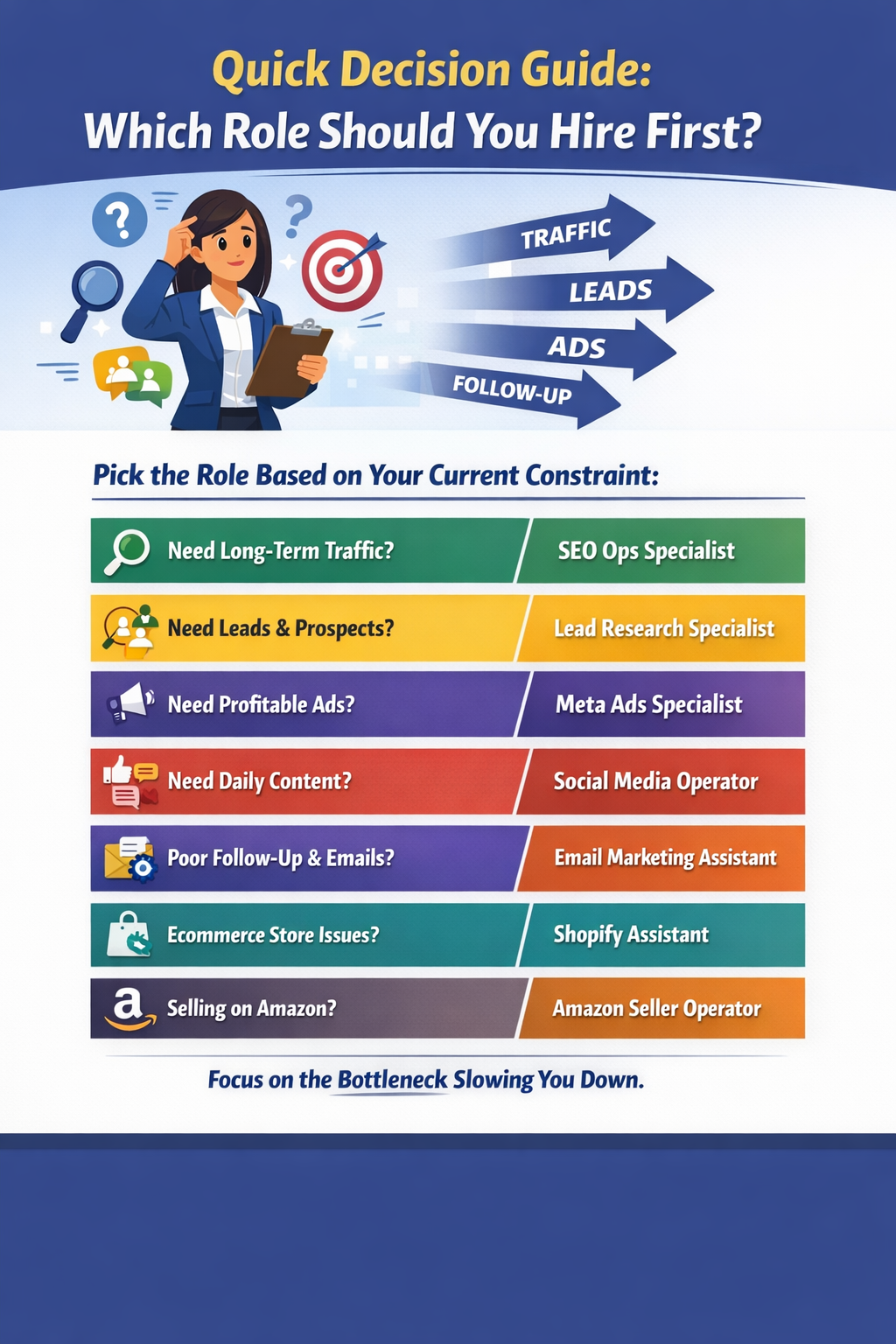
Quick Decision Guide: Which Role Should You Hire First?
Pick the role based on your current constraint:
- You need consistent inbound traffic and long-term visibility → SEO Ops Specialist
- You need leads now and a reliable pipeline → Lead Research and Prospecting Specialist
- You need profitable paid acquisition → Meta Ads Specialist (Facebook and Instagram)
- You need daily content, posting, and fast replies → Social Media and Community Operator
- You have traffic, but weak follow-up and low conversion → Email Marketing and Automation Assistant
- Your store operations are messy, and updates slip → Shopify and eCommerce Operations Assistant
- Amazon is a primary revenue channel → Amazon Seller Central Operator
-
You want a generalist to coordinate execution → Marketing Coordinator (Generalist)
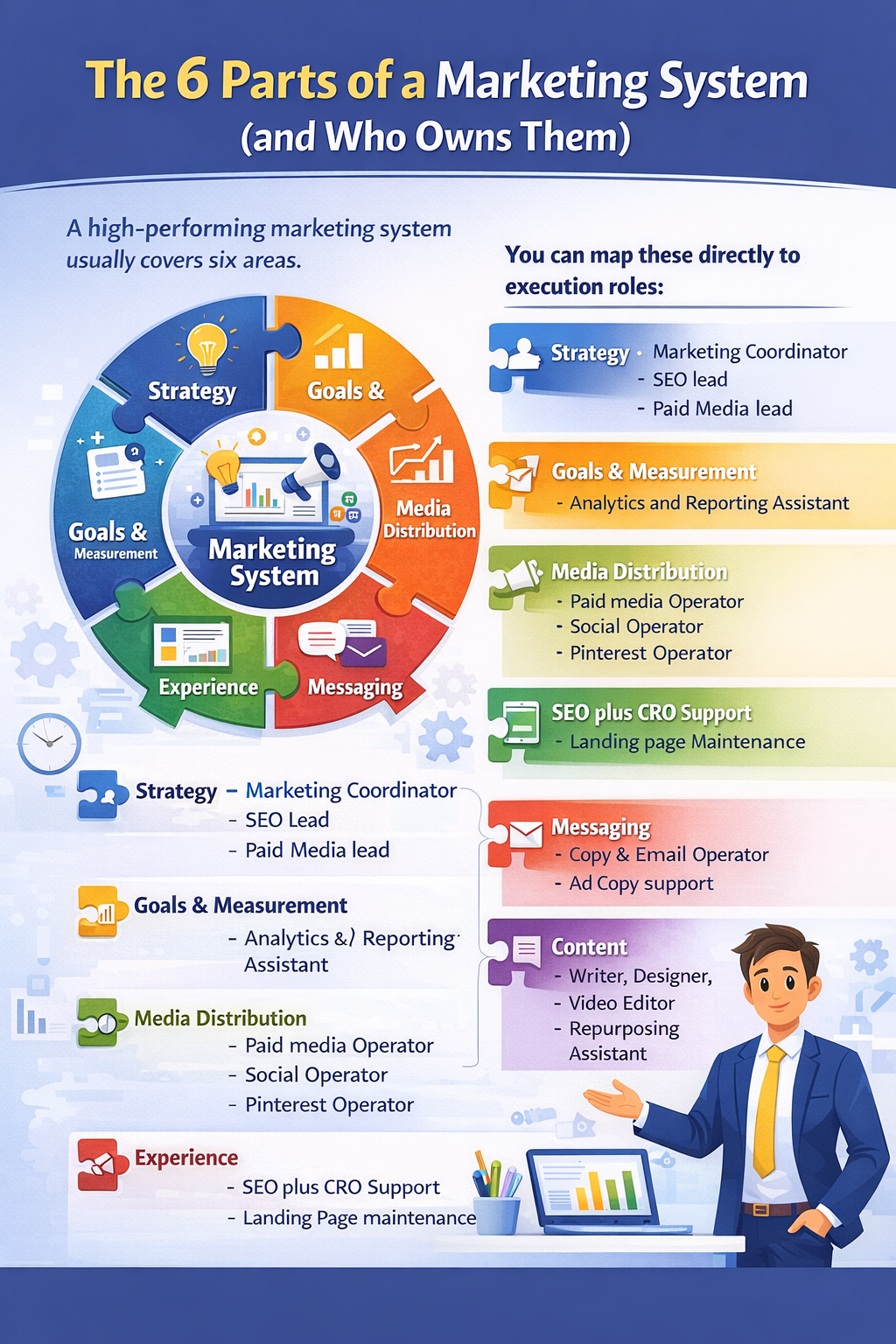
The 6 Parts of a Marketing System (and Who Owns Them)
A high-performing marketing system usually covers six areas:
- Strategy
- Goals and measurement
- Media distribution
- Experience (site and funnel)
- Messaging
- Content production
You can map these directly to execution roles:
- Strategy → Marketing Coordinator, SEO lead, Paid media lead
- Goals and measurement → Analytics and Reporting Assistant
- Media distribution → Paid media operator, Social operator, Pinterest operator
- Experience → SEO plus CRO support, landing page maintenance
- Messaging → Copy and email operator, ad copy support
- Content → Writer, designer, video editor, repurposing assistant.
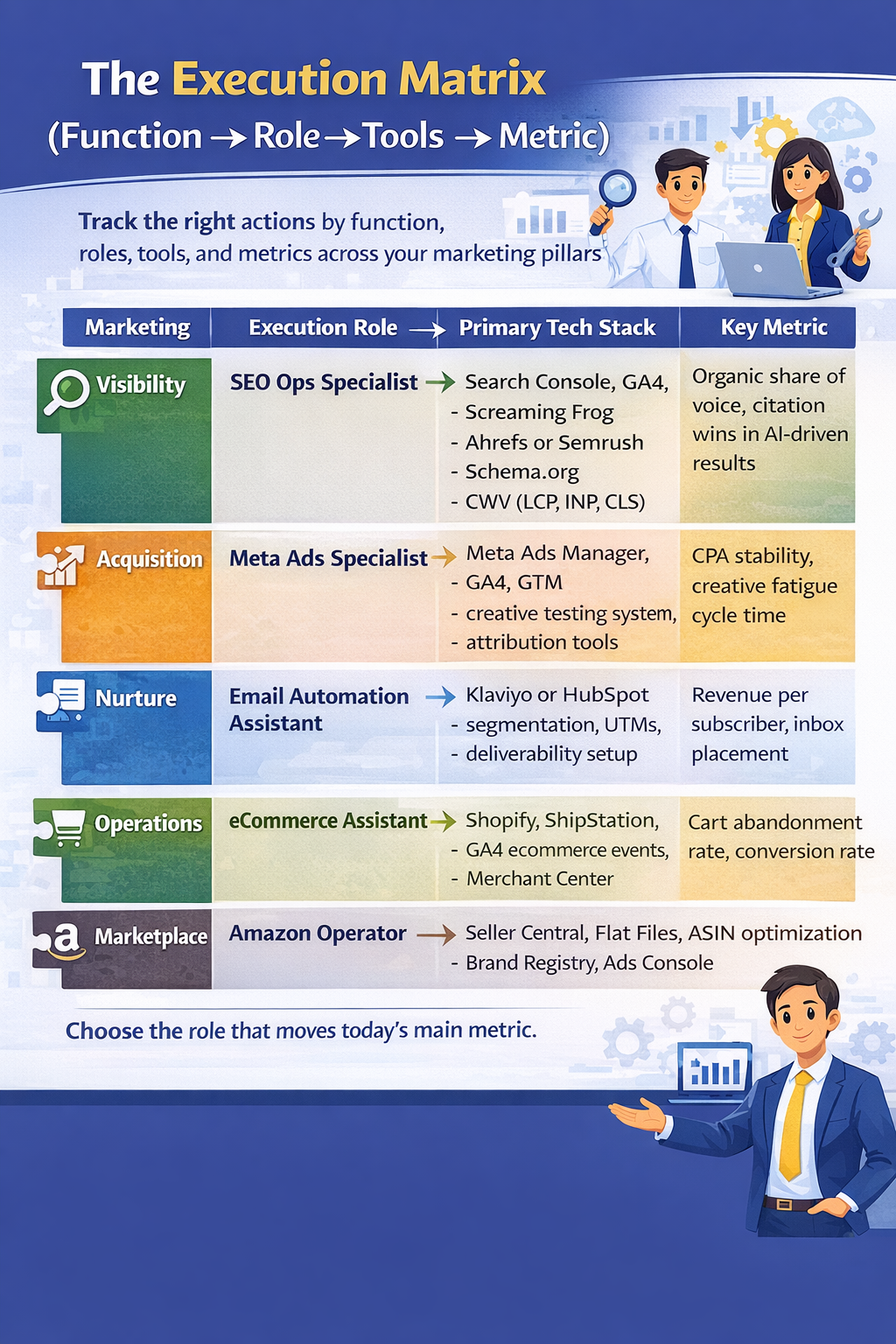
The Execution Matrix (Function → Role → Tools → Metric)
|
Marketing Pillar |
Execution Role |
Primary Tech Stack |
Key Metric |
|
Visibility |
SEO Ops Specialist |
Search Console, GA4, Screaming Frog, Ahrefs or Semrush, Schema.org, CWV (LCP, INP, CLS) |
Organic share of voice, citation wins in AI-driven results |
|
Acquisition |
Meta Ads Specialist |
Meta Ads Manager, GA4, GTM, creative testing system, attribution tools |
CPA stability, creative fatigue cycle time |
|
Nurture |
Email Automation Assistant |
Klaviyo or HubSpot, segmentation, UTMs, and deliverability setup |
Revenue per subscriber, inbox placement |
|
Operations |
eCommerce Assistant |
Shopify, ShipStation, GA4 ecommerce events, Merchant Center |
Cart abandonment rate, conversion rate |
|
Marketplace |
Amazon Operator |
Seller Central, Flat Files, ASIN optimization, Brand Registry, Ads Console |
TACoS, listing conversion rate |
Role 1: Social Media and Community Operator
This is the virtual assistant role that keeps your brand active daily: publishing, replying, routing DMs, and preventing your channels from going quiet. For instance, to turn social attention into predictable revenue, a dedicated Facebook Media Buyer manages testing cycles and scaling once you see organic proof.
Best for
- Businesses that need consistent posting and fast response times
- Founders who can generate ideas but cannot execute daily publishing
Key deliverables
- Weekly content calendar (themes, hooks, CTAs)
- Post creation and scheduling
- Comment and DM triage with escalation rules
- Community prompts, engagement workflows, and basic moderation
Primary tech stack
- Meta Business Suite, Buffer, or Later, Canva
- Notion or Trello, Slack, Loom
- CapCut (short-form edits), Google Drive asset library
KPIs
- Consistent weekly publishing cadence
- Response time for comments and DMs
- Saves, shares, link clicks, profile visits
Trend
AI-assisted publishing is table stakes. The differentiator is AI-integrated moderation and escalation. The assistant uses AI for triage, but routes sensitive issues to humans quickly, with a documented escalation playbook.
Role 2: Meta Ads Specialist (Facebook and Instagram)
This role owns paid acquisition on Meta: campaign setup, creative testing, audience strategy, and weekly optimization.
Best for
- Businesses with an offer that already converts from organic traffic
- Teams that want predictable lead flow and measurable growth
Key deliverables
- Campaign structure (prospecting + retargeting)
- Weekly creative testing plan (angles, formats, offers)
- Landing page conversion feedback loop
- Weekly performance review with clear next actions
Primary tech stack
- Meta Ads Manager, Meta Pixel
- Google Tag Manager, GA4
- Looker Studio dashboards
- Attribution tools (as needed): Hyros, Triple Whale, Northbeam
KPIs
- Cost per lead or acquisition
- CPA stability over time
- Creative fatigue signals (frequency, CTR decline)
- Conversion rate by landing page
Trend
The winning edge is not “targeting hacks.” It is creative throughput and structured testing. The best operators run predictable creative pipelines, refresh angles fast, and protect performance during fatigue cycles.
Role 3: Pinterest Growth Operator (Organic + Ads)
Pinterest behaves more like a visual search engine than a social network, which is why a Pinterest virtual assistant works on keywords and publishing cadence rather than engagement tactics. This role focuses on keyworded content, consistent publishing, and long-tail traffic.
Best for
- Ecommerce, lifestyle, home services, food, travel, education
- Brands with visual assets and blog content to distribute
Key deliverables
- Pin design templates and pin production
- Keyworded titles and descriptions
- Board strategy and scheduled publishing
- Monthly refresh plan based on what is ranking
Primary tech stack
- Pinterest Business Manager, Pinterest Trends
- Tailwind, Canva
- Google Trends, UTM tracking
KPIs
- Outbound clicks
- Saves
- Impressions on target keywords
- Top pins are refreshed and maintained monthly
Role 4: Lead Research and Prospecting Specialist
This role builds lists, enriches contact data, and keeps the CRM clean so sales efforts do not waste time on poor-fit prospects.
Best for
- B2B teams that need pipeline, not vanity metrics
- Agencies and service businesses targeting specific verticals
Key deliverables
- ICP-based lead lists segmented by fit
- Data enrichment and email verification
- CRM hygiene, tagging, and stage rules
- Weekly handoff to sales with notes and context
Primary tech stack
- LinkedIn Sales Navigator
- Apollo or ZoomInfo (depending on your stack)
- Clay (enrichment workflows), Hunter.io
- NeverBounce or ZeroBounce
- HubSpot CRM or Salesforce
KPIs
- Valid contact rate
- Qualified opportunities created
- Bounce rate, reply rate (if assisting outreach)
- CRM cleanliness (duplicates, missing fields)
Role 5: SEO Operations Specialist (Content + Technical Fundamentals)
SEO is an operating system: content structure, internal links, technical hygiene, and measurement.
Best for
- Brands that want compounding inbound traffic
- Sites with existing content that needs structure and updates
Key deliverables
- Keyword map and content briefs
- On-page optimization (titles, headings, entities, FAQs)
- Internal linking plan with implementation checklist
- Technical audits (indexation, broken links, duplication, redirects)
Primary tech stack
- Google Search Console, GA4
- Screaming Frog
- Ahrefs or Semrush
- Schema.org structured data (JSON-LD)
- Canonical tags, robots meta controls, sitemap checks
- Core Web Vitals monitoring, especially LCP (Largest Contentful Paint), plus INP and CLS
KPIs
- Non-branded impressions and clicks
- Organic share of voice for priority topics
- Index coverage improvements and crawl health
- Top pages refreshed, consolidated, and updated
Trend
SEO now includes being cited in AI-driven search experiences. Strong pages use clear entity coverage, structured data, and clean information architecture so both users and machines can extract the answer quickly. To build compounding inbound demand, an SEO Virtual Assistant can run audits, entity updates, and internal linking so your best pages win more clicks over time.
Role 6: Content Writer and Content Repurposing Assistant
This role turns ideas into assets: blog posts, landing page sections, newsletters, and repurposed content for distribution. To publish consistently without losing quality, a dedicated Content Writing Virtual Assistant can turn your ideas into structured assets your team can reuse across channels.
Best for
- Founders with expertise but limited writing time
- Brands that want consistent publishing with a firm structure
Key deliverables
- Briefs, outlines, drafts, and edits
- Content refreshes (older posts updated with new entities and examples)
- Repurposing into LinkedIn posts, short scripts, and newsletter segments
- Content checklists for formatting and on-page SEO basics
Primary tech stack
- Google Docs, Notion
- Grammarly, Hemingway (optional)
- SurferSEO or Clearscope (optional)
- Canva (basic visuals), Loom (SME interviews)
KPIs
- Publish cadence and content volume
- Pages created or refreshed monthly
- Assisted conversions (tracked via GA4 or CRM)
Role 7: Email Marketing and Automation Assistant
Email is where follow-up and monetization happen. This role builds campaigns, automation flows, segmentation, and reporting.
Best for
- Businesses with traffic but inconsistent conversion
- Teams with offers that require trust building and follow-up
Key deliverables
- Weekly campaigns built, QA’d, and scheduled
- Automated flows (welcome, abandoned cart, post-purchase, reactivation)
- List hygiene, segmentation, and tagging rules
- Monthly reporting plus “what to test next” recommendations
Primary tech stack
- Klaviyo, HubSpot, or Mailchimp
- UTM conventions, GA4 measurement
- Deliverability setup: SPF, DKIM, DMARC alignment
- Landing page builder integrations (as needed)
KPIs
- Revenue per subscriber (or lead-to-sale rate)
- Deliverability, inbox placement trends, and list health
- Flow conversion rates by segment
Trend
Deliverability and segmentation matter more than volume. Strong assistants focus on clean data, smart segments, and inbox placement, not just sending more emails.
Role 8: Shopify and eCommerce Operations Assistant
This role keeps the store clean, merchandised, and conversion-ready.
Best for
- Stores with frequent product updates and promotions
- Teams that need consistent store hygiene and execution
Key deliverables
- Product uploads, variants, collections, and tags
- Image optimization, alt text, basic SEO hygiene
- Promo scheduling, banners, and merchandising updates
- Basic reporting, inventory checks, and issue routing
Primary tech stack
- Shopify Admin
- ShipStation (or your fulfillment tool)
- Google Merchant Center
- GA4 ecommerce events, basic dashboards
- Klaviyo (sync and segmentation support)
KPIs
- Cart abandonment rate
- Conversion rate
- Product page completeness (images, descriptions, variants)
- Promo execution accuracy and speed
Role 9: Amazon Seller Central Operator (FBA-Focused)
If Amazon is a primary channel, you need Amazon-specific operators, not generalists. Amazon has its own rules, workflows, and reporting quirks.
Best for
- Amazon sellers who need listing, ops, and customer coverage
- Brands that want reliable execution across the catalog and support
Key deliverables
- Listing creation and optimization (titles, bullets, backend terms)
- ASIN optimization and variation fixes
- A+ Content coordination
- Customer messages, order issues, returns routing
- Inventory monitoring, basic performance tracking
Primary tech stack
- Amazon Seller Central, Brand Registry, FBA
- Flat Files for bulk uploads and variation fixes
- Helium 10 or Jungle Scout (research and monitoring)
- Amazon Ads Console (basic PPC execution support)
- ASIN-level reporting workflows and catalog hygiene
KPIs
- Listing conversion rate trends
- Stockout rate and inventory health
- Customer response time
- TACoS and overall margin stability
Trend
Catalog hygiene and attribution clarity matter more as competition increases. Operators who maintain clean listings, fix variations quickly, and protect inventory prevent silent revenue leaks.
Role 10: Marketing Coordinator (Generalist)
This is the “glue” role. A coordinator keeps your marketing machine moving by managing tasks, deadlines, briefs, and handoffs across specialists.
Best for
- Teams with multiple moving parts and inconsistent execution
- Founders who want visibility, control, and reliable output
Key deliverables
- Weekly marketing plan and priorities
- Task assignment and follow-ups
- Asset library and documentation
- Reporting summaries and “next actions” per channel
Primary tech stack
- Asana, ClickUp, or Trello
- Notion SOPs, Google Drive
- Slack, Loom
- GA4 dashboards (summary level)
KPIs
- On-time delivery rate
- Weekly output consistency
- Reduced founder involvement in coordination
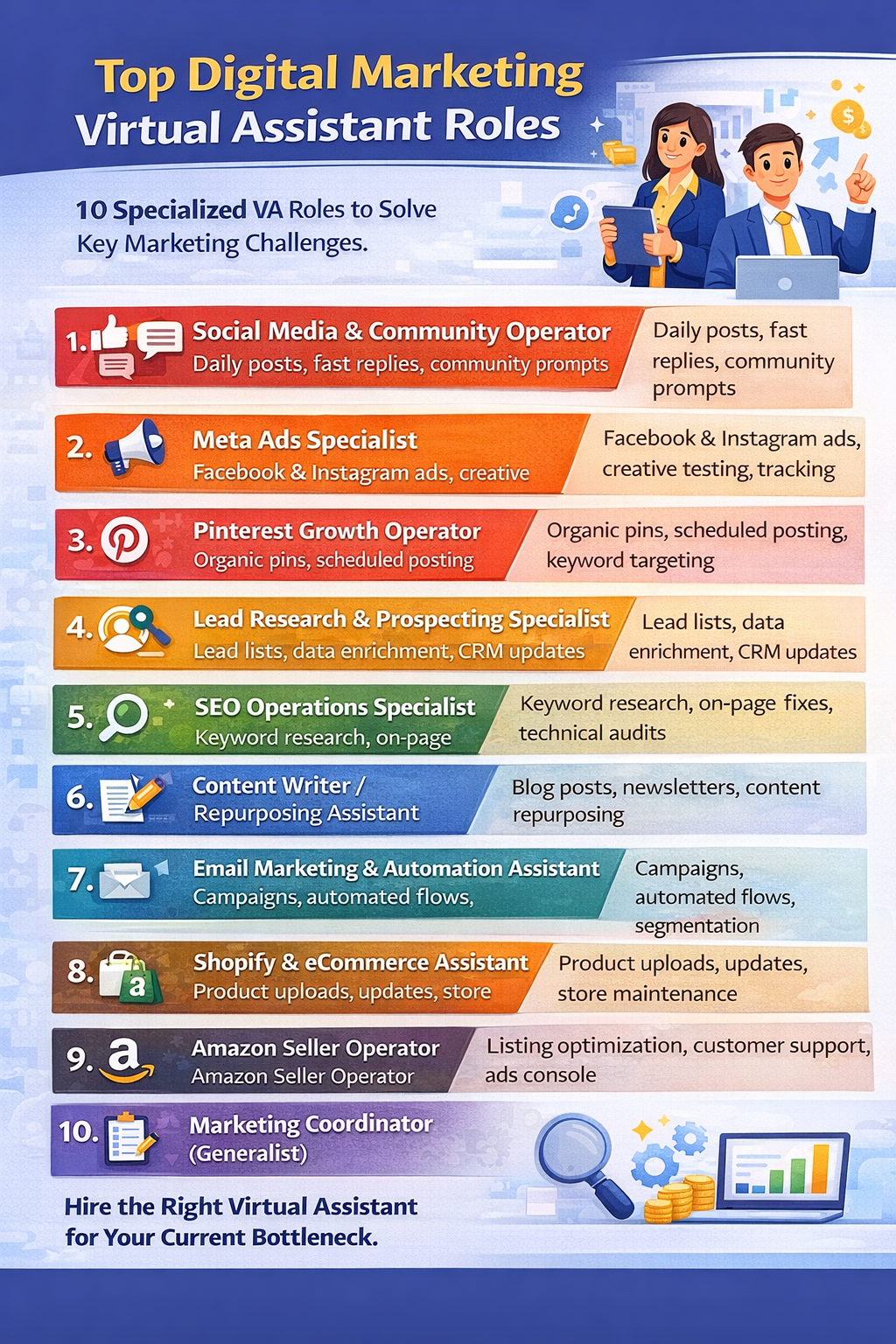
How to Choose the Right Role (Without Overhiring)
Use these three questions:
- What is the bottleneck right now: traffic, conversion, follow-up, creative volume, or operations?
- What must happen weekly to move revenue? Choose the role that owns that cadence.
- What will you measure? If you cannot track it in GA4, Search Console, or your CRM, your scope is too vague.
What Does a Digital Marketing Virtual Assistant Cost?
A digital marketing virtual assistant typically costs $7 to $15 an hour when hired offshore, against a US median of $37.87 an hour for market research analysts and marketing specialists, the closest Bureau of Labor Statistics occupation to an in-house marketing execution role. That US figure is $78,760 a year, from the Bureau of Labor Statistics Occupational Employment and Wage Statistics survey for May 2025. Published 2026 rate guides from offshore staffing providers put digital marketing and SEO specialists at the upper end of the VA range rather than the entry level, because the work needs tool fluency rather than task-following alone.
Rate alone is a poor comparison, though. What actually moves the number is listed below.
- Specialisation depth: A generalist coordinator sits at the bottom of the range. A paid media or SEO operator who owns a channel sits at the top. The gap between the two is roughly double.
- Tool ownership versus tool support: An assistant who schedules content in your tools costs less than one who owns campaign structure and reporting inside them. Decide which you are buying before you compare quotes.
- Hiring route: A marketplace hire looks cheapest per hour but leaves vetting, replacement, and payroll admin with you. A managed provider folds those into the rate.
- Hours committed: Part-time and project rates run higher per hour than a full-time seat, because the provider carries the same overhead across fewer hours.
- Region: Latin American and Eastern European hires cost more per hour than Philippines-based ones and buy you time-zone overlap in return.
Comparing a VA hourly rate against a salary line understates the difference, because a salary is only part of what an employee costs once payroll tax, benefits, recruiting, software seats, and equipment are added. Run the numbers for your own case with our outsourcing cost calculator before you decide between a role hire and an in-house one.
Which type of virtual assistant will be the best for you?
If you want help choosing the right digital marketing virtual assistant, we can map your current bottleneck, define weekly deliverables, and recommend the single role that will create the fastest measurable lift.
If you are ready, share:
- Your primary goal (leads, sales, traffic, retention)
- Your main channel today
- The biggest bottleneck you feel weekly
Schedule a free consultation today to discover how our virtual assistants can support your digital marketing goals and grow your business.
Frequently Asked Questions
In What Order Should You Hire Digital Marketing VA Roles?
Hire the role that owns your current bottleneck first, then add the role that owns the next constraint the first hire exposes. In practice that usually means a channel operator before a coordinator, because a coordinator with nothing to coordinate produces reports rather than results. Most businesses reach three or four roles before a coordinator earns its seat.
Should You Hire a Generalist Marketing VA or a Specialist?
Hire a specialist when one channel clearly drives revenue and is under-run, and a generalist when several channels are each slipping a little. A specialist buys depth in a single system; a generalist buys coverage across many. The failure case for a generalist is a business that needed depth, and the failure case for a specialist is a business whose real problem was that nothing shipped on time anywhere.
How Many Digital Marketing VA Roles Does a Small Business Need?
Most small businesses run well on one or two digital marketing VA roles. Adding a third makes sense when the first two are consistently at capacity and a measurable channel is going unattended, not when a new channel simply looks appealing. Overhiring shows up as roles waiting on each other rather than shipping.
How Much Does a Digital Marketing Virtual Assistant Cost?
A digital marketing virtual assistant costs roughly $7 to $15 an hour offshore, with specialised channel operators at the top of that range. The comparable US in-house benchmark is $37.87 an hour, the Bureau of Labor Statistics median for market research analysts and marketing specialists in May 2025.
