

Most professionals don’t struggle with a lack of tools. They struggle with constant interruption. Emails, calendar changes, travel logistics, personal admin, and small decisions create friction throughout the day. These tasks seem minor, but they compound into hours of lost focus every week, increasing your cognitive load and draining your mental energy.
A virtual personal assistant (VPA) solves that problem by managing both your business admin and personal logistics in one system, so your time stays focused on what actually matters. As a specialized branch of the Business Process Outsourcing (BPO) industry, a VPA functions as a Managed Service Provider (MSP) for your daily life. They act as a vetted remote professional who manages “the intersection of your business and personal life.
But what makes a virtual personal assistant different?
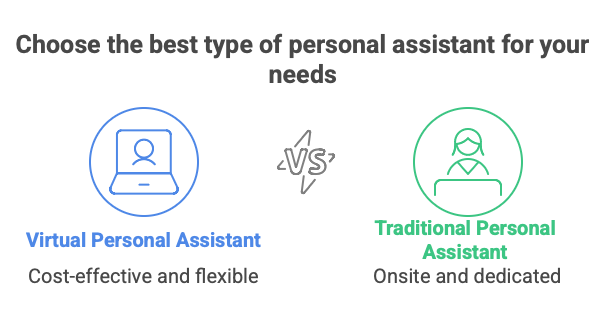
What Makes a Virtual Personal Assistant Different?
A standard assistant handles tasks. A virtual personal assistant manages your day as a system. They don’t just respond to requests; they structure your time, reduce decision fatigue, and keep both your professional and personal responsibilities moving without constant input.
That distinction matters: You don’t lose time on big decisions. You lose it on hundreds of small ones. A virtual personal assistant removes those small decisions entirely.
Thus, an executive lifestyle management serves as the bridge between professional efficiency and personal well-being. Unlike standard administrative support, this approach treats your daily logistics as a cohesive ecosystem. By implementing executive lifestyle management, your virtual PA ensures that international travel, family obligations, and high-stakes business meetings move in sync without creating friction or context-switching penalties.
This role often mirrors that of a chief of staff, where the focus shifts from “doing” to “owning” the outcome. You don’t lose time on big decisions; you lose it on hundreds of small ones. A VPA removes those small decisions entirely.
What a Virtual Personal Assistant Actually Does
A personal virtual assistant operates across two core areas: executive support and personal life management.
Executive Admin and Workflow Management
They control the flow of your workday by implementing Standard Operating Procedures (SOPs) for your communications.
- Inbox triage and email filtering
- Calendar management and conflict resolution
- Meeting coordination and follow-ups
- Daily agenda preparation
Example:
Instead of checking emails all day, you receive a structured daily summary with only the items that require decisions. What used to take 2–3 hours becomes one focused session. This is the Human-in-the-Loop (HITL) model in action—using a professional to filter and optimize the data before it reaches you. This exact system is highlighted by Aristo clients, where assistants consolidate emails, messages, and tasks into a single daily view to speed up decision-making.
Personal and Lifestyle Management
This is where a virtual PA differs from a typical assistant.
They manage:
- Travel planning and itinerary coordination
- Personal appointments and scheduling
- Household logistics and reminders
- Purchases, bookings, and life admin
Example:
A last-minute trip requires flights, accommodation, transport, and calendar adjustments. A VPA handles the entire workflow. You approve, they execute.
You don’t switch contexts. You stay focused.
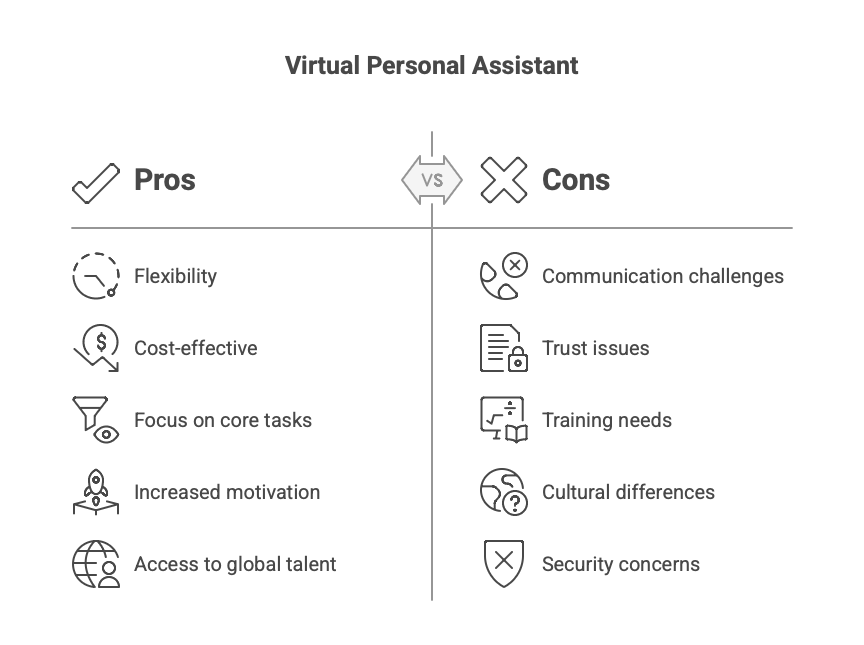
How a Virtual Personal Assistant Works With You
A virtual personal assistant integrates directly into your daily workflow using structured tools. They communicate through Slack or WhatsApp, manage scheduling through Calendly, and organize tasks in tools like Trello or Asana. They also handle secure access using tools like password managers and controlled permissions, ensuring sensitive information stays protected.
This creates a simple operating model:
- You define priorities
- They manage execution
- You only step in for decisions
This structure allows for massive scalability. As your business grows, your virtual assistant scales your personal infrastructure to match your professional demands.
The Real Benefit: Reduced Decision Fatigue and Opportunity Cost
The biggest benefit of a virtual personal assistant is not task completion, it’s mental clarity.
High performers lose hours to micro-decisions:
- When to schedule meetings
- Which emails need replies
- How to organize the day
- When to handle personal obligations
Every minute you spend booking a flight or clearing your inbox carries a high opportunity cost that is time not spent on revenue-generating activities. By removing the layer of micro-decisions, you increase both focus and output. Clarity is a performance advantage.
Research and business insights consistently show that excessive small decisions reduce productivity and increase fatigue. By removing those decisions, you increase both focus and output. Remember: Clarity is a performance advantage.
The best virtual personal assistants don’t wait to be told what’s urgent; they apply priority management frameworks to make that call before it reaches you. Many work with the Eisenhower Matrix, sorting every incoming request by urgency and importance so that the things requiring your attention surface immediately and everything else gets handled, delegated, or scheduled without interrupting your focus. Layered alongside this, time blocking, pre-scheduling protected windows for deep work that low-priority requests can’t erode, becomes something your virtual PA actively manages and defends on your calendar, not something you have to fight for yourself. Diary management at this level isn’t just about booking meetings; it’s about designing the architecture of your day so your highest-value thinking happens when your energy is highest, not whenever a gap appears. That’s what genuine cognitive load management looks like in practice: not just fewer tasks, but a structured environment where the conditions for clear thinking are built in by default.
Time, Cost, and Efficiency
Hiring an in-house personal assistant comes with fixed costs, salary, equipment, office space, and management overhead.
A virtual personal assistant, especially one sourced from global talent hubs such as South Africa or the Philippines, delivers the same functional output with significantly lower overhead and greater flexibility.
According to Aristo Sourcing:
- In-house assistants can cost $55,000–$80,000 per year
- A virtual personal assistant can reduce that cost by up to 70% while remaining flexible and remote
But the real value is not cost, it’s time. Every hour you spend on admin is an hour not spent on growth, relationships, or strategy.
Security and Trust
A virtual personal assistant works closely with sensitive information. That requires structure.
Aristo addresses this through:
- Strict non-disclosure agreements
- Secure password-sharing systems
- Controlled access to accounts
- Fully vetted candidates with background checks
This allows you to delegate confidently without losing control.
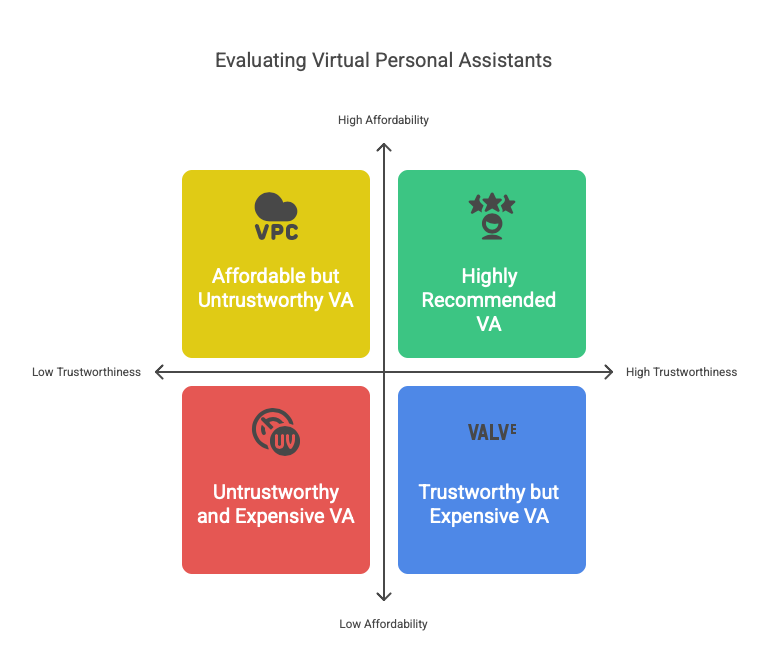
The Aristo Sourcing Advantage
Hiring a virtual personal assistant on your own requires sourcing, screening, interviewing, and onboarding, all of which take time and carry risk.
Aristo Sourcing removes that complexity by acting as your partner in Managed Virtual Assistant Services.
Aristo helps by:
- Source and pre-screen candidates
- Match assistants to your exact needs
- Ensure strong communication and cultural alignment
- Manage performance and retention over time
With over 500 placements and a 93% retention rate, the focus is not just hiring, it’s long-term fit and performance.
How to Get Started
Most people delay hiring because they think they need perfect systems. They don’t.
Start with clarity:
- List the tasks that interrupt your day
- Identify what does not require your decision-making
- Delegate those tasks first
A virtual personal assistant becomes more valuable over time as they learn your preferences, priorities, and routines.
More Freedom. Less Overwhelm.
Having a personal assistant isn’t just limited to the superrich. You can also hire a personal assistant to help you reclaim your time and boost your productivity.
The secret is to hire a virtual personal assistant. They can manage your calendar, inbox, or even your admin. Let Aristo Sourcing help you source a top virtual assistant that matches your priorities.
Ready to take back your time?
Book your free consultation with Aristo Sourcing and get paired with a virtual personal assistant who helps life run smoothly.
Frequently Asked Questions
How quickly can a virtual personal assistant get up to speed?
Most virtual personal assistants become productive within the first 3–7 days when you provide clear instructions and examples. With simple SOPs and recorded walkthroughs, they can take over recurring tasks almost immediately and refine execution over time.
Do virtual personal assistants work in your time zone?
Many VPAs offer flexible scheduling and can align with your working hours or provide partial overlap. Some clients even use time zone differences strategically to maintain progress outside standard business hours.
What tools do virtual personal assistants typically use?
VPAs work inside your existing systems. Common tools include Slack for communication, Asana or Trello for task tracking, and Google Workspace for documents, email, and calendar management.
How do you measure the performance of a virtual personal assistant?
You measure performance through outcomes, not activity. Key indicators include response time, task completion rates, calendar accuracy, and reduced workload on your side. Clear expectations and weekly check-ins keep performance consistent.
Can a virtual personal assistant handle confidential information?
Yes, provided proper systems are in place. Most VPAs work under non-disclosure agreements and use secure tools like LastPass or 1Password to manage access without exposing sensitive credentials.
What types of professionals benefit most from a virtual personal assistant?
Founders, executives, consultants, and remote teams benefit the most. Anyone who manages a high volume of communication, scheduling, or personal logistics will see immediate gains in focus and efficiency.
How is a virtual personal assistant different from automation tools?
Automation tools handle predefined workflows, but they lack judgment. A virtual personal assistant makes decisions, adapts to changes, and manages exceptions, especially in areas like communication, scheduling conflicts, and personal requests.
What happens if your needs change over time?
A strong virtual personal assistant evolves with your workflow. As your business grows, they can take on more responsibility or transition tasks to a specialist (such as a virtual associate) when deeper expertise is required. This flexibility supports long-term scalability.
