

A visitor who chats with your business before buying is 2.8 times more likely to convert than one who doesn’t, and chatters spend 60% more per order once they do. That single stat answers half the question in this title. The other half depends on what “chat agent” actually means, what one costs, and where to hire one.
A chat agent provides live customer support. A chat agent works directly with customers, not with automated scripts alone. A chat agent answers inquiries the moment they arrive, not hours later in an email queue. Those three relationships (provides, works with, answers) describe the whole job. Everything below builds on them: What the role involves, what it costs in the Philippines versus South Africa versus hiring onshore, how to decide if your business needs one, and how to become one yourself, including the path into Amazon’s virtual support program.
What Is a Chat Agent?
A chat agent is a person, not a bot. That distinction matters because the term gets used loosely, and half the confusion business owners run into starts right here.
A chat agent is a remote worker who handles live conversations through a chat interface: your website’s chat widget, a Facebook or Instagram inbox, WhatsApp, or a helpdesk tool like Zendesk, Intercom, Freshdesk, Gorgias, or LiveChat. The agent reads an incoming message, pulls up the customer’s order or account in your CRM, and replies in real time. Some of the work follows scripts and canned responses for common questions. Most of it doesn’t. A refund dispute, a shipping delay, a customer who’s angry about a double charge: none of that resolves with a script, and that’s precisely the work a chat agent exists to do.
An AI chatbot is a different thing entirely. A chatbot uses natural language processing to parse a customer’s message, match it against the intents it was trained on, and generate a reply without a person involved. When people say “chat agent” and mean a chatbot, they’re usually talking about automation. When this article says “chat agent,” it means the human on the other end of the conversation.
Chat Agent vs. AI Chatbot: The Hybrid Model That Actually Works
Every article on this topic eventually lands on “AI is fast but cold, humans are warm but expensive,” then stops there. That framing was already outdated by 2024. The businesses winning on customer experience in 2026 don’t pick a side. They run both, in a specific configuration called human-in-the-loop.
Human-in-the-loop means an AI system handles a task automatically until it hits a case it can’t resolve with confidence, then hands that case to a person. In chat support, that looks like this: the chatbot answers the first message, checks it against your FAQ and order data, and resolves it if it’s routine (“Where’s my order,” “What’s your return policy”). If the query falls outside what it can answer confidently, or the customer expresses frustration, it escalates the conversation to a live agent instead of guessing.
The reason this works better than either extreme is that AI chatbots now handle roughly 70 to 80% of incoming conversations without human involvement, which cuts the volume a chat agent needs to process. But 85% of consumers still want a human for anything at the complaint level, and adding a human handoff to an AI chatbot raises satisfaction rates by up to 35% while cutting churn by around 20%. Pure automation loses that 85%. Pure human staffing pays full agent wages for questions a bot answers in two seconds. The hybrid model keeps the cost savings of automation and the trust of a person, applied to the conversations that actually need one.
In semantic terms, human-in-the-loop escalates complex support tickets. That’s the relationship a chat agent’s job now sits inside, not “instead of AI” but “after AI.”
Do You Need a Chat Agent? A Decision Framework
The honest answer depends on the numbers you already have, not your gut feeling. Here’s what to check before you hire:
| Signal | What it means | What to do |
|---|---|---|
| Cart abandonment above 70% | You’re at the global average (70.22% in 2026), meaning most add-to-carts never convert. | Live chat reduces abandonment by roughly 9%, and AI-triggered chat prompts at checkout have cut desktop abandonment from 70.4% to 63.9% in enterprise trials. Worth testing. |
| First response time over 2 minutes | 53% of customers abandon a chat with no reply within 3 minutes, and every 30-second delay past the first cuts conversion probability by about 7% | You need dedicated coverage, not a shared inbox that someone checks between other tasks |
| Support requests over 100/week | Manageable by one general employee below this, unsustainable above it | A dedicated or part-time chat agent, human or hybrid, becomes cheaper than the lost sales and lost hours |
| CSAT below 80% on existing channels | Live chat runs an 88% satisfaction rating industry-wide, the highest of any support channel, against 61% for email. | Adding live chat as an option, staffed by a real person, closes that gap directly. |
| High refund or dispute volume | These require judgment, empathy, and de-escalation that scripted bots can’t provide | This is exactly the segment a human chat agent should own, with AI handling the routine tier underneath. |
If two or more of these apply to your business, the data says a chat agent pays for itself faster than most other hires you’d consider.
Industries That Rely on Chat Agents
Ecommerce runs the largest share of chat agent hiring, because cart abandonment and shipping questions are the two most common ticket types online retail generates, and both respond directly to fast chat replies. SaaS companies use chat agents for onboarding questions and bug reports that need a human to triage before they reach engineering. Hospitality and travel businesses’ staff chat during booking windows, when a delayed answer means a lost reservation. Healthcare practices use HIPAA-aware chat agents for appointment scheduling and insurance questions that patients don’t want to phone in for. Financial services use chat for account questions that carry too much liability for an unsupervised bot to handle alone. Private schools and universities staff chat agents seasonally, during enrollment periods, to answer admissions questions in real time instead of losing prospective students to a slow email reply.
The pattern across all six: chat agents integrate with the CRM or helpdesk platform your team already uses, and they lower the cost per ticket compared to phone support, which takes longer per interaction and cannot run more than one call at a time.
Chat Agent Job Description
A chat agent’s core responsibilities:
- Respond to inbound chats within an SLA (service level agreement), typically 30 to 60 seconds for the first reply
- Resolve tier-1 and tier-2 tickets directly: order status, returns, billing questions, account access
- Escalate tier-3 issues (legal complaints, fraud, technical bugs) to a specialist or manager
- Log every conversation in the CRM or helpdesk platform (Zendesk, Intercom, Freshdesk, HubSpot Service Hub) with accurate tags for reporting
- Route qualified sales leads to the sales team when a chat reveals buying intent
- Handle multiple concurrent chats, usually three to six at once, without dropping quality on any of them
- Follow up on unresolved tickets until they are closed
- Flag recurring complaints to management as product or policy feedback
Skills Required
- Typing speed of 40 to 60+ words per minute with high accuracy, since slow typing directly increases handle time and abandonment
- Written English fluency: correct grammar, tone control, and the ability to de-escalate a frustrated customer in text with no vocal tone to help
- Working knowledge of at least one helpdesk or live chat platform (Zendesk, Intercom, LiveChat, Gorgias, Freshdesk)
- Basic CRM data entry and navigation
- Multitasking across simultaneous conversations without losing context on any one thread
- Product knowledge specific to the business, learned during onboarding
- Patience and emotional control under repeated, sometimes hostile, customer messages
Career Path
Most chat agents start as a Tier 1 agent handling routine tickets. After 6 to 12 months, strong performers move to Tier 2, handling escalations and more technical or high-value accounts. From there, the path splits: some move into Team Lead or Quality Assurance roles, reviewing chat transcripts and training newer agents. Others move into Chat Operations or Support Manager roles, owning SLA targets and staffing schedules for a whole team. The ceiling above that is Customer Experience Manager, which usually requires two to four years of support experience plus data literacy around CSAT, AHT, and ticket-volume forecasting.
Chat Agent Jobs
Demand for remote chat agents has grown alongside ecommerce and SaaS adoption, and the role now exists in two structures: In-house (hired directly by the company whose product you support) and outsourced (hired through a BPO or staffing agency and placed with a client business). Most listings today specify “remote” or “work from home” by default; onsite call-center chat roles have become the exception rather than the rule. Shifts commonly rotate to cover customer time zones, so a single hire rarely works a fixed 9-to-5 unless the employer serves one region exclusively.
Chat Agent Salary: Philippines vs. South Africa vs. Onshore
This is where outsourcing math gets concrete. Below are the 2026 monthly ranges, converted to approximate USD:
| Region | Entry-level (monthly) | Experienced (monthly) | Approx. hourly (USD) |
|---|---|---|---|
| Philippines | ₱24,000–28,000 (~US$430–US$500) | ₱25,000–38,000 BPO scale (~US$445–USUS$680) | ~US$2.50–US$4.00 |
| South Africa | R6,500–9,500 (~US$350–US$515) | R16,000–22,000+ (~US$865–US$1,190+) | ~US$2.00–US$6.50 |
| United States | N/A (typically salaried or higher hourly floor) | US$39,000–$46,000/year | US$18.00–US$22.00 |
| United Kingdom | N/A | ~£25,420/year | ~£12.00–£13.00 |
Two things stand out. First, a fully experienced chat agent in either the Philippines or South Africa costs roughly 70 to 85% less than an equivalent onshore U.S. hire, based on the ranges above. That gap is the entire economic case for outsourcing this role, and it holds even before accounting for the fact that a remote hire doesn’t need desk space, equipment, or benefits overhead. Second, the Philippines and South Africa aren’t interchangeable, and picking between them should depend on who your customers are.
The Philippines has a more mature outsourcing infrastructure for this specific role: A BPO industry built over two decades, deep bench strength in high-volume chat operations, and shift patterns that align naturally with U.S. and Asia-Pacific business hours, which supports genuine 24/7 coverage without paying overnight-shift premiums everywhere. South Africa runs on GMT+2, which overlaps UK and EU business hours far more cleanly, and its agents typically carry a neutral, Western-facing accent and cultural fluency that suits brands selling into the UK and Europe. Neither region is “the cheap one” and the other “the good one.” They’re cheaper than onshore for the same reason (lower cost of living translates to lower wages for equivalent skill), and they serve different customer bases well.
Outsourced chat agents lower cost per acquisition for exactly this reason: The support cost per resolved ticket drops without the resolution quality dropping alongside it, provided the agent is properly vetted.
Work From Home Chat Agent
A work-from-home chat agent needs less overhead than most remote roles but can’t skip a few non-negotiables: Stable broadband (25 Mbps minimum, since a dropped connection mid-chat looks identical to abandoning a customer), a quiet space free of background noise for any voice check-ins, a working headset, and a backup power or mobile hotspot option in regions where outages happen. Most employers issue a laptop or reimburse one; some require the agent’s own hardware to meet minimum specs.
The trade-offs run both directions. Agents get no commute, and schedules often flex around personal life more than a call-center floor ever allowed. But the job also isolates in a way office-based support doesn’t, and it demands genuine self-discipline: nobody is watching over a shoulder to catch a missed chat.
Live Chat Agent
“Live” is the operative word. A live chat agent works synchronously, meaning the customer is watching the screen in real time, waiting for a reply, unlike email support, where a four-hour response window is normal. That changes the job. A live agent typically juggles three to six concurrent conversations in a queue, replying to each within the seconds a customer is willing to wait before assuming nobody’s there. Average handle time, the industry metric for how long a single ticket takes start to finish, runs a few minutes for routine questions and considerably longer for anything requiring an account lookup or a supervisor. The job uses macros and canned responses for repeat questions, but a good live agent edits them enough that the reply reads as if a person wrote it, because customers notice when it doesn’t.
Virtual Chat Agent Jobs
“Virtual” describes the employment structure more than the work itself, and three structures currently exist. Freelance or gig-platform agents (Upwork, Fiverr) work project to project, with income that swings month to month and no vetting layer between the worker and the client beyond the platform’s own reviews. Staffing-agency placements put a vetted, pre-screened agent directly onto a client’s team, with the agency handling recruitment and the client managing day-to-day work once placed. Direct-hire remote employees join a company’s internal support team as a full employee, with the deepest product integration but the highest recruiting and cross-border payroll overhead for the employer.
For a business owner choosing between these, the trade-off is simple: Freelance platforms offer flexibility with the least reliability, agency placement offers vetted talent without doing the sourcing yourself, and direct hiring offers full control at the highest administrative cost.
Live Agent Chat Jobs: Where to Find Them
Job seekers looking for live chat roles typically search four channels. General job boards (Indeed, LinkedIn, Virtual Staff South Africa) list both in-house and BPO openings. Region-specific boards matter more than people expect: OnlineJobs.ph and Jobstreet dominate Philippine listings, while Careers24 and Pnet are the equivalent in South Africa. BPO companies (Concentrix, TTEC, Alorica, TaskUs) hire in bulk on a rolling basis. Staffing and recruitment agencies that specialize in remote placement, including Aristo Sourcing, source and vet candidates before presenting them to a hiring business, which shortcuts the resume-screening work for both sides.
Application processes for this role almost always include a typing test, a written grammar or comprehension assessment, and a live chat simulation where the candidate handles a mock customer scenario in real time. Candidates who prepare for that simulation specifically, rather than just polishing a resume, tend to clear it faster.
How to Become a Chat Agent
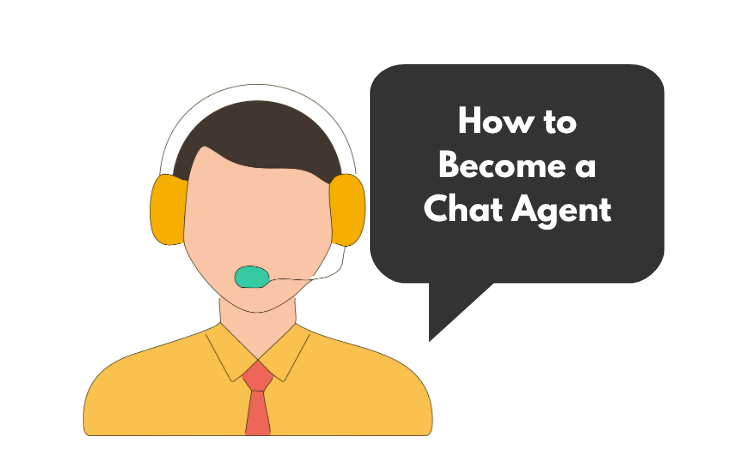
Start with the mechanical skills: Typing speed and written English accuracy, since both get tested before anything else. Learn one major helpdesk platform well enough to navigate it without hesitation; Zendesk and Intercom both offer free trial environments worth practicing in. Gain any customer-facing experience you can, even outside chat specifically, since it demonstrates the patience and communication skills hiring managers screen for. Build a resume that leads with metrics if you have them: chats handled per shift, CSAT scores, and resolution rates. Apply broadly, and treat the practical chat simulation as part of the interview that actually decides the outcome, not the resume screen. Most agents start at Tier 1 and specialize from there once they’ve built a track record.
How to Become a Chat Agent for Amazon
Amazon hires for its Virtual Customer Service program on an ongoing basis, and the role is built for remote work from the start. The baseline requirements: a high school diploma or equivalent, basic computer navigation skills across multiple systems at once, and typically at least a year of prior chat or customer service experience, though this varies by listing. Typing speed matters here specifically: Amazon expects 40+ words per minute with accuracy, since agents move between order tracking, returns, and account systems mid-conversation. Strong written communication, patience under repeated similar questions, and comfort with multitasking across tools round out the required skill set.
The application path runs through Amazon’s own jobs site or an authorized partner BPO, followed by an assessment (typing and situational judgment), a virtual interview, and a paid training period before live customer contact begins. Reported pay for these roles runs roughly US$15 to US$21 an hour for standard virtual customer service, with some listings reaching US$20 to US$28 an hour for specialized or senior positions. Equipment policies vary by program: Some provide a company laptop, others require the candidate’s own hardware meeting minimum specs.
Hiring a Chat Agent Through Aristo Sourcing
Aristo Sourcing recruits and vets remote chat agents and customer service VAs sourced from the Philippines and South Africa, matching businesses with candidates who’ve already cleared typing, writing, and live-scenario assessments before you ever see a resume. The economics above hold regardless of who does the hiring. What an agency changes is the time and risk on your side of it: You skip the sourcing, screening, and typing-test logistics, and you start with a candidate who’s already been checked against the role.
If your business shows two or more of the signals in the decision framework above, that’s the point to have a real conversation about it, rather than keep guessing. Book a consultation with Aristo Sourcing to talk through what a chat agent hire would look like for your specific ticket volume and budget.
FAQ
What does a chat agent do?
A chat agent answers customer questions in real time through a chat interface such as a website widget, WhatsApp, or social media inbox. The role covers order status, returns, billing questions, and account issues, with more complex or sensitive cases escalated to a specialist. Most chat agents work through a CRM or helpdesk platform like Zendesk or Intercom and are measured on response time, resolution rate, and customer satisfaction score.
How do I become a chat agent?
Build fast, accurate typing and strong written English first, since both get tested in almost every hiring process. Learn a common helpdesk platform, gain any customer-facing experience you can, and apply through general job boards, region-specific boards, BPO companies, or a staffing agency. Most hiring processes include a live chat simulation, and preparing specifically for that step matters more than polishing a resume.
What skills are needed for chat agents?
Typing speed of 40 to 60+ words per minute, fluent written English with strong grammar and tone control, working knowledge of at least one CRM or helpdesk platform, the ability to multitask across several simultaneous conversations, and patience under pressure from frustrated customers. Product knowledge specific to the employer is typically trained on the job rather than required upfront.
