

Sales teams often focus on closing techniques, deal negotiation, and revenue forecasting. Yet one role quietly determines whether those activities ever happen: the sales setter.
A strong sales pipeline depends on fast lead qualification, consistent outreach, and well-scheduled discovery calls. When these steps break down, opportunities disappear long before a sales representative has a chance to present a solution.
This is where a sales setter becomes critical.

What Is a Sales Setter?
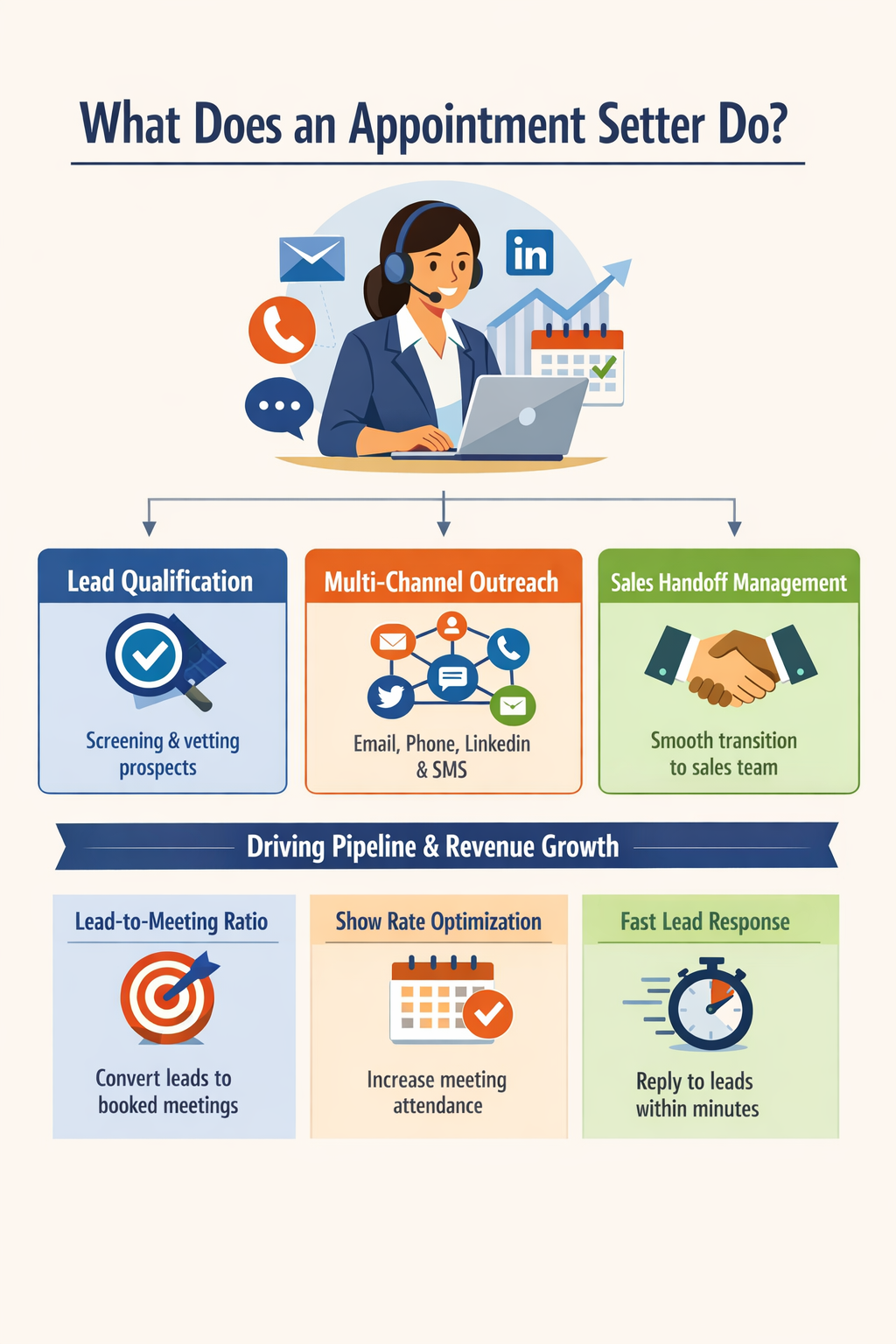
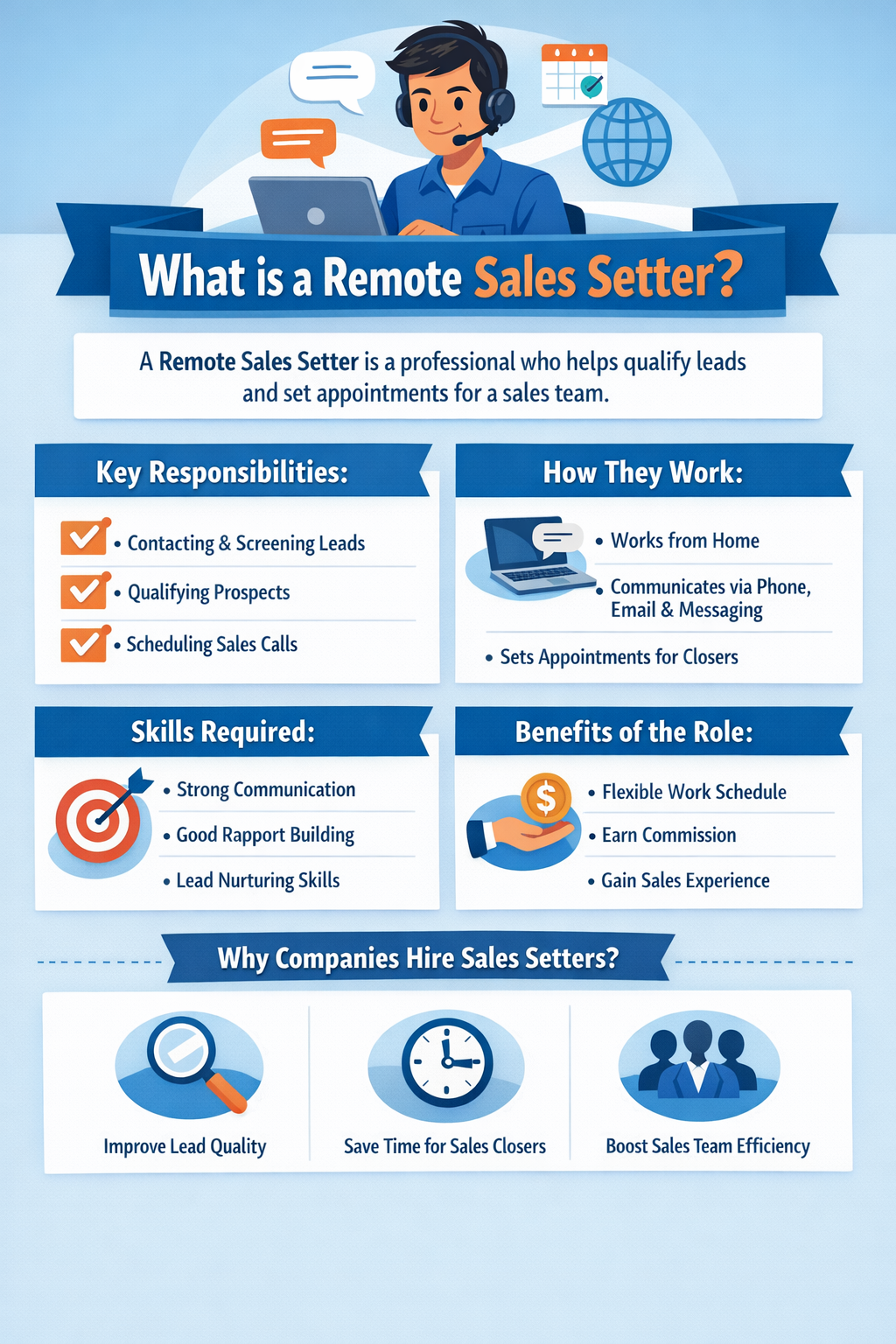
A sales setter, often called an appointment setter, manages the early stage of the sales process. Their primary responsibility is lead qualification—identifying whether a prospect fits the company’s Ideal Customer Profile (ICP) and scheduling a discovery call with a closer or account executive.
Instead of asking senior salespeople to chase cold prospects, setters handle the transition from Marketing Qualified Leads (MQLs) to Sales Qualified Leads (SQLs).
Their daily activities typically include:
- Responding to inbound leads quickly to prevent lead decay
- Conducting short qualification conversations
- Identifying budget, authority, need, and timeline
- Booking discovery calls on the sales team’s calendar
- Updating the CRM system with prospect details
In simple terms, setters protect one of the most valuable resources in any business: the time of your closers.
Sales strategist Aaron Ross summarized this model clearly:
“Salespeople should spend their time selling. Prospecting and qualification should be systemized.”
Setters make that system possible.
Core Responsibilities: From Qualification to CRM Management
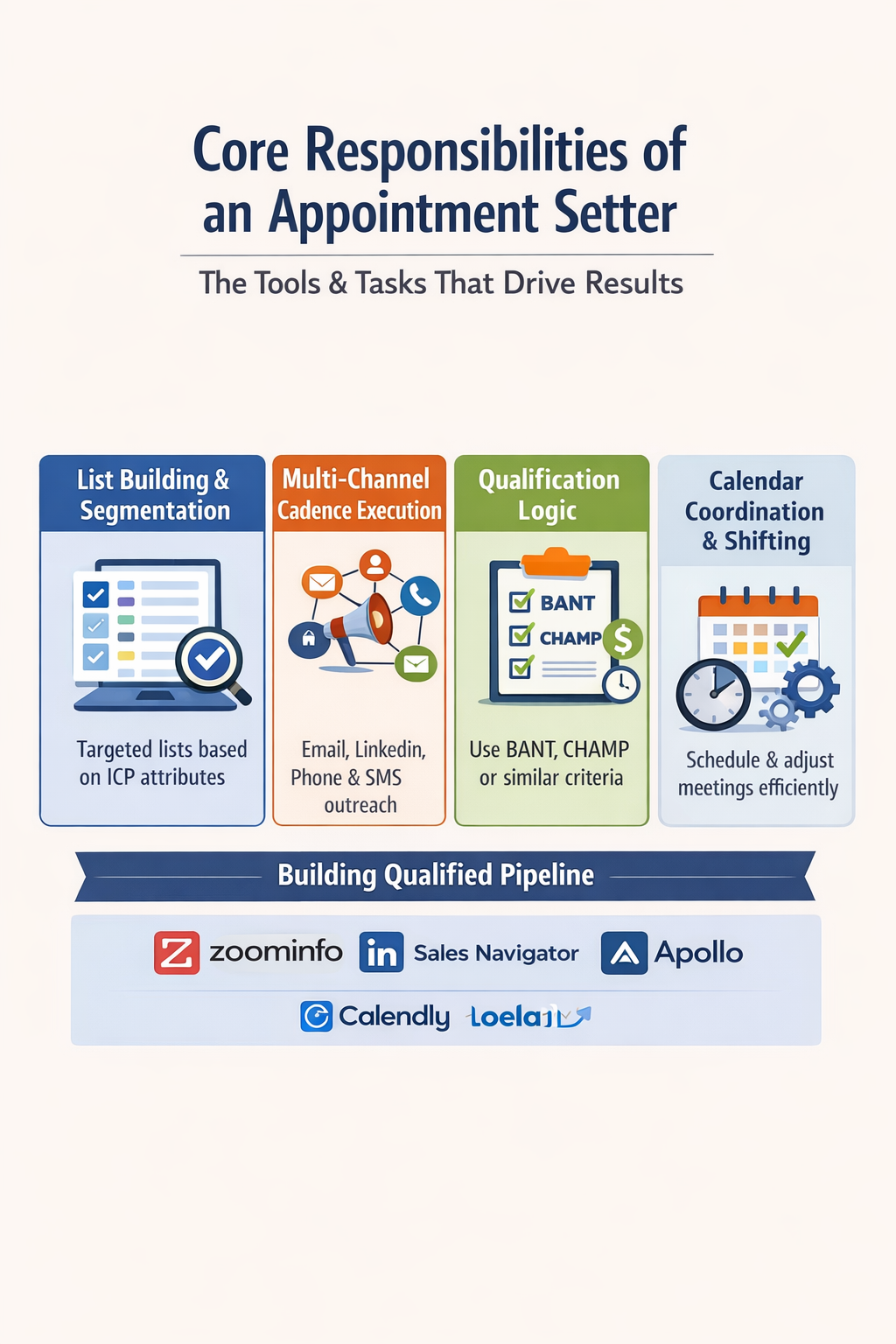
A sales setter performs several operational functions that keep the pipeline healthy and predictable.
Lead Qualification
Not every inquiry represents a real opportunity.
Research from MarketingSherpa shows that 61% of leads sent to sales are not ready to buy. Without proper qualification, sales teams waste hours on conversations that never convert.
Setters filter prospects using criteria such as:
- Industry Fit
- Company Size
- Budget Range
- Immediate Problem or Need
- Decision-Making Authority
Only qualified prospects move forward to a discovery call.
Outbound Prospecting
Many setters also run outbound prospecting campaigns through:
- LinkedIn Outreach
- Email Sequences
- Cold Calling
- Follow-Up Messages to Older Leads
Consistent outreach prevents pipeline stagnation and increases meeting volume.
Discovery Call Scheduling
Once a prospect qualifies, the setter schedules a discovery call with the appropriate salesperson.
A well-trained setter reduces calendar friction by:
- Matching prospects with the right sales representative
- Confirming meeting availability
- Sending reminders
- Reducing no-show rates
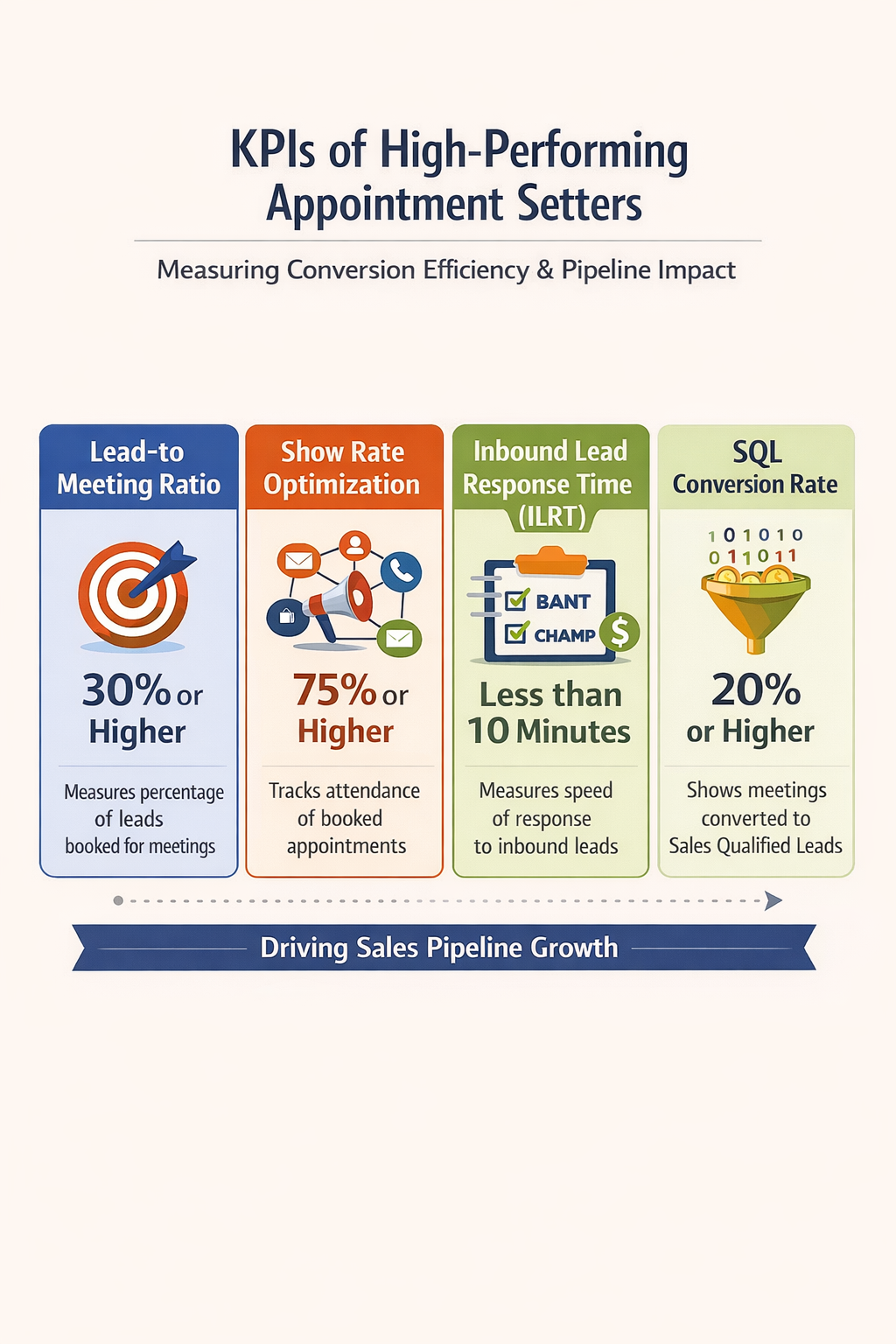
Sales teams frequently see no-show rates drop by 20–30% when setters confirm appointments ahead of time.
CRM Hygiene
One of the most overlooked responsibilities is CRM management.
A setter documents:
- Conversation Summaries
- Qualification Notes
- Pain Points and Goals
- Follow-Up Requirements
Clean CRM data improves forecasting accuracy and allows marketing teams to refine targeting strategies.
How Setters Improve Pipeline Velocity
Pipeline velocity measures how quickly prospects move through the sales funnel.
A setter accelerates this process in three ways.
Faster Lead Response
A study by Harvard Business Review found that companies responding to inbound leads within five minutes are 21 times more likely to qualify the prospect.
Setters ensure speed.
Reduced Sales Friction
Closers focus on negotiation and solution design. They avoid spending time on basic qualification calls.
This shift dramatically increases the number of revenue conversations a sales team can handle.
Consistent Follow-Ups
Many opportunities disappear simply because no one follows up.
Setters maintain consistent communication with prospects who:
- Requested information
- Missed meetings
- Needed time to review proposals
This follow-up process prevents lost deals.

Why Businesses Hire Remote Sales Setters
Remote work has expanded access to global sales support talent. Many companies now hire setters remotely to increase pipeline capacity without expanding internal overhead.
Two major talent hubs stand out: South Africa and the Philippines.
Cost Efficiency and CAC Reduction
Customer acquisition cost (CAC) increases when senior sales staff spend time prospecting instead of closing.
A remote setter allows companies to scale outreach while maintaining lower operational costs.
Strong Communication Skills
Professionals in South Africa and the Philippines are widely recognized for strong English communication and customer service experience. This matters in early sales conversations where clarity and trust determine whether prospects continue the process.
Tech-Stack Readiness
Remote setters commonly work with modern sales tools such as:
- HubSpot
- Salesforce
- LinkedIn Sales Navigator
- Calendly
- Apollo
- Slack
This familiarity allows businesses to integrate new setters quickly into their existing sales stack.
Time Zone Coverage
Remote setters also enable extended outreach windows.
For example:
- US companies can hire setters working overnight to respond to inbound leads instantly.
- European companies can extend outreach coverage across multiple time zones.
Example: How a Setter Changes a Sales Pipeline
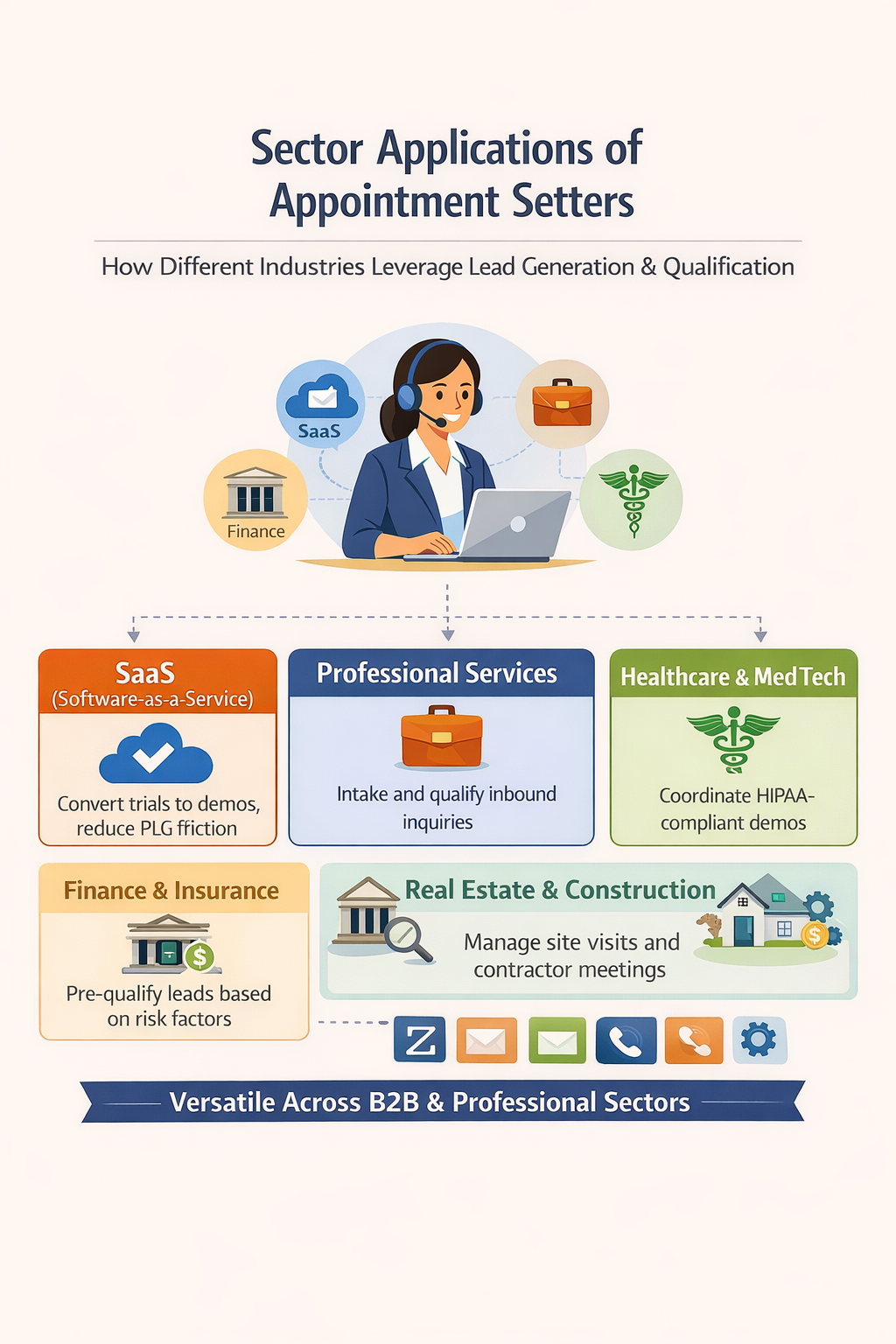
Consider a SaaS company generating 200 inbound leads per month.
Without a setter:
- Sales representatives respond inconsistently
- Many leads wait hours or days for a reply
- Discovery calls compete with closing activities
With a dedicated setter:
- Leads receive responses within minutes
- Qualification calls happen immediately
- Only SQL-level prospects reach the closers
The result: higher meeting volume, better conversion rates, and improved pipeline forecasting.
In high-performing outsourcing models, a dedicated setter can also help maintain a 93% success rate in ensuring Marketing Qualified Leads successfully transition into attended discovery calls, significantly reducing no-shows and pipeline leakage.

The Modern Sales Stack Still Needs Human Qualification
Automation tools can identify potential prospects.
They cannot replace human judgment.
Setters interpret tone, ask probing questions, and identify subtle buying signals that automated workflows miss.
A prospect may appear unqualified on paper but reveal a critical pain point during conversation. That nuance often determines whether a deal progresses.
This is why many high-performing sales organizations separate roles:
- Setters handle qualification and outreach
-
Closers focus on negotiation and revenue generation
The structure improves efficiency across the entire funnel.
A Strategic Role in the Sales Process
A healthy pipeline depends on more than lead generation.
It requires structured qualification, disciplined follow-up, and accurate CRM data.
Sales setters provide that structure.
They transform scattered leads into organized opportunities and ensure that closers spend their time where it matters most: high-value sales conversations.
For companies looking to scale revenue without overwhelming their internal sales team, hiring a remote sales setter, particularly from talent-rich hubs like South Africa, is one of the most effective ways to build a predictable, high-velocity sales engine.
Scale Your Pipeline with a Dedicated Sales Setter
Stop letting high-value opportunities slip through the cracks due to slow response times or inconsistent qualification. By integrating a professional sales setter into your workflow, you empower your closers to focus exclusively on revenue-generating conversations while maintaining a predictable, high-velocity engine of Sales Qualified Leads. Whether you are looking to slash your overhead costs or expand your outreach across global time zones, our specialized talent networks in South Africa and beyond are ready to transform your sales process. Book a free consultation today to learn how a remote sales setter can optimize your CRM and accelerate your business growth.
Frequently Asked Questions
What is the difference between a sales setter and a sales closer?
A sales setter (often categorized as an SDR or BDR) focuses on the “top of the funnel,” specializing in lead qualification, initial outreach, and appointment scheduling. A sales closer (Account Executive) takes over once a prospect is deemed a Sales Qualified Lead (SQL), focusing on product demonstrations, overcoming objections, and final negotiations to secure a contract.
How does a sales setter reduce Customer Acquisition Cost (CAC)?
Setters reduce CAC by filtering out uninterested or low-budget leads before they reach high-salaried senior sales staff. By ensuring that “closers” only spend time on high-probability deals, businesses maximize their ROI on payroll and prevent expensive talent from performing administrative prospecting tasks.
Why is “Lead Decay” a risk for sales teams without a dedicated setter?
Lead decay occurs when the likelihood of converting a prospect drops significantly as time passes from the initial inquiry. Research shows that responding within five minutes is critical; a dedicated setter eliminates this “speed-to-lead” gap, capturing intent while it is at its peak.
What is the role of a sales setter in improving CRM data integrity?
Setters act as the primary gatekeepers of data. They document the initial “pain points,” budget constraints, and decision-making structures of a prospect. This clean CRM hygiene ensures that when a closer steps in, they have a comprehensive roadmap of the prospect’s needs, leading to more personalized and successful sales presentations.
Can a sales setter handle both inbound and outbound lead generation?
Yes. While inbound setters focus on responding to marketing-generated leads (MQLs), outbound setters proactively hunt for new business through LinkedIn, cold calling, and email sequences. Many high-growth companies use a hybrid model where setters manage the entire “pre-discovery” phase of the journey.
What are the benefits of hiring remote sales setters in South Africa or the Philippines?
These regions offer a unique combination of high English proficiency, cultural alignment with Western markets, and cost-efficiency. Additionally, hiring across these time zones allows for “follow-the-sun” coverage, ensuring that inbound leads are qualified instantly, even outside of standard US or European business hours.
How do sales setters help lower “no-show” rates for discovery calls?
Setters manage the “micro-commitment” phase. By sending personalized reminders, confirming the agenda beforehand, and establishing a human connection during the qualification call, they build the rapport necessary to ensure the prospect actually attends the scheduled meeting with the closer.
What technical tools are essential for a modern sales setter?
A proficient setter must be adept at using a “Sales Stack” which typically includes a CRM (HubSpot or Salesforce), prospecting tools (LinkedIn Sales Navigator or Apollo), scheduling software (Calendly), and communication platforms (Slack and VoIP systems).
