

In 2024, 91% of businesses use video as a marketing tool, according to Wyzowl’s State of Video Marketing report. That number climbed from just 61% in 2016. The shift isn’t accidental. Video outperforms every other content format across conversions, retention, and organic reach, and the data gets more compelling every year.
This guide unpacks the real benefits of video marketing with specific numbers, platform-level tactics, and expert perspectives. It also explains how to execute a video strategy without hiring an expensive in-house production team.
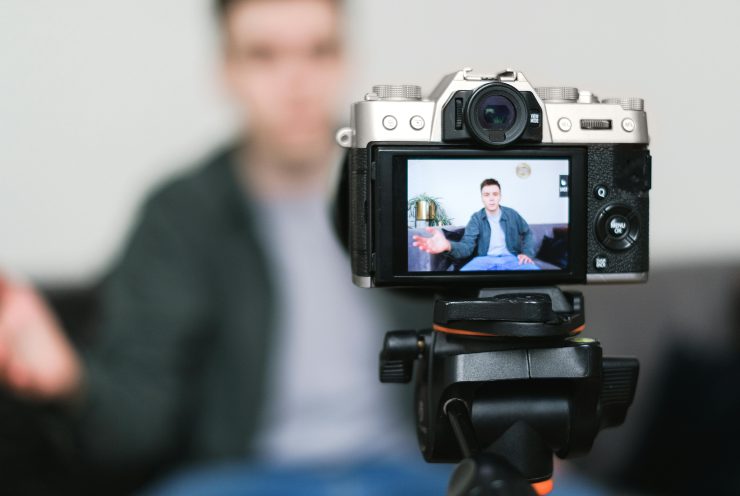
Video Marketing Builds Revenue Faster Than Any Other Channel
Aberdeen Group research found that companies using video grow revenue 49% faster than companies that don’t. That figure alone explains why brands from solo operators to Fortune 500 companies have made video a core pillar of their content strategy.
The mechanism is straightforward. Video compresses the buyer’s journey. It builds trust, demonstrates value, and handles objections in ways that text cannot replicate. Forrester Research calculated that one minute of video communicates the equivalent of 1.8 million words. Video doesn’t just inform. It persuades.
Marketing strategist Ann Handley framed it directly: “Video is the most powerful tool in a marketer’s arsenal because it shows rather than tells. Showing builds trust faster than any other medium.”
Wyzowl’s 2024 report reinforced that with a direct purchase metric: 89% of consumers say watching a video convinced them to buy a product or service. Not influenced or nudged. Convinced. That’s a purchase-ready signal, not a brand awareness signal.
The ROI case for video doesn’t rest on a single data point. It compounds. Each view builds familiarity. Each familiarity touchpoint shortens the sales cycle. Biteable research found that 74% of marketers report that video delivers a better ROI than static imagery. Brands that invest in video consistently outperform those that treat it as an occasional tactic.
Higher Conversion Rates: The Numbers Behind the Click
The conversion rate lift from video appears at every stage of the funnel.
On landing pages, embedding a video increases conversions by up to 80%, according to Unbounce. Visitors who watch a video spend more time on the page, which signals quality to Google and raises the probability of a form fill or purchase.
In email campaigns, including the word “video” in a subject line raises open rates by 19% and click-through rates (CTR) by 65%, according to HubSpot. Marketers who add a video thumbnail inside the email body see click rates climb further because the visual cue creates curiosity. Campaign Monitor found that video in email lifts CTR by 300% in some sectors.
On product pages, Zappos reported that customers who watched a product video were 6 to 30% more likely to buy than those who didn’t. When a customer sees a product in motion, purchase hesitation drops because uncertainty drops with it.
These aren’t marginal gains. An 80% lift on a landing page converting at 2% takes it to 3.6%. At scale, that difference separates a campaign that breaks even from one that generates real profit. Animoto reported that 93% of brands acquired a new customer because of a video on social media. The mechanism: video creates memory, memory creates intent, intent creates purchase.
Short-Form vs. Long-Form Video: Choosing the Right Format
One of the most common mistakes brands make is treating all videos as the same format. Short-form and long-form videos serve different purposes, and the best-performing brands deploy both with intention.
| Format | Ideal Platforms | Core Objective | Conversion Mechanism |
|---|---|---|---|
| Short-Form (<60s) | TikTok, Reels, YouTube Shorts | Top-of-Funnel Reach & Awareness | Algorithmic discovery driven by the first 2-second viewer hook |
| Long-Form (5–20m+) | YouTube, LinkedIn | Authority Building & Consideration | High-intent search queries and deep-dive solution mapping |
TikTok passed 1 billion active users faster than any platform in history. Its algorithm rewards content quality over follower count, which means a brand with 500 followers can generate millions of views on a well-executed 30-second clip. That democratizes reach in a way paid advertising rarely replicates at an equivalent cost.
YouTube’s 2 billion+ logged-in monthly users make it the second-largest search engine in the world. People visit YouTube with intent. They search for solutions. Think With Google found that 70% of viewers purchased from a brand after seeing it on YouTube. Long-form captures buyers who are already researching, which produces significantly higher purchase intent than discovery-mode social content.
The practical framework: use short-form to generate awareness and drive traffic. Use long-form to convert that traffic and build lasting authority.
Video SEO: How Video Improves Your Search Rankings
Google indexes video content. A video on a page increases the probability of that page earning a featured snippet, appearing in Google’s video carousel, or ranking in standard organic results. But video SEO requires intentional execution, not just uploading a file.
Rand Fishkin, founder of Moz and SparkToro, framed the opportunity clearly: “Video creates a content surface area advantage. The same idea expressed in video and text reaches two completely different audiences through two completely different channels.”
Core video SEO factors:
- Transcriptions and captions. Search engines read text, not video. Adding a full transcript makes every spoken word crawlable. YouTube auto-generates captions, but correcting them improves accuracy and indexation quality.
- VideoObject schema markup. Implementing the VideoObject schema tells Google exactly what your video contains, its duration, thumbnail URL, and upload date. Pages with video schema earn rich results at a measurably higher rate than those without.
- Thumbnail optimization. A custom thumbnail functions as the headline of your video in search results. Bright colors, faces with clear expressions, and legible text consistently outperform auto-generated frames. Wistia’s internal research found that custom thumbnails increase play rates by up to 43%.
- Video sitemaps. Submitting a video sitemap through Google Search Console accelerates indexation, particularly for newer sites with limited crawl budgets.
- Platform choice. Hosting on YouTube and embedding on your site gives you presence on both platforms. Hosting natively on your site and blocking embedding keeps authority consolidated but limits viral distribution.
Wordstream research found that social video generates 1,200% more shares than text and image content combined. That share velocity generates backlinks organically, which reinforces the SEO value of well-distributed video content.

User Retention: People Remember What They Watch
The retention gap between video and text is significant. Research from Wistia shows that viewers retain 95% of a message when they watch it in a video compared to just 10% when they read text. That gap explains why product demo videos, explainer videos, and tutorial content generate such high downstream purchase rates.
Human memory encodes information more durably when it arrives through multiple channels simultaneously. Video combines audio, visual motion, and subtitled text into a single experience. Each channel reinforces the others.
This retention advantage compounds over time. A customer who watched a product demo three weeks ago remembers how the product works. A customer who skimmed a feature list does not. Video accelerates the familiarity that drives conversion, and it does so passively, without requiring the viewer to revisit the content.
Brands that run retargeting campaigns specifically to video viewers see this data translate directly into revenue. A viewer who watched 75% of a product video is orders of magnitude more likely to convert than someone who clicked a display ad once and bounced.
Video and the Buyer’s Journey
Video accelerates every stage of the funnel. It doesn’t just support one phase. It works across all three.
- Awareness stage. Short-form content on TikTok, YouTube Shorts, and Instagram Reels introduces your brand to audiences who have never heard of you. The algorithm distributes content based on engagement, not ad spend.
- Consideration stage. Explainer videos, product comparisons, and tutorial content address the specific objections and questions buyers research before making a decision. A buyer choosing between two CRM platforms will watch a 10-minute comparison video before scheduling a demo.
- Decision stage. Customer testimonial videos, case study walkthroughs, and live demos remove the final layer of uncertainty. Seeing a real person describe a real result builds the trust that closes deals. Forbes reported that 65% of executives visit a vendor’s website after watching a relevant video online.
Each stage requires a different video format and a different distribution channel. Brands that map their video strategy to the buyer’s journey outperform those that publish content without a conversion function attached.
Platform Strategy: Where to Publish for Maximum ROI
Publishing video to the right platform matters as much as the video itself. Each platform rewards different formats, lengths, and posting cadences.
- YouTube. Best for search-driven content and long-form authority building. Optimize titles and descriptions with specific keyword phrases. Use chapters to improve watch time and navigation. Post at a minimum twice per month to maintain consistent algorithmic recommendations.
- TikTok. Best for brand discovery and broad organic reach. The first two seconds must hook the viewer, or they scroll. Use trending audio, on-screen text captions, and a direct call to action in the caption. Brands that post three to five times per week see compounding algorithmic distribution.
- Instagram Reels. Best for lifestyle content, behind-the-scenes clips, and repurposed short-form content. Instagram’s algorithm currently prioritizes Reels over static posts, making it the highest-leverage organic format on the platform.
- LinkedIn. Best for B2B thought leadership, case studies, and recruitment content. LinkedIn video posts generate 5x more engagement than text posts, according to LinkedIn’s own data. Autoplay with the sound off is the default experience on LinkedIn, making subtitles non-negotiable for every piece of video content on the platform.
- Email. A video thumbnail in an email campaign consistently outperforms a static image. Link the thumbnail to a landing page or YouTube watch page, as most email clients don’t play embedded video natively.
Thumbnail Optimization: The Click Happens Before the Play
Marketers invest hours optimizing headlines, ad copy, and subject lines. Most underinvest in thumbnails, which function as the cover page for every video asset.
A thumbnail determines whether a user clicks or scrolls. On YouTube, where a video competes with dozens of suggestions in a sidebar or search result, a thumbnail carries as much weight as the title. High-performing thumbnails share these characteristics:
- A human face with a clear, expressive reaction draws attention faster than product-only visuals
- High-contrast colors that stand out against the platform’s background (white on YouTube, dark mode on TikTok)
- Three to five words of bold text that create curiosity or promise a specific outcome
- A clean layout with one focal point, not multiple competing elements
The CTR from a search result or suggested video to the watch page directly measures thumbnail effectiveness. A channel with a 5% CTR on suggested videos reaches twice the audience of one with a 2.5% CTR, even if the content quality is identical. Thumbnail optimization requires no budget and delivers measurable results within days of testing.
How to Scale Video Marketing: The Aristo Content Multiplication Framework
The most common barrier to a brand name is production capacity. Shooting, editing, captioning, formatting for multiple platforms, and publishing consistently demand more time than most marketing teams have available.
The brands winning at video in 2024 use the Content Multiplication Framework, a structured repurposing system that maximizes output from a single recording session:
- Record one long-form anchor video (a webinar, interview, product deep-dive, or tutorial)
- Extract 5 to 10 short clips from the highest-value segments
- Repurpose clips into Reels, TikToks, YouTube Shorts, and LinkedIn posts
- Pull quotes and transcriptions for blog posts and email newsletters
- Create audiograms for podcast platforms and audio-first audiences
One hour of recorded content, properly repurposed, generates a full month of multi-platform video output. The bottleneck is post-production editing capacity, not creative ideas. Inconsistent publishing kills channel growth regardless of content quality. Algorithms reward channels that publish on a reliable cadence. Brands that publish weekly generate a fraction of the algorithmic friction that brands publishing once a month face.

From Strategy to Execution: This Is Where Most Brands Stall
Understanding the Content Multiplication Framework is one thing. Executing it every week across five platforms, with correctly formatted captions, optimized thumbnails, VideoObject schema, and a consistent posting calendar, is an operational challenge that overwhelms most in-house teams.
That gap between strategy and execution is exactly where Aristo Sourcing operates.
How Aristo Sourcing Helps You Capture These Benefits
Aristo Sourcing provides trained Video Editing VAs and Digital Marketing VAs who own the full post-production workflow, so your core team doesn’t have to:
- Video editing and sequencing across YouTube, TikTok, Reels, and LinkedIn
- Caption creation and subtitle formatting for accessibility and video SEO
- Thumbnail design optimized for CTR on each specific platform
- Content repurposing from long-form anchor videos into short-form clips using the Aristo Content Multiplication Framework
- YouTube channel management, including titles, descriptions, and tag optimization for search
- VideoObject schema implementation for every published video
- Scheduling and publishing across all platforms on a consistent, pre-approved calendar
Aristo Sourcing VAs operate at a fraction of the cost of an in-house editor or a local production agency, without the overhead of full-time employment, equipment costs, or studio fees. Brands that outsource their video production workflow gain consistent publishing velocity without burning out their core team.
The 49% faster revenue growth, the 80% landing page conversion lift, the 95% viewer retention rate: those results only materialize when the content gets produced, optimized, and published on a reliable cadence every single week.
The Bottom Line
Video marketing delivers measurable results across every stage of the buyer’s journey. It drives 49% faster revenue growth, lifts landing page conversions by up to 80%, improves email CTR by 65%, and retains information in a viewer’s memory at nearly 10 times the rate of text alone. Platforms like YouTube and TikTok give brands of every size organic reach that paid advertising cannot replicate at an equivalent cost.
The businesses that win at video are not the ones with the biggest budgets. They are the ones that publish consistently, optimize strategically, and scale their production capacity to match their ambition.
Want the benefits of video marketing without the time drain?
Hire an Aristo Sourcing Video Editing VA today and start publishing the content that converts. Book your free consultation today.
