

Managing payroll has become increasingly complex. From tax compliance to handling sensitive employee data, payroll management demands precision, time, and expertise. Businesses, especially small and medium enterprises (SMEs), often struggle to allocate the right resources for payroll. That’s where an outsourced payroll manager transforms the payroll process from a burdensome task into a streamlined operation.
Benefits of Outsourcing Payroll Management
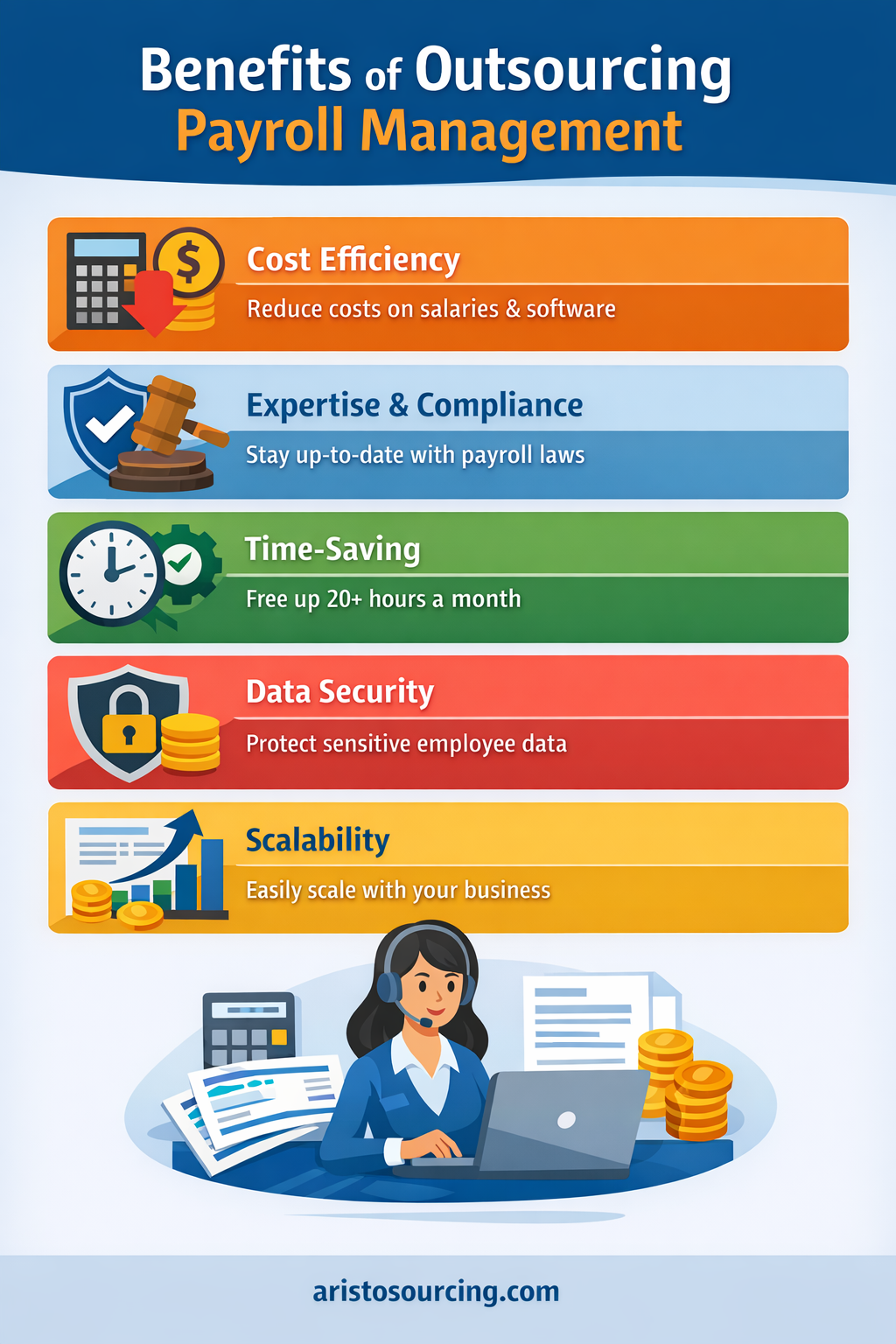
Outsourcing payroll management is vast and impactful, especially for businesses wanting to scale.
Cost Efficiency
Maintaining an in-house payroll department comes with a hefty price tag. Salaries, software, training, and other overheads can quickly add up. By outsourcing, you eliminate these expenses, typically paying only for the services you need.
Expertise and Compliance
Payroll regulations are constantly changing. One mistake could cost your business in penalties or legal action. Outsourced payroll managers stay current on laws and regulations, ensuring payroll runs smoothly and error-free. For example, according to a 2023 study, 33% of small businesses faced payroll penalties due to compliance mistakes. Outsourcing significantly reduces this risk.
Time-Saving
By outsourcing payroll responsibilities to experts, your internal team can focus on more strategic tasks that drive revenue and growth. According to a 2022 Deloitte report, companies that outsourced payroll saved an average of 20 monthly hours, valuable time that could be better used on core business functions.
Data Security
Payroll processing involves handling sensitive information. Outsourced providers invest heavily in securing their systems to protect against data breaches, ensuring the safety of your employees and company data.
Scalability
An outsourced payroll manager easily scales to meet your needs, whether your business is expanding or going through a seasonal hiring boom. You won’t have to worry about hiring more staff to meet increased demand: the service grows as your company does.
Outsourced Payroll Manager vs Remote Payroll Specialist
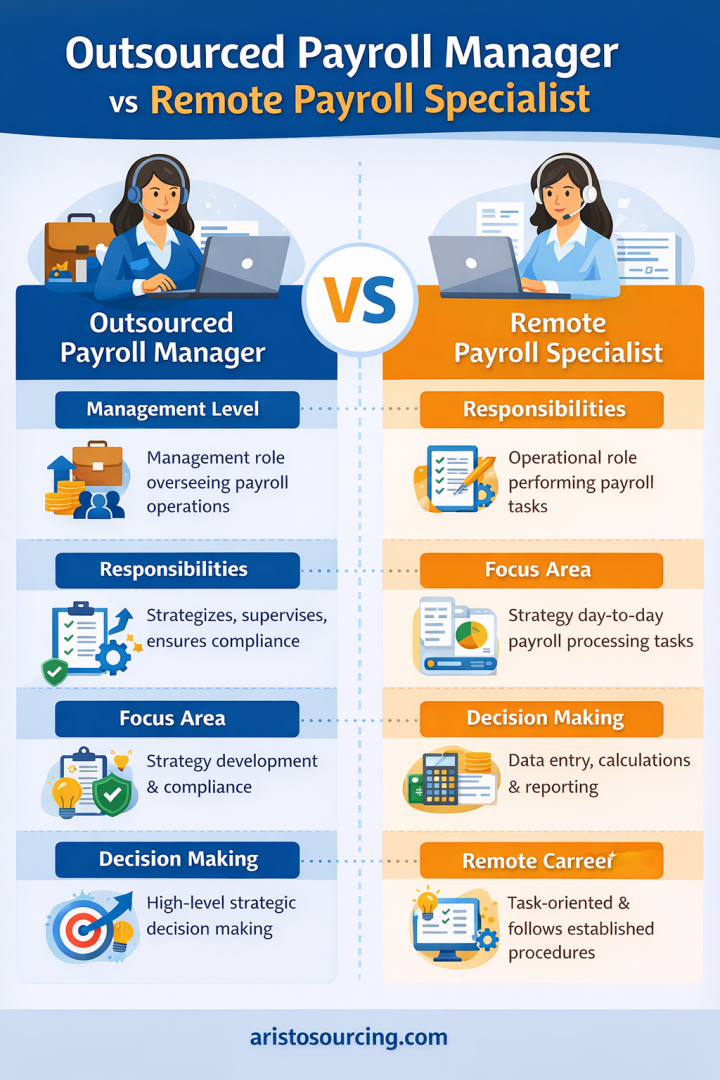
While an outsourced payroll manager typically oversees the full payroll function, a remote payroll specialist focuses on execution — processing payroll, managing timesheets, handling deductions, and ensuring accurate data entry.
In high-performing businesses, these roles work together to create an efficient system: the payroll manager handles strategy, compliance, reporting, and oversight, while the payroll specialist executes the day-to-day tasks.
This structure allows businesses to separate oversight from execution, reducing errors, improving accountability, and creating a more scalable payroll operation.
Tools An Outsourced Payroll Manager May Use
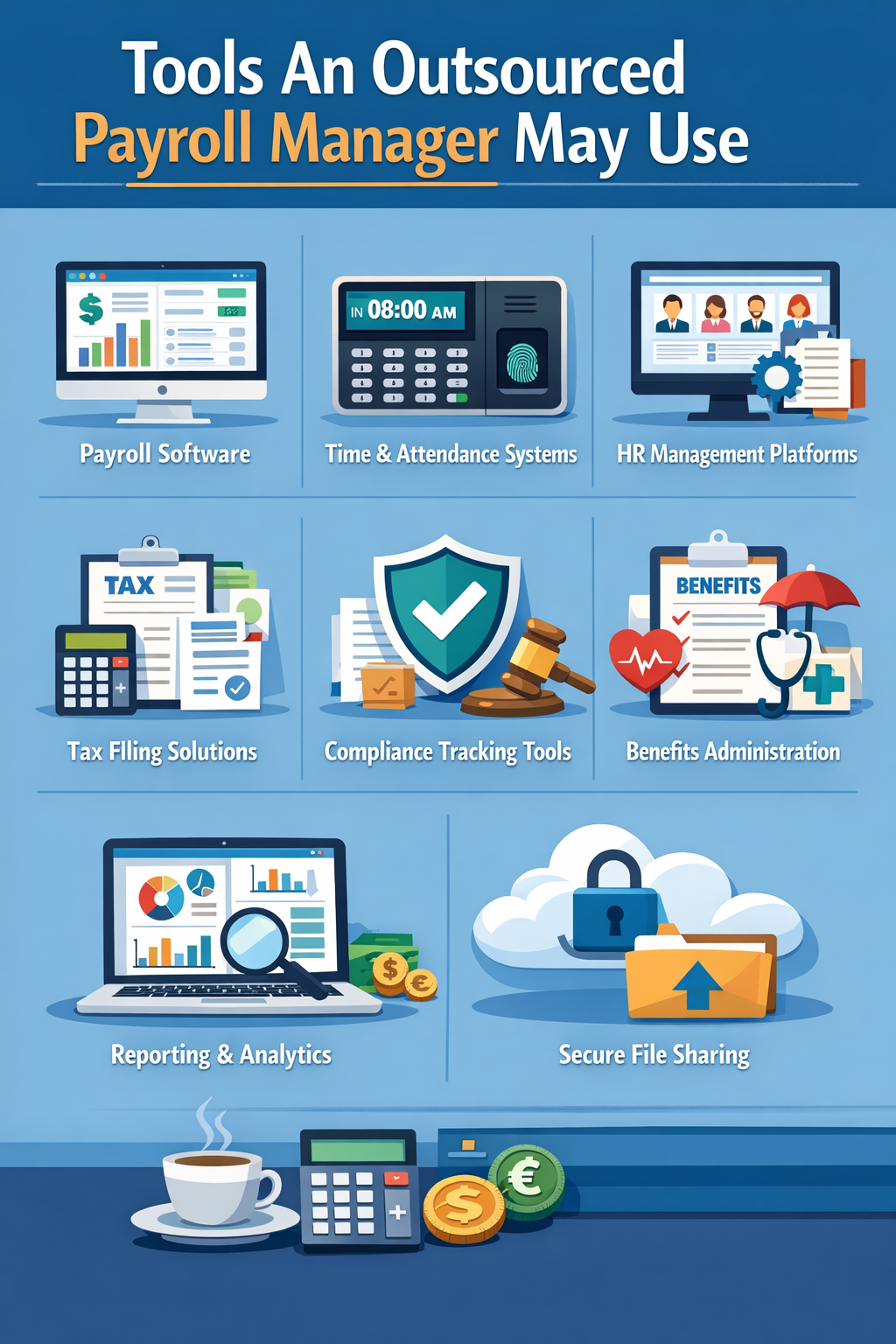
Outsourced payroll managers rely on a combination of specialized software and systems to ensure accuracy, compliance, and efficiency. These tools form the backbone of a well-structured payroll operation.
Payroll Software:
Platforms such as Sage, QuickBooks Payroll, ADP, and Gusto are commonly used to process payroll, calculate taxes, and generate payslips. These systems automate complex calculations and reduce the risk of human error.
Time & Attendance Systems:
Tools like Hubstaff, Time Doctor, or built-in HR systems track employee hours, overtime, and leave. Accurate time tracking ensures payroll is processed correctly and fairly.
HR Management Systems (HRIS):
Systems like BambooHR or Zoho People centralize employee data, contracts, and leave records, creating a single source of truth for payroll inputs.
Compliance & Tax Tools:
Payroll managers use compliance tools and local tax systems to stay updated with regulations, ensuring accurate deductions and filings across different regions.
Communication & Collaboration Tools:
Platforms such as Slack, Microsoft Teams, and email are used to coordinate with internal teams, clarify discrepancies, and manage payroll approvals efficiently.
Document Management Systems:
Cloud storage solutions like Google Drive or Dropbox are used to store payroll records, reports, and employee documentation securely.
How to Work Effectively with a Remote Payroll Specialist
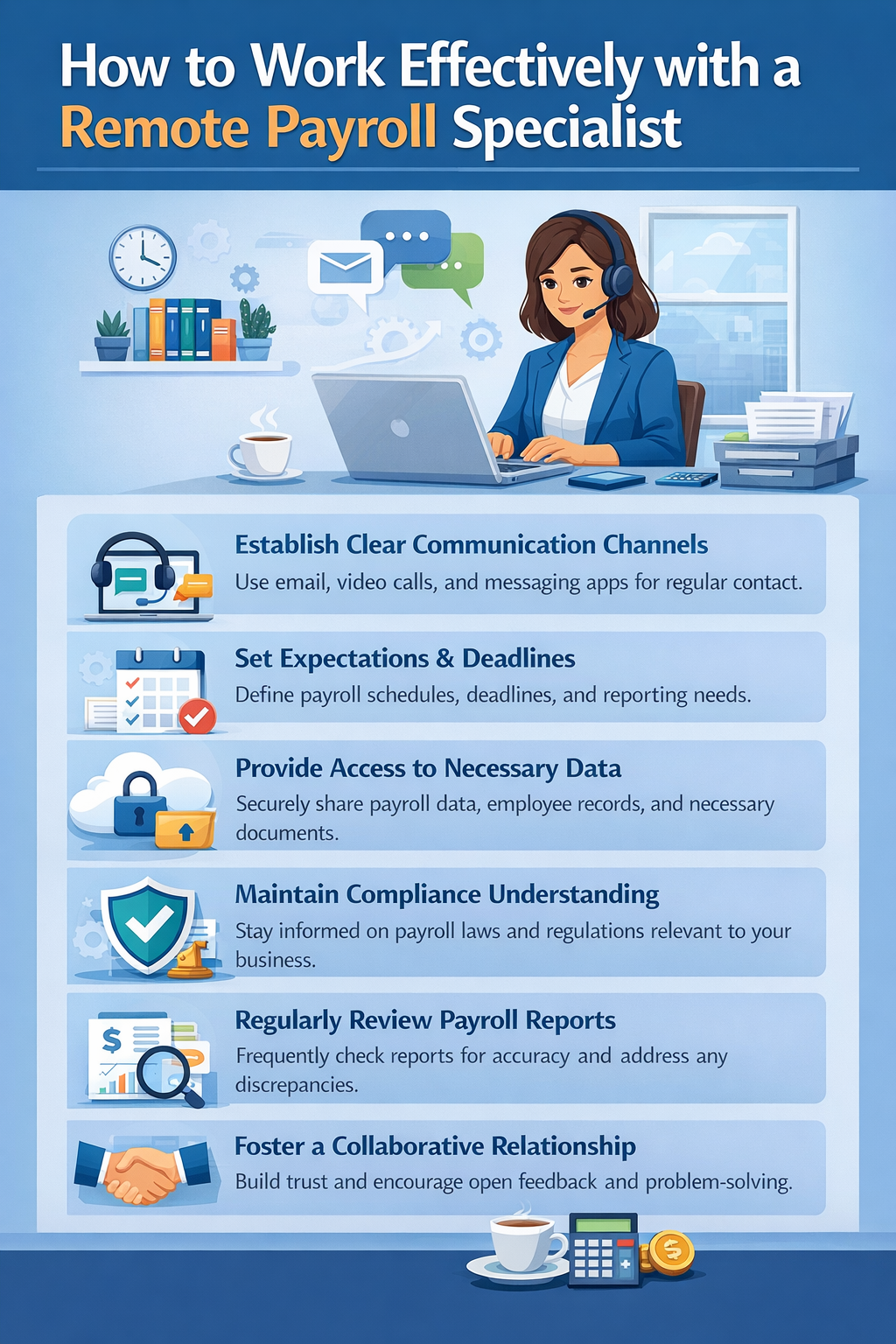
To fully unlock the value of outsourced payroll, businesses need structured workflows and clear collaboration systems. Simply hiring talent is not enough — how you integrate them determines success.
Standardize Inputs:
Ensure that all payroll data — including timesheets, bonuses, commissions, deductions, and leave records — is submitted in a consistent format and on a fixed schedule. Disorganized or last-minute inputs are one of the leading causes of payroll errors.
Use Centralized Systems:
Leverage payroll software such as Sage, QuickBooks, or ADP, combined with shared platforms like Google Drive or HR systems, to create a single source of truth. This prevents version control issues and ensures accuracy.
Create Clear Payroll Calendars:
Define and communicate payroll cut-off dates, processing timelines, and payment dates. This ensures alignment between your internal team and your outsourced payroll support.
Document SOPs (Standard Operating Procedures):
High-performing companies document every payroll-related process — from onboarding employees to handling adjustments and corrections. SOPs reduce reliance on individuals and improve consistency.
Establish Approval Workflows:
Before payroll is finalized, implement a structured review and approval process. This adds a layer of accountability and significantly reduces the risk of costly errors.
Potential Challenges of Outsourcing Payroll
Outsourcing payroll management is not without challenges; however, most of these can be mitigated with proper planning and communication.
Loss of Control: Some businesses fear outsourcing, which means losing control over their payroll processes. However, this concern can be effectively managed with regular reporting, clear communication, and the setting up of performance metrics.
Data Privacy Concerns: Transferring sensitive employee data to a third-party provider might raise concerns. Choosing a provider with robust data security protocols and encryption methods is crucial to combat this.
Cultural or Time Zone Differences: Concerns about time zone differences could arise when outsourcing to countries such as the Philippines or South Africa. However, these countries are well-known for their flexibility and adaptability to match the client’s time zone needs, making this less of an issue than it may seem.
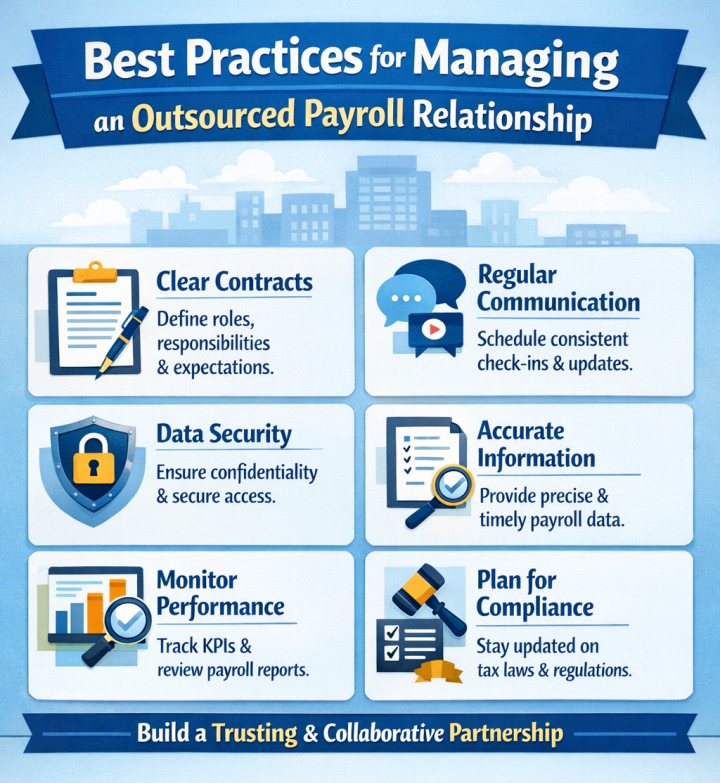
Best Practices for Managing an Outsourced Payroll Relationship
Managing a successful relationship with an outsourced payroll manager requires a proactive approach.
Set Clear Expectations: Before entering into a contract, clearly outline your expectations regarding reporting, deadlines, and compliance requirements. This ensures that both parties are on the same page from the start.
Regular Communication: Establish a regular communication cadence to monitor any changes in your business or updates in payroll regulations. Weekly or biweekly check-ins help to maintain a strong working relationship.
Performance Metrics: Establish key performance indicators (KPIs) to evaluate the outsourced payroll provider’s performance. KPIs could include accuracy, timeliness, compliance rates, and overall satisfaction.
Confidentiality Agreements: Ensure your provider signs confidentiality agreements and adheres to strict data privacy laws to protect sensitive information.
Common Mistakes When Working with Remote Payroll Support
Even with the right talent, poor internal processes can lead to payroll issues. Common mistakes include:
- Providing incomplete or last-minute payroll data
- Lack of a defined approval process before payroll is finalized
- Over-reliance on manual spreadsheets instead of integrated systems
- Poor communication regarding changes such as new hires, salary updates, or terminations
Avoiding these pitfalls ensures your outsourced payroll function operates as a structured system rather than a reactive, error-prone process.
Why Hire from the Philippines or South Africa?
Two top-tier locations stand out when outsourcing payroll management: the Philippines and South Africa. Here’s why.
Cost-Effectiveness: Both countries offer significantly lower labor costs than hiring in-house or outsourcing to other destinations. This makes them attractive for businesses looking to optimize payroll operations without breaking the bank.
High-Quality Talent: The Philippines is known for its highly educated workforce, many of whom are proficient in English and have experience working with Western companies. South Africa, similarly, boasts a skilled labor force with expertise in finance, HR, and payroll, making it an excellent fit for businesses with complex payroll needs.
Cultural Compatibility: Both the Philippines and South Africa have strong cultural ties to the West, making communication seamless. Their professionals are known for their adaptability, making it easy for businesses to integrate outsourced managers into their existing teams.
Time-Zone Alignment: The Philippines is particularly favorable for U.S.-based companies due to its time-zone alignment, allowing real-time collaboration. South Africa, on the other hand, works well for European businesses due to its proximity to time zones.
Transform Your Business Today
In a world where time and resources are increasingly scarce, outsourcing payroll management could be a game-changing solution for your business. By handing over the responsibility to an expert, you save time and money and ensure that your business remains compliant and secure. Companies like yours can focus on growth and innovation while the payroll manager handles the rest. So, what’s stopping you?
Your business can thrive in a competitive landscape with the right outsourced payroll manager from top-tier talent pools in the Philippines or South Africa. After all, why let payroll be a headache when it can be a well-oiled machine running behind the scenes? Let the experts transform your business, one paycheck at a time.

Frequently Asked Questions
What are the specific legal risks of managing payroll in-house?
In-house teams often struggle with payroll tax non-compliance, miscalculation of overtime pay, and incorrect employee classification (contractor vs. employee). An outsourced manager mitigates these risks by performing regular audits and staying abreast of changing labor laws, protecting the business from Department of Labor (DOL) audits and hefty IRS interest penalties.
How does an outsourced payroll manager handle year-end tax filings?
Beyond monthly processing, a manager oversees the critical transition into the new fiscal year. This includes generating and distributing W-2 or 1099 forms, reconciling annual payroll tax returns, and ensuring all payroll liabilities are settled. This end-to-end oversight prevents the “tax season crunch” that often overwhelms SME owners.
Can outsourced payroll services integrate with my existing accounting software?
Yes. Most modern outsourced managers work within your “tech stack.” They specialize in bridging the gap between payroll platforms (like Gusto or ADP) and General Ledger (GL) accounting software (like Xero or QuickBooks). This ensures that every pay run automatically syncs with your financial statements for real-time reporting.
What is the difference between a Payroll Manager and an Employer of Record (EOR)?
While an outsourced payroll manager handles the administration, calculations, and compliance of your existing staff, an Employer of Record (EOR) actually becomes the legal employer of your staff in a foreign country. If you hire through the Philippines or South Africa, a payroll manager is ideal if you have a local entity; an EOR is used if you don’t.
How do I maintain visibility over my data when outsourcing?
Transparency is maintained through cloud-based self-service portals. Even though an external expert manages the “backend,” you and your employees retain 24/7 access to digital payslips, tax documents, and leave balances. You shift the labor of entry to the expert while retaining 100% ownership of the data.
Is payroll outsourcing secure for companies handling highly sensitive IP?
Top-tier providers in regions like South Africa and the Philippines adhere to international standards such as GDPR or POPIA. By using encrypted Document Management Systems (DMS) and multi-factor authentication (MFA), outsourced providers often offer higher security levels than a standard small business’s internal spreadsheet-based system.
How does a payroll manager assist with “Global Mobility” or remote hiring?
If your business hires talent across different states or countries, a manager handles multi-jurisdictional tax withholding. They ensure you are registered with the correct local tax authorities and that your payroll reflects the specific labor rights (such as mandatory 13th-month pay in the Philippines) of the employee’s home country.
What is the typical ROI of switching to an outsourced model?
The Return on Investment (ROI) is measured by subtracting the service fee from the combined costs of software licenses, in-house labor hours, and potential compliance fines. Most SMEs find that the “hidden cost” of an owner or HR director spending 20+ hours a month on manual data entry far exceeds the flat fee of a specialized manager.