

Learn how to communicate with a virtual assistant: The insights in this guide draw directly from Aristo Sourcing’s operational data across 500+ global VA placements since 2014, documenting the communication protocols that separate high-velocity remote teams from operational failure cycles.
Most entrepreneurs confuse communication with talking. They add a virtual assistant to Slack, schedule a weekly Zoom call, drop occasional Loom recordings into a shared folder, and believe they have built a communication framework. They have not.
What they have built is a set of channels. Channels are not a system. A system defines what gets communicated, in what format, at what frequency, with what accountability structure, and how failure surfaces before it compounds into something expensive.
When tasks come back incomplete, deadlines slide, or the assistant goes quiet for days at a stretch, founders face the most punishing diagnostic question in remote operations: Is this a system failure or a people failure?
Getting the answer wrong costs real money in both directions. Fire a capable, well-matched VA because your onboarding infrastructure is broken, and you enter a recruitment loop that burns thousands in overhead and loses the institutional knowledge that took months to accumulate. Spend six months coaching an unvetted marketplace hire who lacks the cognitive flexibility or written precision to operate inside a fast-moving business, and you sacrifice market momentum you cannot recover.
This guide gives you the diagnostic tools to answer that question accurately. It also presents the case from multiple angles, because the system-versus-person debate carries genuine intellectual weight that the typical listicle flattens into useless advice.ht structure and the right person, a virtual assistant becomes one of the most powerful leverage tools in modern business operations.
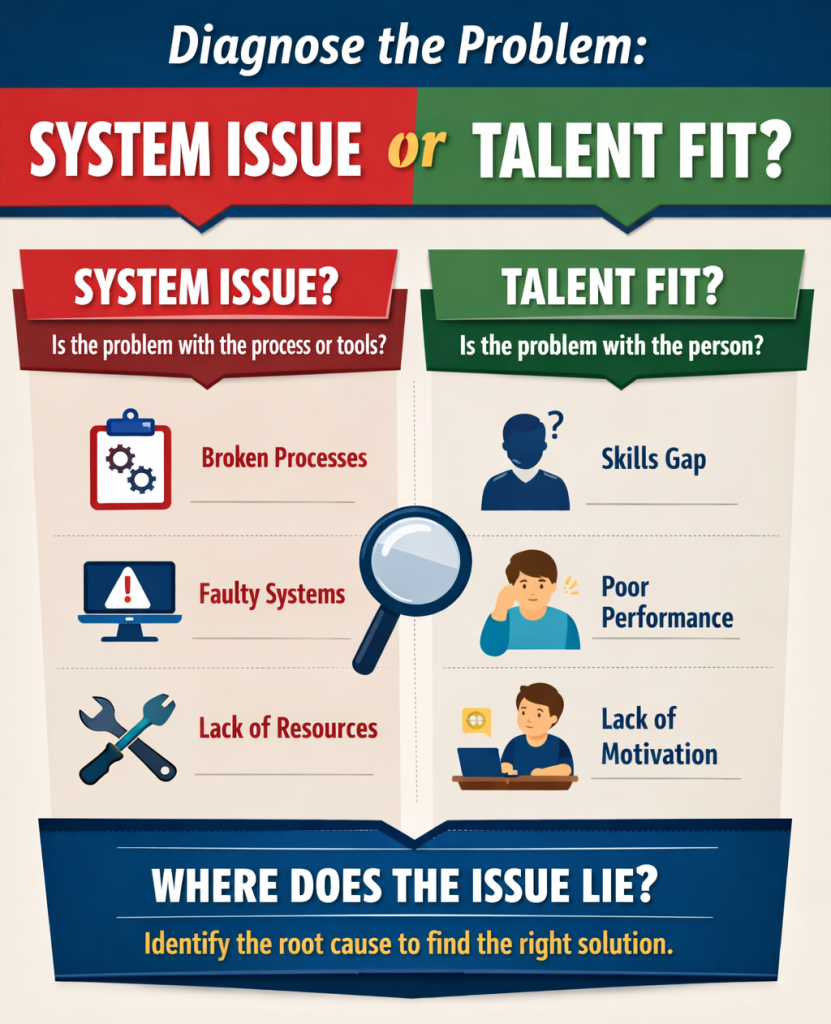
The Debate That Practitioners Actually Have
The management consulting world leans heavily toward systems explanations for operational failure. W. Edwards Deming, the quality management theorist whose work transformed post-war Japanese manufacturing, put his position directly: “A bad system will beat a good person every time.” His broader research argued that 85 to 94% of all organizational failures trace back to system design, not individual performance. Most workers want to do their jobs well, and when they don’t, the root cause is almost always the environment they work inside rather than personal deficiency.
Modern remote work research broadly supports this position. A 2023 Gallup study found that only 23% of remote employees strongly agree their manager communicates clear expectations about their role. Three in four remote workers operate with ambiguous direction, and their managers typically interpret the resulting underperformance as a talent problem. They are diagnosing the wrong variable.
The counter-argument, however, holds real weight and deserves honest treatment.
Organizational psychologists who study trait-based performance find that individual characteristics including conscientiousness, cognitive flexibility, and baseline communication discipline account for meaningful performance variance independent of system quality. Research published in the Journal of Applied Psychology on self-regulation in distributed work environments found that workers scoring high on conscientiousness maintained performance in ambiguous, low-structure conditions where lower-scoring workers showed significant output degradation. Some people figure out what to do when the instructions are incomplete. Others cannot, regardless of how much coaching or system refinement they receive.
Patrick Lencioni, whose team dysfunction research has been applied across thousands of organizations, makes a sharper version of the same point: “Not finance. Not strategy. Not technology. It is teamwork that remains the ultimate competitive advantage, precisely because it is so powerful and so rare.” Lencioni’s frameworks consistently identify individual accountability and communication discipline as non-negotiable personal traits that no team structure fully compensates for.
So which camp is right?
Both, depending on one variable the debate usually ignores: where you hired the person.
Among vetted, cognitively tested candidates matched through a structured placement process, system failure explains the majority of communication breakdowns. Among unvetted marketplace hires, individual capability variance is a genuine primary cause that no communication framework fully compensates for. The hiring source changes the diagnostic answer. This is not a theoretical position. It is what Aristo Sourcing’s data across 500+ placements since 2014 consistently surfaces.
What Current Research Says About Remote Communication Failure
The McKinsey statistic that circulates in most VA articles on this topic, the one showing knowledge workers spend 20% of their week searching for information, dates to 2012. The remote work landscape that number described looks nothing like 2026 operations. Using it as a primary citation degrades the credibility of any argument built around it.
More current data tells a more specific story.
Buffer’s 2024 State of Remote Work Report identifies communication and collaboration as the top challenge for 22% of remote workers, ranking above time zone friction and work-life boundary management. Critically, teams with documented communication protocols report 31% higher satisfaction with remote collaboration than teams relying on informal channel-based communication. The difference is not the platform. It is the protocol.
Research from Stanford’s Remote Work lab, led by economist Nicholas Bloom, demonstrates that productivity differences between high and low-performing remote teams correlate more strongly with managerial communication clarity than with individual worker capability. Teams where managers defined output expectations explicitly and surfaced blockers proactively outperformed teams where communication remained reactive and synchronous-dependent, across industry types and organization sizes.
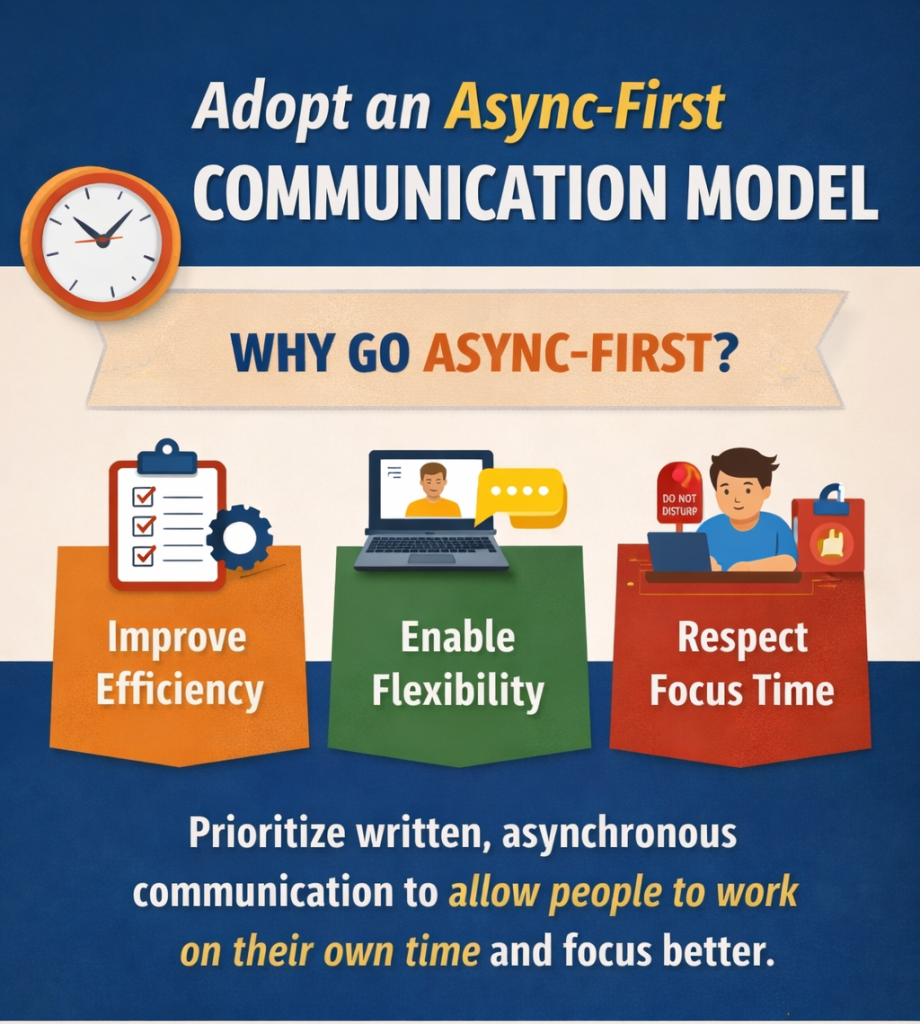
Loom’s 2023 Async Report, drawing on survey data from 2,000 remote workers, found that structured asynchronous communication reduced meeting frequency by 38% and increased self-reported deep work time by 47% compared to teams running synchronous-first communication models. The productivity gain did not come from eliminating conversation. It came from eliminating the interruption cycle that real-time communication dependency creates.
The pattern across this body of research is consistent: structured, asynchronous, output-defined communication outperforms informal, synchronous, intention-based communication in distributed teams. This finding holds across capability levels. The structure accelerates capable performers and sometimes compensates for minor skill gaps. What it cannot do is manufacture competence where the baseline is insufficient. That ceiling is real, and it matters.
The Root Cause Matrix
Before you change a workflow or terminate a contract, run the observed breakdown through this diagnostic framework to isolate the actual cause.
| Observed Symptom | System Failure Indicator | Capability Failure Indicator |
|---|---|---|
| Missing deadlines | No project management board or undefined priority tiers | VA consistently underestimates task duration despite documented micro-milestones |
| Incomplete deliverables | No written Definition of Done or missing SOP | VA skips explicitly documented steps in an existing, accessible SOP |
| Misinterpreted strategy | Instructions sent as unstructured long-form text messages | VA fails to apply logical patterns across tasks after video walkthrough review |
| Communication gaps | No mandated daily reporting cadence or asynchronous check-in protocol | VA masks project delays or becomes unreachable when check-ins are clearly scheduled |
If your symptoms map to the left column, you have a systems problem. If they map to the right column after a documented system already exists, you have a capability or fit problem.
The critical qualifier: the right column only applies after documented systems exist. Running a capability diagnosis on a team that has never received clear SOPs, output definitions, or reporting expectations produces false positives that cost you people who could have performed well under proper infrastructure.
The Three-Layer Asynchronous Communication Framework
High-velocity remote operations run on structured asynchronous handoff protocols, not on real-time conversation. Every synchronous communication dependency creates a bottleneck: the VA cannot move forward until the founder responds, and the founder cannot focus on strategic work while fielding questions that documentation could have preempted. Building a communication infrastructure means eliminating those dependencies layer by layer.
Layer 1: The Definition of Done
The most common source of incomplete deliverables in remote teams is not laziness or incompetence. It is the interpretation gap between what the founder imagined as the completed state and what the VA understood from the assignment description.
“Clean up the CRM this week” means different things to different people. To a founder, it might mean verifying email deliverability loops, updating lead status tags, and archiving contacts who have not engaged in six months. To a VA processing the same instruction, it might mean deleting obvious duplicate entries and considering the task complete.
A Definition of Done (DoD) eliminates this gap. Every task needs a bulleted list of the exact conditions that must be true before the task qualifies as complete. A DoD for a content publishing workflow looks like this:
- Surfer SEO content score at 70 or above.
- Canonical tag set to the correct URL.
- JSON-LD structured data markup validated in Google’s Rich Results Test.
- Meta description written between 140 and 160 characters.
- Two internal links pointing to existing cornerstone pages.
- URL submitted to Google Search Console for indexing.
The VA checks each item against the list before marking the task done. The founder reviews the completed checklist rather than auditing the output from scratch. Both parties operate against the same documented standard, and disagreements about completion become objective rather than interpretive.
Layer 2: The Visual System Walkthrough
Text-only instructions leave structural gaps that VAs fill with their own assumptions. A screen recording that narrates the task while demonstrating the exact steps reduces misinterpretation to near zero for any process a founder can show once. If you can record yourself completing a task in five minutes, you should not explain it in a text message.
The addition that most founders skip: explain why the task matters, not just what to do. A VA who understands that the canonical tag prevents Google from treating a page as duplicate content will catch a missing canonical on a page the SOP did not explicitly cover, because they understand the underlying logic. A VA who was told “set the canonical to X” will only set the canonical on tasks that specifically mention it.
Understanding the why enables autonomous pattern recognition. That capability separates a VA who requires continuous supervision from one who manages the operation independently and surfaces anomalies before they compound.
Layer 3: The End-of-Day Asynchronous Status Update
The most common founder complaint in remote VA relationships is not knowing what the VA is working on or whether deadlines are tracking to plan. This anxiety drives unnecessary synchronous check-ins that interrupt both parties and slow the operation down without adding information value.
The End-of-Day (EOD) update protocol eliminates this by making operational transparency a daily non-negotiable. At the close of every shift, the VA submits a structured update covering three items:
Completed deliverables. Specific tasks moved to done, with direct links to outputs or shared documents rather than general descriptions.
Active blockers. Anything currently stalled, with a precise statement of what the VA needs and from whom. “Waiting on client API credentials” is a blocker. “Working through some challenges” is not.
Next-day priorities. The three tasks the VA will address first in the following shift, in priority order.
The update takes three minutes to write and gives the founder complete pipeline visibility without a single synchronous conversation. It also builds an audit trail that makes performance reviews objective rather than impressionistic. When a pattern of missed deadlines appears in the EOD logs, the conversation about performance has documentation behind it rather than relying on memory.
Why the Hiring Source Changes the Diagnostic Answer
The communication framework above works reliably with capable, vetted talent. With unvetted marketplace hires, it works less reliably, and for a reason most founders misdiagnose.
The problem is not that open-platform contractors cannot follow systems. Some can. The problem is that unmanaged platforms do not screen for the characteristics that predict consistent performance inside structured, asynchronous frameworks: cognitive flexibility, written and verbal English precision, professional accountability under distributed work conditions, and the reliability to maintain output quality when no one is watching in real time.
A candidate who writes polished asynchronous messages during hiring may produce those messages with AI assistance. A candidate who lists full-time availability may hold three concurrent client contracts and queue your tasks in the gaps between their primary accounts. A candidate with listed SEO experience may have handled basic formatting tasks under a senior VA’s direction and rounded up significantly on their profile.
Open platforms do not verify any of this. The business owner absorbs the verification cost in executive time and failed hire cycles.
Aristo Sourcing’s vetting process addresses each risk explicitly before a candidate reaches a client conversation. Task mapping defines the operational requirements and software dependencies before sourcing begins. Global sourcing pulls from deep, vetted networks rather than open listings. Linguistic proficiency screening tests real-time verbal clarity, not just written samples submitted asynchronously. Cognitive and technical testing requires candidates to solve operational scenarios under time pressure. Structured interviews assess communication discipline, accountability patterns, and response behavior under ambiguity. Curated candidate presentation delivers three to five pre-screened matches against the defined operational profile. Managed onboarding introduces the selected candidate alongside communication templates and SOP frameworks built from twelve years of placement data.
This process produces a 93% retention rate across 500+ placements since 2014. Retention at that level reflects match quality the open marketplace cannot replicate, because the marketplace does not conduct the verification that makes consistent performance predictable.
The Accountability Checklist
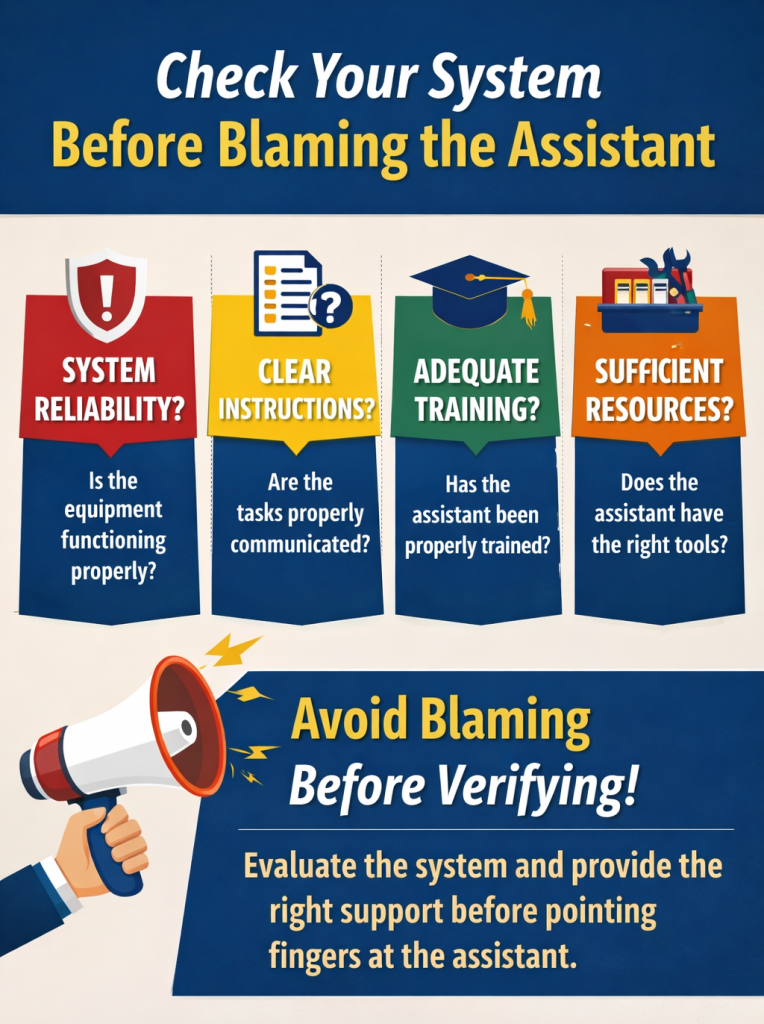
When communication breaks down, work through these four questions in sequence before making any personnel decision.
- Does the task map to a step-by-step SOP the VA can reference independently? If no: you have a system failure. Build the SOP before drawing any conclusions about capability.
- Does the assignment include a written, binary Definition of Done? If no: you have a system failure. The VA cannot meet a standard that was never defined.
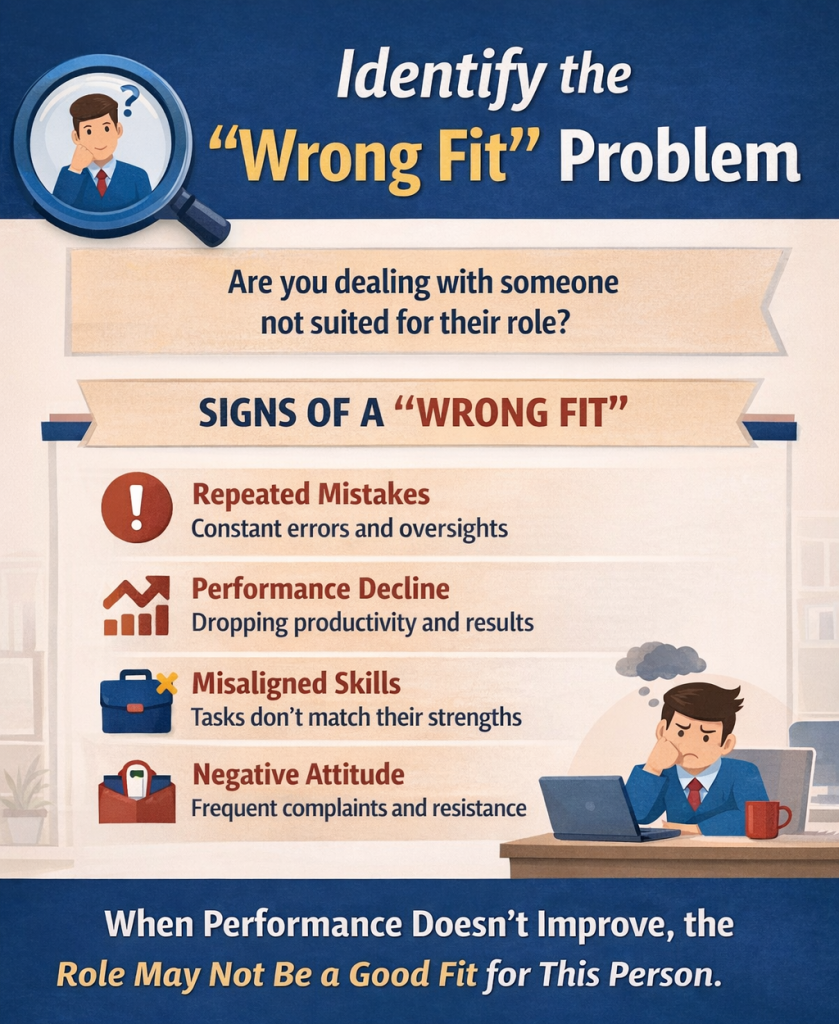
- After reviewing a narrated video walkthrough and a clear SOP, does the VA’s output still miss the same documented steps? If yes: you have a capability issue. The assistant lacks the attention to detail or pattern recognition the role requires.
- Does the VA consistently fail to submit EOD updates or become unreachable during active project cycles? If yes: you have a professional discipline issue. You have hired someone whose accountability standards fall below what the role demands, regardless of how clean your communication infrastructure is.
The first two questions diagnose system failures. The last two diagnose people failures, but only after a documented system exists to measure performance against. Running the last two questions without a functioning system in place is the most common diagnostic error founders make..
The Bottom Line
Communication in a remote team is an engineering problem, not an emotional one. The founders who solve it fastest are the ones who stop asking “why won’t my VA just get it?” and start asking “what is my system missing that would make the answer obvious?”
If your execution pipeline breaks down because you lack documented SOPs, written output definitions, visual walkthroughs, and a daily reporting cadence, a new VA will not fix the problem. You will run the same failure cycle with a different person. The system is the product. Build it first.
If your system is clean and your VA still produces incomplete work, skips explicit SOP steps, and disappears without updates, you have a capability or accountability problem. The framework reveals the gap; it cannot close a gap that the hiring process created.
That is the point where hiring source matters most. Aristo Sourcing built its vetting process specifically to reduce the capability variable before the client relationship begins. When the placement arrives vetted, linguistically tested, and operationally matched against the defined role, the system becomes the primary lever. Improve the system and performance follows reliably, because the person on the other end of the workflow has the baseline to meet it.
If you are currently absorbing the cost of the open-platform lottery in executive time and failed placement cycles, the alternative is a managed placement built on twelve years of operational data and a retention rate that reflects the difference between systematic matching and open-market guesswork.
Frequently Asked Questions
How do I handle time zone differences with an offshore VA?
Time zone overlap is not always necessary for productivity. By adopting an async-first communication model using tools like Loom and Notion, you create a “follow-the-sun” workflow. The assistant completes tasks while you sleep, and you review them during your morning. A daily 10-minute overlap for a sync meeting or a structured end-of-day report is usually sufficient to maintain alignment.
Which software tools are essential for managing a remote support staff?
A professional remote tech stack should include three categories: Project Management (Asana, ClickUp, or Monday.com) to track task progress, Communication (Slack or Microsoft Teams) for real-time and async updates, and Knowledge Management (Notion or Google Workspace) to house your SOPs. Centralizing these tools prevents “information fragmentation” and ensures your VA has a single source of truth.
What is the difference between a Freelancer and a Managed Virtual Assistant?
Freelancers found on marketplaces often work with multiple clients and lack a structured support system, increasing the risk of “disappearing” or skill gaps. A managed virtual assistant through an agency like Aristo Sourcing undergoes rigorous vetting for proactive communication and technical proficiency. Managed services also provide a replacement guarantee, ensuring operational continuity if the initial hire isn’t a perfect fit.
How many hours of onboarding does a new VA typically require?
High-leverage delegation begins with a structured 10 to 15-hour onboarding process spread over the first two weeks. This should focus on knowledge transfer rather than basic skill training. By providing recorded Loom tutorials and existing SOPs, you reduce the time spent in live meetings and allow the assistant to reach full productivity faster.
Can one Virtual Assistant handle multiple areas of my business?
While a “General VA” can handle basic administrative tasks, scaling requires specialized remote talent. For example, an SEO Virtual Assistant focuses on analytics and content optimization, while an Executive Assistant manages high-level operations and scheduling. For maximum efficiency, it is best to hire for specific “Role Entities” rather than spreading one person across unrelated departments.
How do I measure the ROI of my Virtual Assistant?
The ROI of a VA is measured by the “Time Reclaimed” for high-value strategic growth. Track the hours your assistant spends on recurring operational tasks (like CRM management or inbox filtering) that you previously handled. If your assistant saves you 20 hours a week, the ROI is calculated by your hourly value multiplied by those 20 hours, minus the cost of the assistant.
