

How appointment setters strengthen sales funnel strategy
Most companies believe their biggest sales problem is lead generation.
In reality, the problem often sits inside the funnel.
Marketing campaigns generate traffic. Ads produce leads. Landing pages collect contact details.
But between the moment a prospect raises their hand and the moment a salesperson speaks to them, the funnel often breaks down.
Leads sit unanswered in a CRM.
Sales calendars remain half empty.
Marketing budgets produce far fewer deals than expected.
High-performing companies solve this gap by introducing a dedicated funnel role: the appointment setter.
Rather than acting as generic sales support, appointment setters operate as the bridge between marketing activity and revenue conversations.
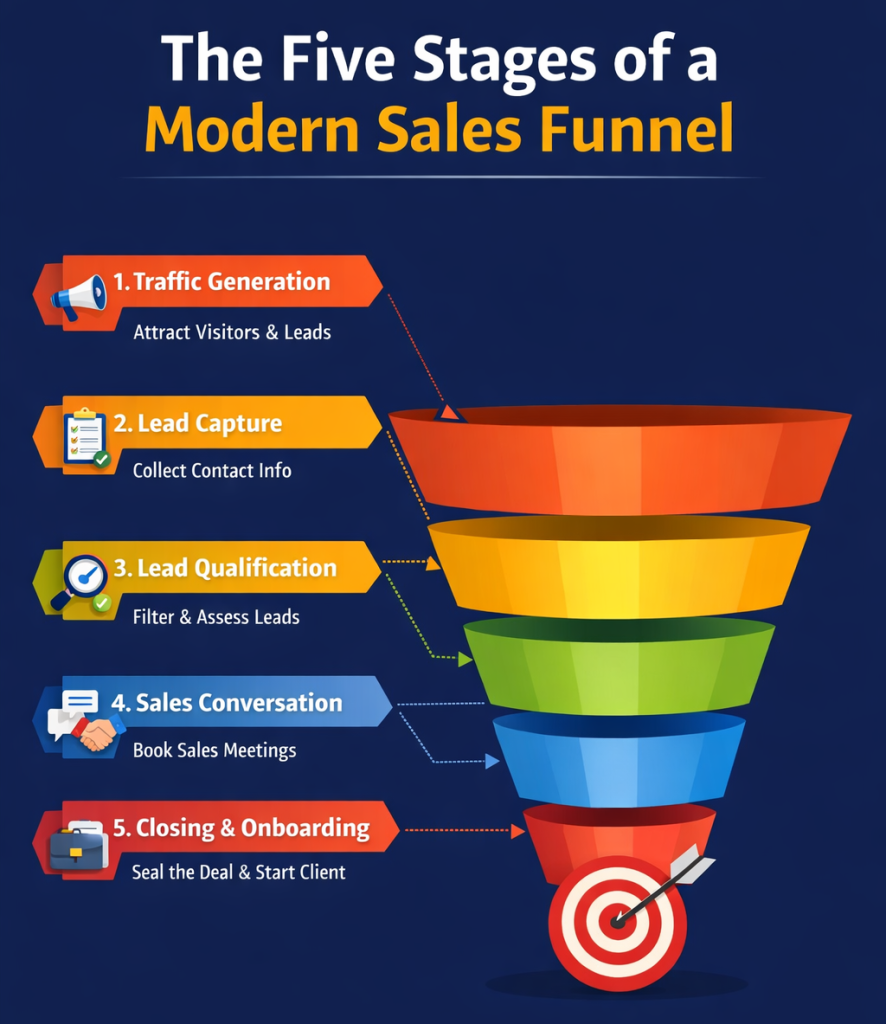
The Five Stages of a Modern Sales Funnel
A predictable sales system usually contains five operational stages:
- Traffic generation
- Lead capture
- Lead qualification
- Sales conversation
- Closing and onboarding
Most companies invest heavily in stages one and two.
They spend thousands on:
- paid advertising
- SEO campaigns
- lead magnets
- webinars
- outbound outreach
Yet the largest conversion improvements often occur in stage three: lead qualification.
This is where appointment setters, business development representatives (BDRs), or inside sales support operate.
The Funnel Gap That Kills Conversions
Marketing can create interest, but interest does not automatically turn into meetings.
Without structured follow-up, several predictable issues occur:
• leads receive slow responses
• sales representatives waste time qualifying poor prospects
• inbound inquiries go cold
• marketing ROI drops dramatically
According to research by the Harvard Business Review, companies that respond to leads within an hour are 7 times more likely to qualify that lead compared to companies that respond later.
Speed alone, however, is not enough.
A functioning funnel also requires persistent follow-up and qualification filtering.
Appointment setters exist to manage this stage.
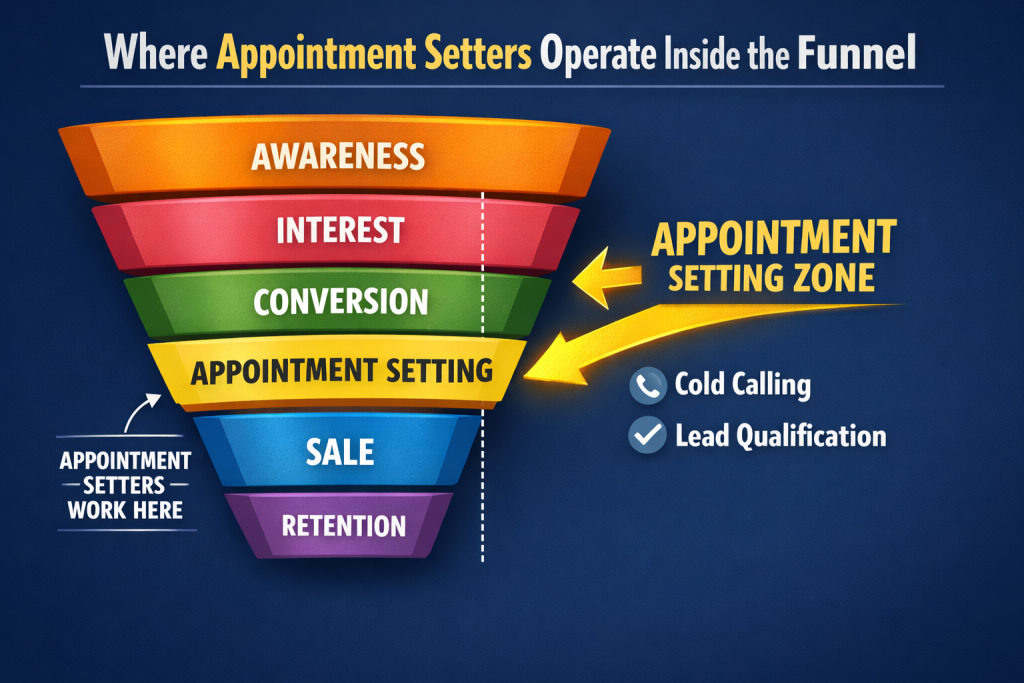
Where Appointment Setters Operate Inside the Funnel
Appointment setters manage the transition between lead interest and sales conversation.
Their core responsibilities typically include:
• responding to inbound leads
• initiating outbound contact
• asking qualification questions
• identifying decision-makers
• scheduling meetings with closers
This structure ensures that when the salesperson joins the call, the conversation already involves a qualified and interested prospect.
Instead of chasing leads, the sales team focuses on closing opportunities.
Initial Response Speed: The Conversion Multiplier
In sales funnels, time directly affects revenue.
Research from InsideSales.com found that contacting a lead within 5 minutes increases the chances of conversion by up to 100 times compared to waiting 30 minutes.
Marketing automation alone cannot maintain this level of responsiveness.
Appointment setters provide the human layer that ensures:
• immediate engagement
• contextual responses
• personalized outreach
Speed transforms interest into conversation before competitors reach the prospect.
Persistence in Follow-Up: The Hidden Revenue Driver
Most deals are not lost because prospects say “no.”
They are lost because companies stop following up too early.
According to research from Brevet Group, 80% of sales require at least five follow-up attempts, yet 44% of salespeople stop after one attempt.
Appointment setters maintain structured follow-up sequences that include:
• email outreach
• LinkedIn messaging
• phone calls
• appointment reminders
This persistence ensures that interested prospects remain inside the funnel rather than disappearing.
The Lead Qualification Layer
Not every lead should speak to a closer.
A poorly qualified meeting wastes time for both the company and the prospect.
Appointment setters apply structured frameworks such as:
• Budget
• Authority
• Need
• Timing
This approach filters prospects before the sales call occurs.
The result is a cleaner pipeline and higher conversion rates.
Protecting the Sales Team’s Time
Sales representatives generate revenue when they:
• run discovery calls
• present solutions
• negotiate deals
• close contracts
When salespeople spend hours answering first-contact emails or qualifying early-stage leads, their productivity drops.
Appointment setters remove this workload by managing the top and middle layers of the funnel.
Sales teams then focus exclusively on high-value conversations.
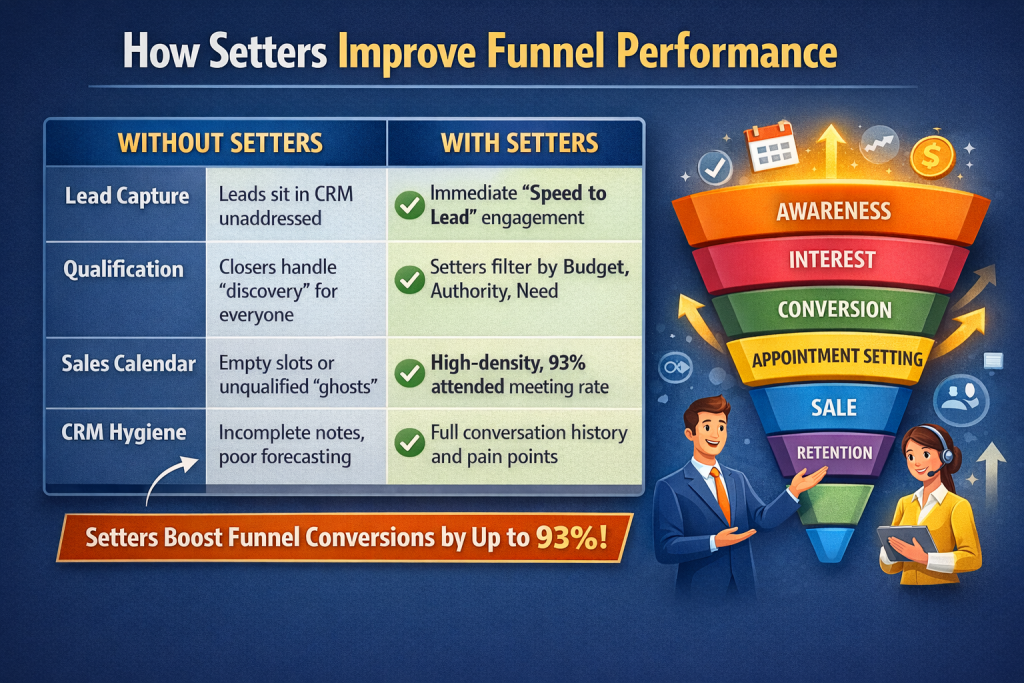
How Setters Improve Funnel Performance
Appointment setters increase funnel efficiency in several measurable ways.
1. Faster Lead Engagement
They contact prospects quickly and maintain conversation momentum.
2. Better Lead Qualification
Sales calls occur only with prospects who meet defined criteria.
3. Higher Meeting Attendance
Setters confirm meetings, send reminders, and maintain communication with prospects.
Many structured setter systems report meeting attendance rates above 90%.
4. Cleaner CRM Data
Every interaction gets logged with notes about:
• pain points
• timeline
• decision authority
This information improves sales forecasting.
Sales Funnel Performance: With vs Without a Setter
| Funnel Stage | Without a Setter | With a Setter |
|---|---|---|
| Lead Capture | Leads sit in CRM for hours or days | Immediate response and engagement |
| Qualification | Closers handle discovery for every lead | Setters filter prospects using qualification frameworks |
| Sales Calendar | Empty slots or unqualified calls | High-density calendar with qualified prospects |
| Follow-Up | Leads go cold after one or two attempts | Structured multi-channel follow-up |
| CRM Data | Limited notes and poor forecasting | Detailed conversation history and qualification data |
Structured funnel roles dramatically increase pipeline efficiency.
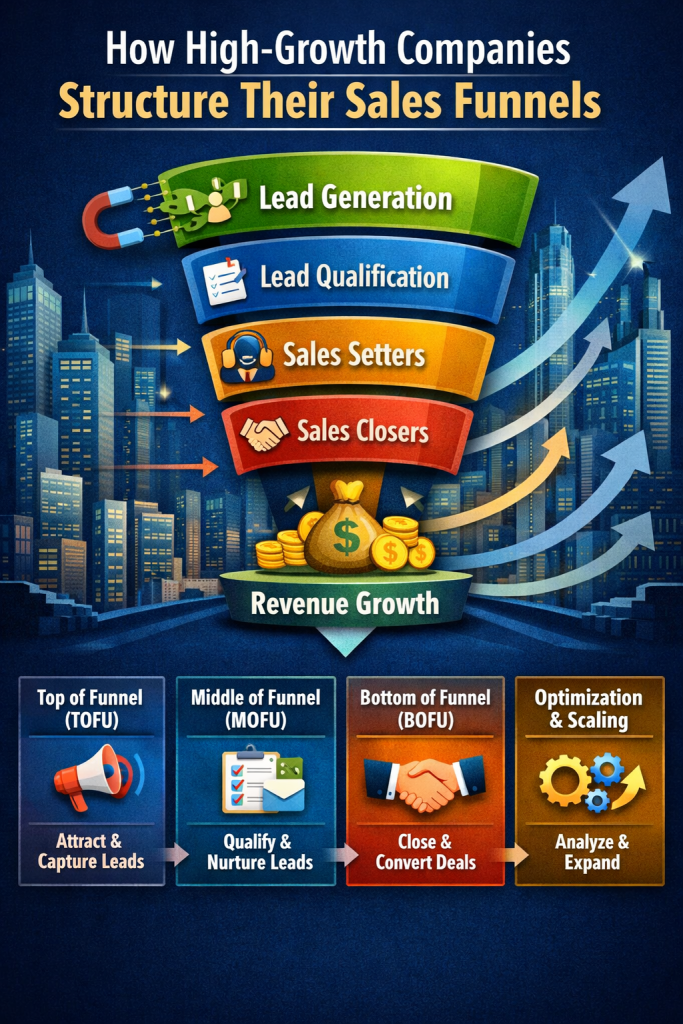
How High-Growth Companies Structure Their Sales Funnels
Fast-growing companies rarely rely on a single person to manage the entire sales cycle.
Instead, they create specialized pipeline roles:
Marketing
Generates traffic and leads.
Appointment Setters / SDRs / BDRs
Qualify leads and book meetings.
Closers / Account Executives
Convert opportunities into revenue.
This specialization allows each role to focus on one stage of the funnel.
The result is a predictable pipeline that scales.
Real-World Example: How Funnel Structure Improves Conversion
Imagine a B2B software company generating 200 leads per month through ads.
Without a setter:
• 60 leads receive slow responses
• 80 leads are poorly qualified
• sales reps waste hours chasing uninterested prospects
The result: low meeting volume and inconsistent revenue.
With a dedicated appointment setter:
• every lead receives rapid follow-up
• qualification filters remove poor prospects
• closers focus only on qualified meetings
The same marketing budget suddenly produces more sales conversations and higher conversion rates.
How Appointment Setters Connect Marketing and Sales
As lead volume increases, companies must decide whether to expand internal sales teams or introduce support roles.
Remote appointment setters provide a flexible option because they can:
• manage high volumes of outreach
• operate across multiple time zones
• support inbound and outbound funnels
This allows businesses to increase marketing spend without overwhelming their sales teams.
For a deeper breakdown of the role itself, see our guide on remote sales setters.
The Bottom Line
A sales funnel is not just a marketing system.
It is an operational pipeline.
Marketing generates interest.
Sales teams close deals.
But the middle stage—where leads become conversations—determines whether the funnel produces revenue.
Appointment setters strengthen this stage by:
• engaging leads quickly
• maintaining consistent follow-up
• qualifying prospects before meetings occur
When companies structure their funnels this way, marketing activity translates into predictable sales conversations and measurable revenue growth.

Frequently Asked Questions
How does an appointment setter directly impact pipeline velocity?
Pipeline velocity measures how fast prospects move through your funnel to generate revenue. An appointment setter accelerates this by eliminating the “waiting period” between lead capture and qualification. By ensuring that leads are vetted and scheduled immediately, the total time from initial interest to a closed deal is significantly reduced.
What specific lead qualification frameworks do setters use?
Most high-performing setters utilize the BANT (Budget, Authority, Need, Timing) or CHAMP (Challenges, Authority, Money, Prioritization) frameworks. This systematic approach ensures that every discovery call on a closer’s calendar meets a pre-defined threshold of quality, preventing “junk” leads from wasting executive time.
Can a remote setter integrate with my existing CRM and Tech Stack?
Yes. Professional setters are typically “tech-stack ready,” meaning they are proficient in managing leads within platforms like HubSpot, Salesforce, or Pipedrive. They handle the manual data entry—logging call notes, updating lead status, and tagging prospects—ensuring your CRM remains a “single source of truth” for the entire sales organization.
What is the “Speed-to-Lead” benchmark for a successful funnel?
In a modern sales environment, the gold standard is responding to an inbound lead within 5 minutes. A dedicated setter ensures this benchmark is met consistently. After 30 minutes, the odds of qualifying a lead drop by nearly 21 times; the setter’s primary role is to prevent this “lead decay.”
How do setters improve the “Sales-to-Service” handoff?
The handoff occurs when a setter transitions a Sales Qualified Lead (SQL) to an Account Executive (AE). By providing detailed qualification notes and a summary of the prospect’s pain points, the setter ensures the closer enters the discovery call with a strategic advantage, making the transition seamless for the prospect.
Do appointment setters help with “Ghosting” and no-show rates?
One of the most valuable operational layers a setter provides is appointment governance. They manage the follow-up sequence between the booking and the actual meeting—sending reminders and re-confirming interest—which often pushes attendance rates above 90%.
What is the difference between an Inbound and Outbound setter?
Inbound setters specialize in “Speed-to-Lead,” qualifying prospects who have already engaged with your marketing (e.g., downloaded a whitepaper or requested a demo). Outbound setters act as hunters, using LinkedIn and cold outreach to generate interest from prospects who match your Ideal Customer Profile (ICP) but haven’t engaged yet.
Why is South Africa a top-tier hub for remote appointment setting?
South Africa is a strategic hub due to its high English proficiency, cultural alignment with Western business values, and favorable time zones (GMT+2). This allows for extended coverage for UK, European, and US markets, ensuring your funnel operates while your local team is offline.