

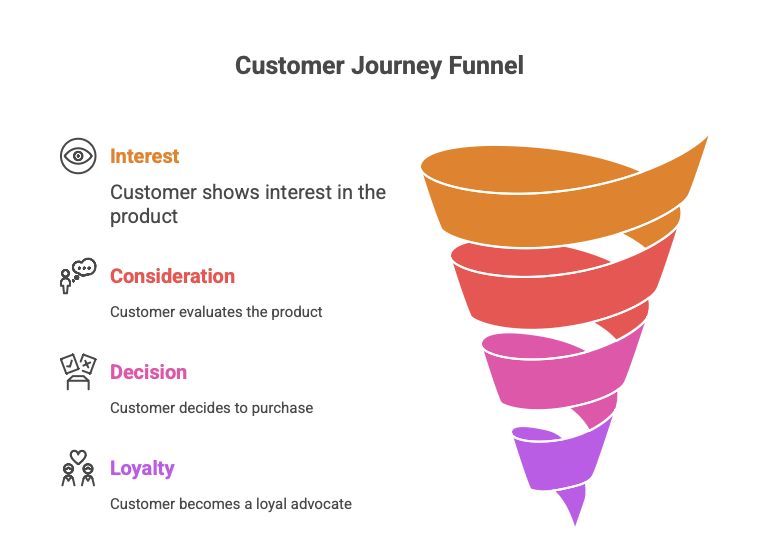
Why Most Marketing Funnels Leak
Many businesses build a funnel once and assume it will run itself. In reality, a funnel is a living system that needs regular maintenance. Without support staff managing the process, leads get stuck between stages.
For example, a business might collect hundreds of leads from a LinkedIn campaign. Those leads enter a spreadsheet or CRM, but no one qualifies them, sends follow-ups, or assigns them to sales. Within days, the opportunity disappears.
According to HubSpot’s State of Marketing Report, companies that respond to leads within five minutes are 21 times more likely to convert them compared to slower responses. The problem is not knowledge. The problem is operational capacity.
A virtual assistant closes these gaps. They ensure every lead receives attention, every action is tracked, and every opportunity moves forward.
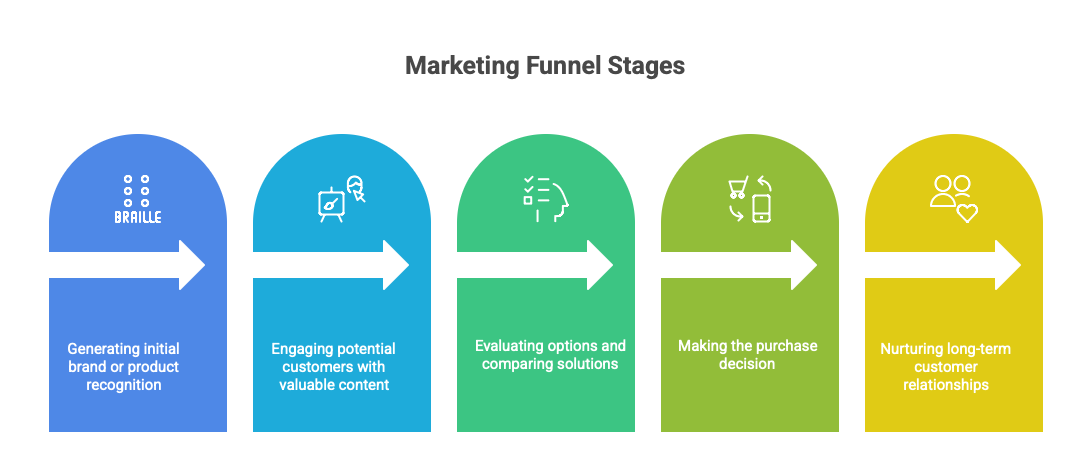
Stage 1: Awareness — Capturing the First Signal
The awareness stage begins when a potential customer first discovers your business. They might click a social media post, read a blog article, or download a guide. At this moment, they are not ready to buy. They are simply exploring.
The biggest operational mistake at this stage is failing to capture and organize interest signals. If someone comments on an ad or fills out a form, that interaction must move into a system immediately.
A virtual assistant manages this intake process. They monitor social media comments, download lead form submissions, and enter them into the CRM. For example, a VA might export leads from LinkedIn Lead Gen Forms and import them into HubSpot while tagging them by campaign.
Marketing strategist Jay Baer explains why this step matters:
“Speed and organization are the difference between interest and indifference.”
Without someone managing the data flow, the funnel stops before it even begins.
Stage 2: Interest — Qualifying the Right Leads
Not every lead is worth pursuing. Some people are curious but not serious. Others match your ideal customer profile perfectly.
The interest stage focuses on identifying the difference. This process is often called lead scoring. Businesses assign points based on behavior such as downloading resources, visiting pricing pages, or opening emails.
A virtual assistant supports this process by tracking engagement signals inside the CRM. For example, if someone visits the pricing page twice and downloads a case study, the VA can update their score and move them into the next stage.
According to Salesforce research, businesses that use structured lead scoring increase conversion rates by 77%.
This stage shows why a funnel is not just marketing. It is operational management. Someone must review activity, update records, and flag qualified prospects for the sales team.
Stage 3: Consideration — Building Trust Through Nurture Sequences
When a lead reaches the consideration stage, they are comparing options. They may read reviews, evaluate competitors, or request additional information.
This stage requires consistent communication. Businesses that fail to nurture leads often lose them to competitors who stay visible during the evaluation process.
A virtual assistant manages the nurture system. They configure automated email sequences in tools such as MailChimp and ActiveCampaign. These sequences trigger based on behavior. For example, if a prospect downloads a white paper, they might receive a three-email series explaining the service in more detail.
Marketing author Seth Godin highlights the importance of this stage:
“People do not buy goods and services. They buy relationships, stories, and trust.”
A nurture sequence builds that trust gradually. Without someone managing the automation and monitoring engagement, the relationship never develops.
Stage 4: Conversion — Moving from Lead to Customer
The conversion stage is where many funnels break down. Leads may show strong interest, but the transition to the sales team fails.
One common issue is the MQL to SQL handoff. MQL stands for Marketing Qualified Lead, while SQL means Sales Qualified Lead. When marketing identifies a serious prospect, someone must pass that information to sales quickly and clearly.
A virtual assistant manages this handoff process. They review CRM activity, confirm that a lead meets the qualification criteria, and assign the contact to a sales representative. They may also prepare background notes summarizing the lead’s behavior.
For example, the VA might write:
“Lead downloaded the pricing guide, opened three nurture emails, and requested a demo.”
This context allows sales teams to start conversations immediately instead of repeating questions.
Research from InsideSales shows that responding to qualified leads within the first hour dramatically increases closing rates. A virtual assistant ensures that this response happens consistently.
Stage 5: Loyalty — Turning Customers into Long-Term Value
The funnel does not end after a sale. In fact, the most profitable stage often comes afterward.
Customer retention increases lifetime value and lowers acquisition costs. According to Harvard Business Review, increasing customer retention by just 5 percent can boost profits by 25 to 95%.
A virtual assistant supports this stage by maintaining regular contact with customers. They schedule follow-ups, send onboarding materials, and collect feedback.
For example, a VA might send a satisfaction survey two weeks after purchase and log the response in the CRM. If a client reports a problem, the VA flags the issue for the support team.
This process turns the funnel into a loop. Satisfied customers often become repeat buyers and referral sources.
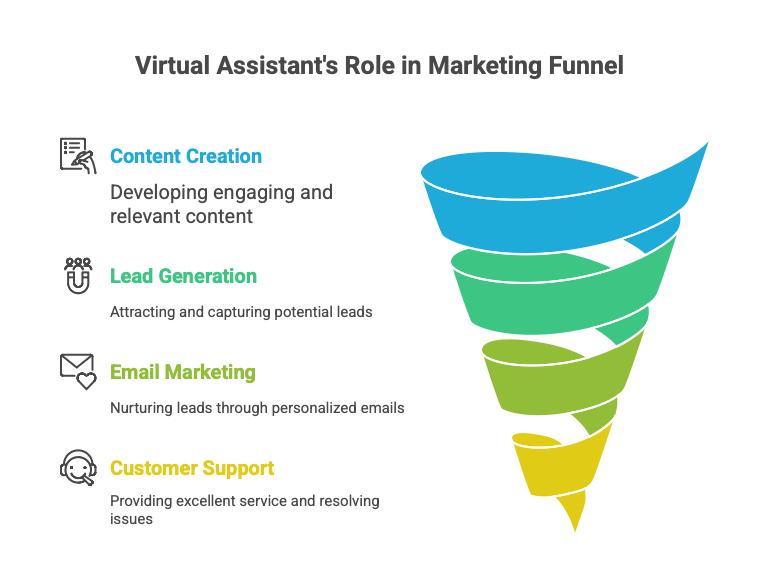
The Tech Stack Behind a Modern Funnel
A modern funnel relies on several interconnected tools. Each platform captures or processes different types of data. When these tools work together, businesses gain clear visibility into the customer journey.
A virtual assistant helps manage this ecosystem.
Typical funnel tools include:
CRM platforms such as HubSpot or Salesforce that store lead data and track interactions.
Email marketing tools like Mailchimp or ActiveCampaign that automate nurture sequences.
Automation platforms such as Zapier that move data between systems.
Analytics tools like Google Analytics that track campaign performance.
For example, a VA might configure a Zapier automation that sends new website leads directly into HubSpot while tagging the source campaign. This small automation prevents manual errors and ensures accurate reporting.
Digital marketing consultant Avinash Kaushik explains why structured data matters:
“Without measurement, marketing becomes guessing.”
Virtual assistants help maintain the systems that make accurate measurement possible.
The Real Role of Virtual Assistants in Marketing Operations
The biggest misunderstanding about virtual assistants is that they only perform simple tasks. In reality, they often manage the operational backbone of marketing systems.
A business owner or marketing director designs the strategy. The virtual assistant executes the daily work that keeps the strategy functioning.
For example, a VA may:
Monitor lead form submissions and import them into the CRM
Update lead scores based on engagement behavior
Maintain automated nurture sequences
Prepare sales handoff notes for qualified prospects
Track campaign metrics and prepare performance reports
These responsibilities keep the funnel active. Without this operational layer, even the best marketing strategy struggles to produce results.
This approach aligns closely with the philosophy behind Aristo Sourcing, which focuses on building structured remote support teams rather than hiring isolated freelancers.
The Simple Test: Do You Need Funnel Support?
Many business owners ask the same question. Do they need more marketing, or do they need better operational support?
A quick test can reveal the answer.
If leads take days to receive a response, the funnel has an operational gap. If CRM data is outdated or incomplete, the funnel lacks management. If prospects disappear after showing interest, the nurture process is broken.
These problems rarely require more advertising. They require structured support.
A virtual assistant provides that structure. By maintaining the systems that connect marketing and sales, they turn scattered activity into a predictable growth engine.
In other words, the funnel does not succeed because it exists. It succeeds because someone manages it every day.