
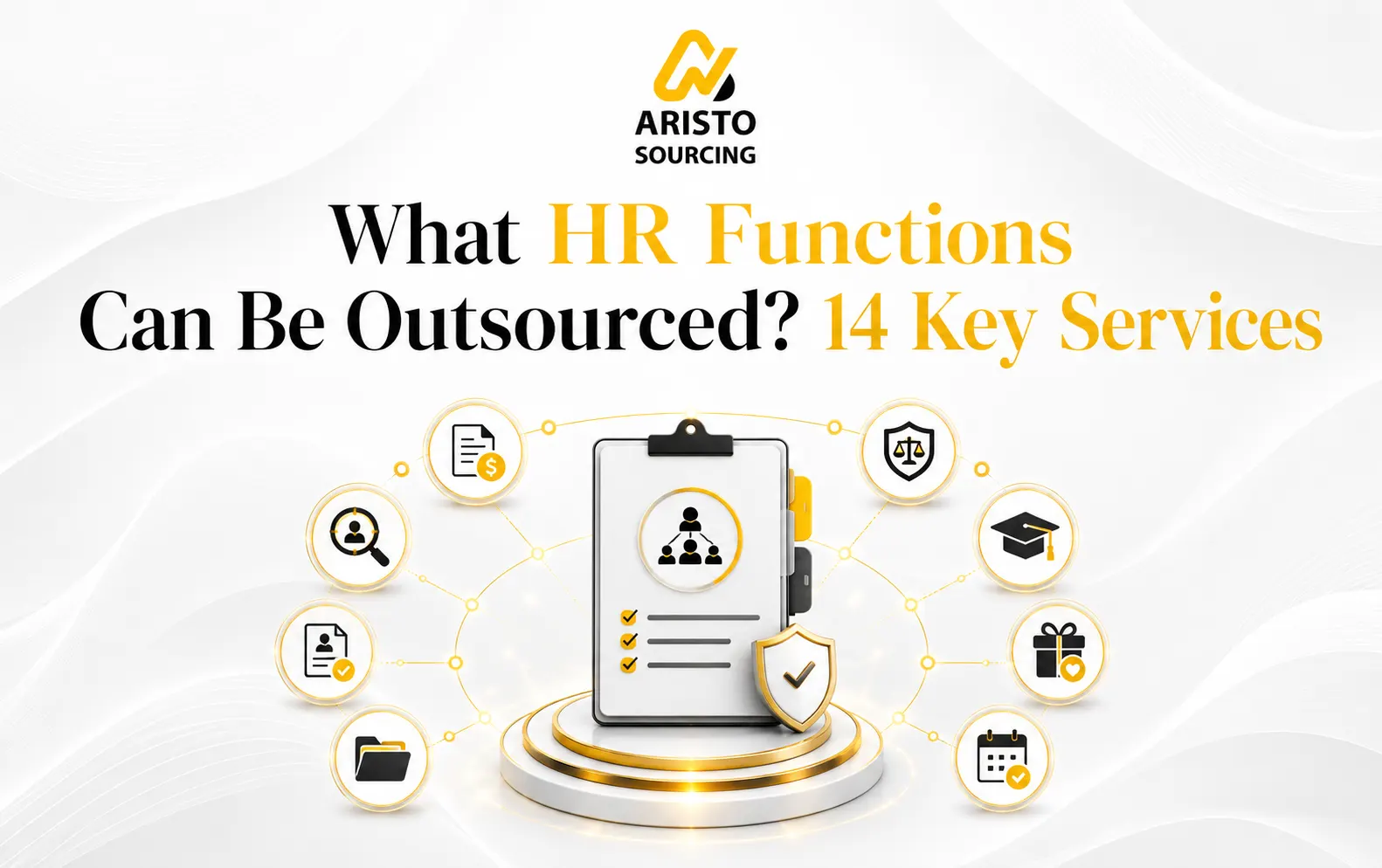
HR functions are the specific people-management tasks such as payroll, benefits, and hiring that keep a workforce running, and many can be handled by an outside provider. Important HR functions that can be outsourced include payroll processing, benefits administration, recruitment, compliance management, employee onboarding, and more.
It is also important to understand that not every function should move outside the company; for example, culture-building, final hiring and termination decisions, and other judgment-heavy work are generally best kept in-house, a distinction covered later in this guide.
What Does It Mean to Outsource HR Functions?
HR outsourcing functions means contracting one or more human resources tasks, such as payroll, benefits, or recruitment, to an external provider that performs the work under a service agreement.
In practice, the company selects which functions to hand off, the provider builds the workflows and technology to support them, and both sides agree on service levels, data access, and reporting before work begins.
Businesses can outsource a single function, such as payroll alone, or hand off an entire department’s worth of human resources outsourcing, covering payroll, benefits, compliance, and recruitment together under one provider. The right scope depends on how much internal HR capacity the company already has and which different types of functions carry the highest administrative burden.
What Types of HR Functions Are Most Typically Outsourced?
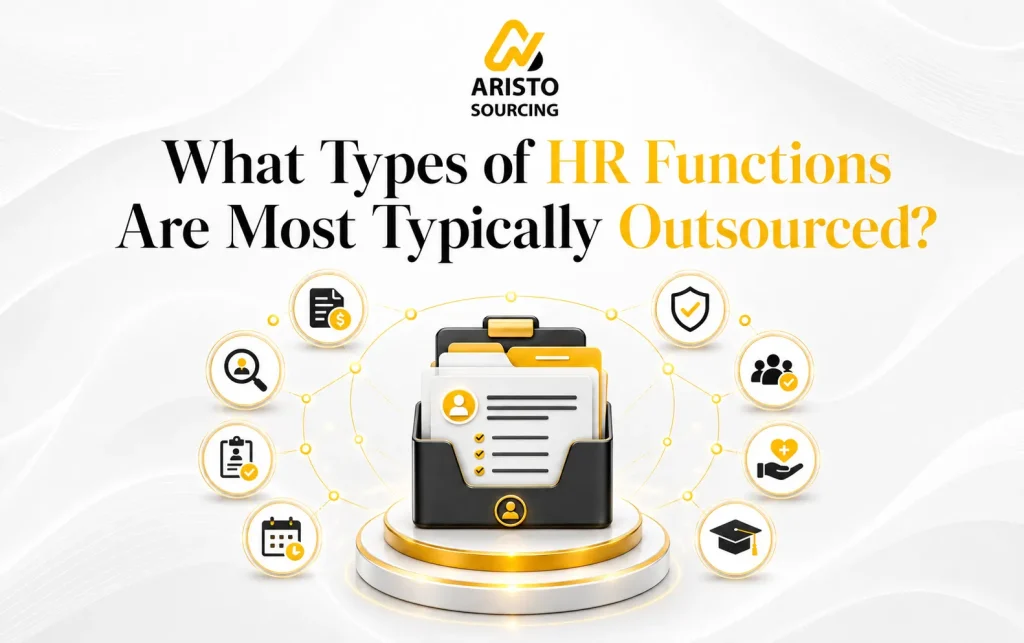
The most outsourced HR function types include payroll and tax administration, benefits management, recruitment, compliance, onboarding, employee relations, training, performance management, HR technology, workforce administration, screening, rewards, DEI training, and leave management.
The most outsourced HR functions or services are listed below.
- Payroll and Tax Administration
- Benefits Administration
- Recruitment and Staffing
- Compliance and Risk Management
- Onboarding and Offboarding
- Employee Relations and Conflict Resolution
- Training and Development
- Performance Management
- HR Technology and HRIS Administration
- Workforce Administration
- Drug and Background Screening
- Rewards and Recognition
- DEI and Anti-Harassment Training
- Leave of Absence Management
1. Payroll and Tax Administration
Payroll and tax administration is the most commonly outsourced HR function, since it touches every employee, every pay period, without exception. It typically covers payroll processing and direct deposit, along with tax withholding, filing, and year-end W-2 preparation. In-house payroll errors carry real compliance risk, since the employer remains legally responsible for tax deposits even when a provider makes them on its behalf. Because of that liability, payroll should be outsourced only to a provider whose Electronic Federal Tax Payment System (EFTPS) activity the employer can independently verify, a safeguard the IRS specifically recommends to catch provider errors or fraud early.
2. Benefits Administration
Benefits administration ranks close behind payroll as a commonly outsourced function, largely because plan rules and compliance requirements change every year. It typically covers open enrollment support, health and retirement plan administration, and COBRA compliance for departing employees. Providers also field day-to-day employee questions about coverage and claims, which frees internal staff from routine benefits inquiries. Because premiums and plan options vary by provider, businesses that outsource this function still need to review renewal terms closely each year.
3. Recruitment and Staffing
Recruitment and staffing outsourcing covers everything from job posting and candidate sourcing to interview coordination and offer management. Providers often bring applicant tracking systems and sourcing networks that a smaller internal team couldn’t easily build on its own. This function is commonly outsourced through recruitment process outsourcing (RPO) or contingency search, depending on hiring volume and role seniority. Outsourcing recruitment tends to shorten time-to-hire, though final candidate selection typically still involves the hiring manager directly.
4. Compliance and Risk Management
Compliance and risk management outsourcing tracks federal, state, and local labor law changes that apply to the business. It typically includes wage-and-hour rule monitoring, EEOC and OSHA compliance support, and policy audits to catch gaps before they become violations. Multi-state employers benefit the most from this function, since tracking dozens of jurisdictions internally is difficult without dedicated staff. Providers generally flag issues and recommend fixes, but the employer still carries ultimate legal responsibility for compliance.
5. Onboarding and Offboarding
Outsourcing onboarding and offboarding covers the paperwork-heavy steps at both ends of employment. New-hire onboarding typically includes I-9 verification, benefits enrollment paperwork, and orientation scheduling, while offboarding covers final pay calculations, COBRA notices, and exit interviews. Standardizing these steps through a provider reduces the paperwork errors that commonly occur when onboarding is handled ad hoc by different managers. Consistent offboarding documentation also matters for compliance if a former employee later disputes their separation.
6. Employee Relations and Conflict Resolution
Employee relations and conflict resolution outsourcing gives a business access to a neutral party for handling workplace complaints and disputes. Providers typically manage complaint intake, document disciplinary conversations, and facilitate mediation between employees or between an employee and a manager. This function works best as a support layer rather than a replacement for internal judgment, since final decisions on outcomes still need an employer’s voice. Businesses that outsource this function usually keep a clear escalation path back to internal leadership for serious cases.
7. Training and Development
Training and development outsourcing typically covers learning management system (LMS) administration, compliance training delivery, and tracking of completion records across the workforce. Providers often supply ready-made content libraries for common topics like workplace safety or new-manager training, which saves the cost of building courses internally. Skills-based development programs can also be outsourced, letting employees access structured learning paths without an internal training department. Completion tracking matters most for mandatory training, where documentation may be needed to demonstrate compliance.
8. Performance Management
Performance management outsourcing includes the administration of the review cycle, from scheduling and reminders to goal-tracking software and calibration support across departments. Providers often supply the platform employees and managers use to document reviews, which standardizes the process across teams. This function also frequently includes documentation support for promotions or performance improvement plans, which matters if a decision is later challenged. Managers still handle the actual performance conversations and ratings, since that judgment doesn’t transfer to a vendor.
9. HR Technology and HRIS Administration
HR technology and HRIS administration outsourcing include the setup, maintenance, and troubleshooting of the software systems that store employee data and run HR workflows. Providers typically handle system implementation, data migration from older platforms, and ongoing user support when employees or managers run into issues. Integration work, connecting the HRIS to payroll, benefits, and time-tracking systems, is also commonly outsourced, since it requires specialized technical knowledge. This function matters more as a company grows, since manual HR recordkeeping becomes unworkable past a certain headcount.
10. Workforce Administration
Workforce administration outsourcing covers the ongoing recordkeeping that supports every other HR function, including employee files, org charts, and headcount tracking. It typically includes time and attendance administration, along with workforce reporting and analytics that leadership uses for planning. Keeping this data accurate and current is tedious but essential, since errors here tend to cascade into payroll and compliance problems. Providers generally centralize this recordkeeping in a single system, which reduces the risk of conflicting records across departments.
11. Drug and Background Screening
Drug and background screening outsourcing handles criminal checks, employment and education verification, and drug testing coordination. While specialized vendors streamline the logistics, employers retain non-delegable legal duties under the Fair Credit Reporting Act (FCRA). Employers remain strictly liable for providing standalone written disclosures, securing separate written authorizations, and executing proper pre-adverse and adverse action notices, the primary targets of compliance class-action lawsuits. Additionally, while background screening falls under the FCRA, drug testing coordination is governed separately by state-specific labor laws and federal safety regulations. Because turnaround times directly dictate how quickly a candidate can onboard, efficient processing is critical for time-sensitive roles and highly regulated industries.
12. Rewards and Recognition
Rewards and recognition outsourcing includes administration of employee recognition programs, service awards, and incentive or bonus tracking across the organization. Providers typically supply the platform employees use to give and receive recognition, along with reporting on program participation. This function also often includes engagement survey administration, which gives leadership visibility into how recognition efforts are landing. Outsourcing the administrative side lets internal HR staff focus on designing the recognition strategy rather than running the day-to-day mechanics.
13. DEI and Anti-Harassment Training
DEI and anti-harassment training outsourcing includes delivery of mandatory harassment prevention courses, which several states require on a recurring schedule, along with broader diversity, equity, and inclusion training content. Providers typically track completion records for compliance purposes, since documentation matters if a harassment claim is later investigated. Content is usually built to meet the strictest applicable state requirement, since employers with staff in multiple states must satisfy each jurisdiction’s rules. This function is commonly outsourced because staying current on state-specific training mandates requires dedicated legal and compliance attention.
14. Leave of Absence Management
Leave of absence management outsourcing covers administration of FMLA, state paid family and medical leave programs, and short- and long-term disability coordination. Providers typically track eligibility, required documentation, and return-to-work timelines for each employee on leave. Multi-state employers benefit most from this function, since paid leave laws vary significantly by state and change frequently. Accurate leave tracking also protects the business from compliance exposure if a leave request is mishandled or a return-to-work date is missed.
What HR Functions Should Not Be Outsourced?
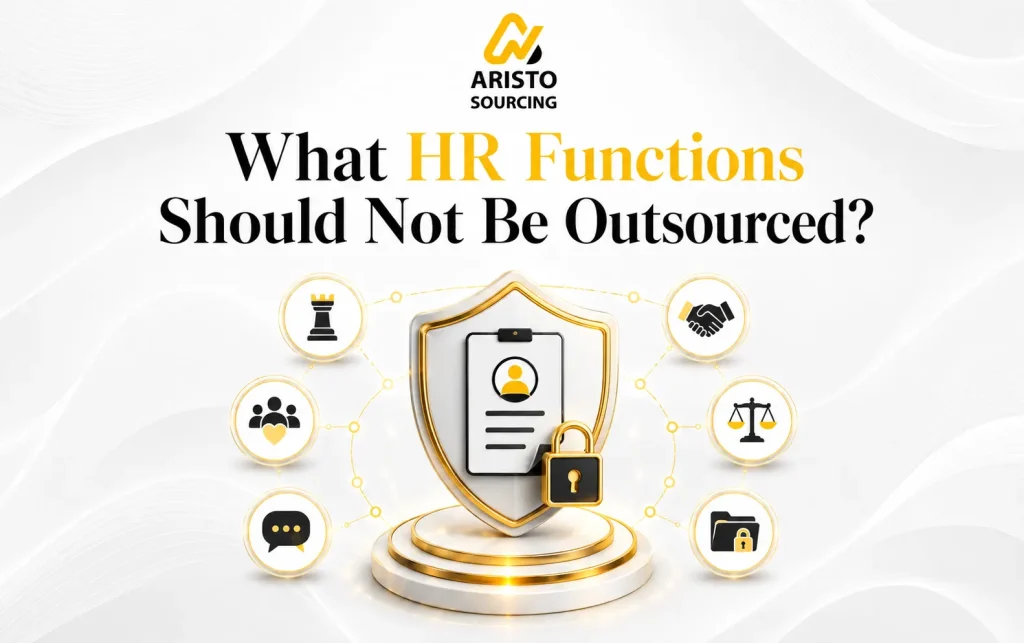
HR functions that should not be outsourced include company culture, final hiring and termination decisions, strategic workforce planning, and sensitive internal communications, meaning any work that depends on direct, ongoing leadership judgment.
HR functions that should not be outsourced are listed below.
- Company Culture and Employee Engagement
- Final Hiring and Termination Decisions
- Strategic Workforce Planning
- Sensitive Internal Communications
Company Culture and Employee Engagement
Cultural ownership can’t be transferred to a vendor because culture is built through daily leadership behavior, not administered through a service contract. An outside provider can support engagement programs and surveys, but the tone a company sets, how it treats mistakes, recognizes contributions, and communicates values, has to come from people who work inside the business every day. Employees also tend to sense when culture initiatives are outsourced wholesale, which can undermine the authenticity leadership is trying to build.
Final Hiring and Termination Decisions
Final employment decisions stay with leadership because a vendor can advise, but the employer decides, and that distinction carries real legal and cultural weight. A recruitment provider can screen candidates and a compliance provider can flag termination risk, but the actual choice to hire or let someone go reflects judgment about fit, performance, and the business’s specific needs that no outside party fully has. Keeping this decision internal also keeps accountability where it belongs when a decision is later questioned.
Strategic Workforce Planning
Long-term headcount and org-design strategy stays internal because it’s tied directly to where the business is headed, not just how its current HR administration runs. Deciding which roles to grow, which functions to consolidate, and how the organization should be structured in two or three years requires knowledge of strategy, budget, and market position that sits with leadership, not an outside HR vendor. Outsourced providers can supply data and benchmarks to inform this planning, but the decisions themselves need to stay in-house.
Sensitive Internal Communications
Layoffs, restructures, and executive matters need an internal voice because employees expect difficult news to come from someone who represents the company, not a third party. A vendor delivering a layoff notice or restructuring announcement can come across as impersonal at exactly the moment employees need reassurance and clarity. This is one of several different types of HR outsourcing decisions where the line isn’t about capability; it’s about who employees need to hear from directly.
What Are the Types of HR Outsourcing?
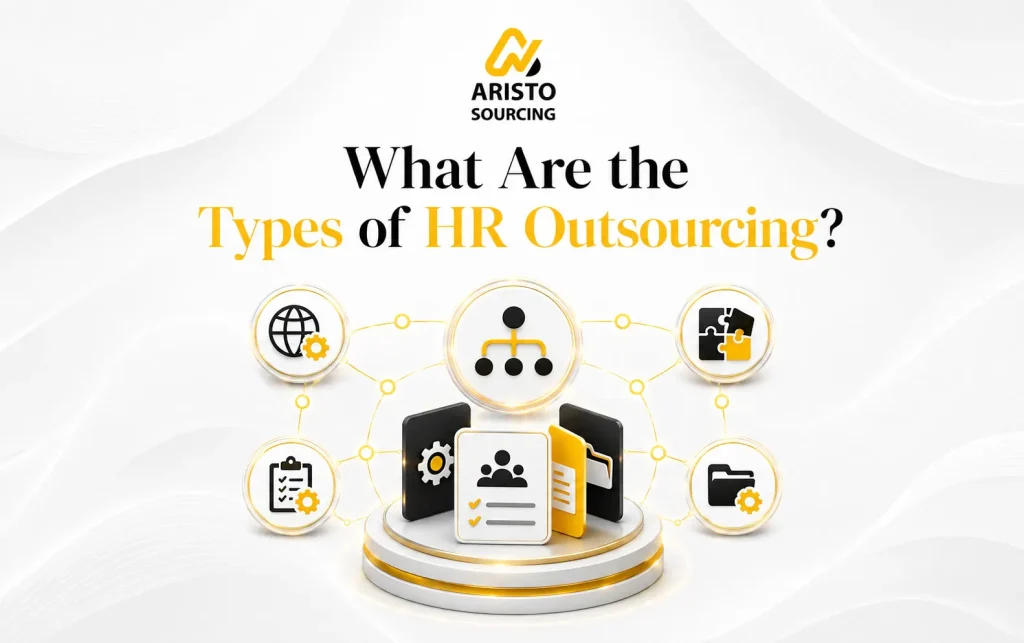
The types of HR outsourcing include PEO, ASO, HRO, HR SaaS, BPO, and EOR arrangements, each transferring a different degree of responsibility to the provider.
The types of HR outsourcing are listed below.
- PEO: PEO means a professional employer organization that enters a co-employment relationship with the client, sharing contractually defined employer responsibilities. Under this model, the PEO typically files federal payroll taxes under its own EIN rather than the client’s. At the state level, reporting rules vary by jurisdiction. Some states require filings under the PEO’s tax account, some require the client’s individual account, and others utilize a hybrid reporting structure.
- ASO: ASO means administrative services organization that handles payroll and HR administration without entering a co-employment relationship. It offers a service menu similar to a PEO’s but leaves the employer as the sole legal employer of record. Businesses that want outsourced support while retaining full control typically choose this model.
- HRO: HRO is a broad HR outsourcing arrangement in which an external provider manages some or all HR functions as a vendor rather than a co-employer. It typically covers everything from payroll to recruitment to compliance, depending on the contract scope. Businesses that want flexible, à la carte coverage often choose this model over a PEO.
- HR SaaS: HR SaaS is a software-only model in which the business licenses a platform to manage HR tasks internally rather than outsourcing the labor itself. It typically covers HRIS functionality, payroll processing tools, and self-service portals, though the business’s own staff still does the administrative work. Businesses with an internal HR team that just needs better tools typically choose this model.
- BPO: BPO means business process outsourcing (BPO) focused on a single HR function, such as payroll or background screening, handled by a specialized vendor. It typically involves a narrower scope than an HRO arrangement, since the provider manages one process rather than a broad set of functions. Businesses that want to outsource a specific pain point without a full HR overhaul typically choose this model.
- EOR: EOR means an employer of record that becomes the legal employer for a company’s workers, often used for hiring in states or countries where the business has no legal entity. It typically handles payroll, tax compliance, and statutory benefits on the client’s behalf while the client manages the employee’s day-to-day work. Businesses expanding into new markets without setting up a local entity typically choose this model.
How Much Does HR Outsourcing Cost?
HR outsourcing costs between $45 and $400 per employee per month for standard administrative and full-service tiers, with PEO co-employment pricing running higher once benefits pass-through is included, depending on service scope and provider model.
Pricing typically follows one of three structures: per-employee-per-month (PEPM) fees that scale with headcount, flat monthly fees for a fixed service bundle, or à la carte pricing for a single function like outsourced payroll services. Each model offers a different benefit: PEPM gives predictable per-head budgeting, flat fees suit stable teams, and à la carte pricing lets a business outsource only the functions it actually needs without paying for a full bundle.
What are The Benefits of Outsourcing Human Resources?
The benefits of outsourcing human resources are listed below.
- Cost efficiency: Outsourcing typically costs less than building the same capability with in-house salaries, software, and training. The savings come from providers spreading their technology and expertise across many clients rather than one.
- Access to compliance expertise: Providers track labor law changes as their core business, reducing the risk of missed filings or outdated policies. This matters most for companies operating across multiple states with varying requirements.
- Scalability: Outsourced HR support adjusts as headcount grows or shrinks, without requiring a new internal hire at every threshold. This flexibility is harder to replicate with a fixed internal team.
- Focus on core business: Delegating HR administration frees leadership and staff to spend more time on the work that directly grows the business. This is especially valuable at smaller companies where the owner often handles HR by default.
What Are the Pros and Cons of Outsourcing Human Resources?
The pros of outsourcing HR include the cost efficiency, compliance expertise, scalability, and focus on core business already covered above, and the cons include reduced control, cultural distance, vendor dependency, and data-security considerations.
For businesses wary of full outsourcing, they can consider staff augmentation as an alternative model. This adds a dedicated outsourced HR person who works inside the company’s own processes and can offer a middle ground between full vendor dependency and hiring internally for every function.
Which HR Functions Should Your Business Outsource First?
HR functions your business should outsource first are payroll and other admin-heavy tasks, the functions with the highest volume and lowest strategic judgment involved. The best starting criteria are functions that are repetitive, compliance-heavy, and non-strategic: payroll, benefits administration, and background screening are common first picks because they run on a predictable schedule and carry real compliance risk if handled incorrectly in-house.
Starting here lets a business capture outsourcing benefits quickly while keeping judgment-heavy work internal. As comfort with outsourcing grows, businesses often expand into recruitment support and HR technology administration before touching the types of functions that should not be outsourced, like culture and final hiring decisions, covered earlier in this guide. For businesses ready to outsource payroll and other admin-heavy functions but not ready for a full PEO commitment, it can be worth exploring options to hire dedicated remote HR staff. For example, Aristo Sourcing’s remote HR staffing model, which pairs a business with a dedicated HR professional handling day-to-day admin work without the co-employment structure of a PEO.