

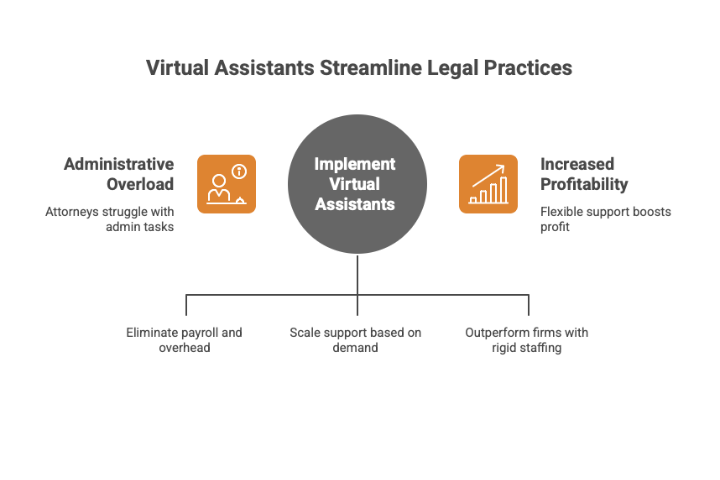
In an unpredictable economy, law firms are reassessing how they staff their practices, and many are shifting their focus toward more flexible support options. Attorneys face rising overhead, fluctuating caseloads, and increased pressure to maintain profitability without expanding payroll. According to the American Bar Association, 68 percent of small and solo attorneys struggle with administrative overload, yet most hesitate to hire due to long-term financial commitments. This growing disconnect explains why searches for virtual legal assistant services have risen consistently over the last year. As more firms question the sustainability of traditional staffing, they naturally look toward a Virtual Assistant for Attorneys who eliminates fixed costs and adapts to real-time workload changes.
This shift is not simply a reaction to temporary market volatility. It reflects a broader transformation in how modern legal practices operate and scale. Firms prioritizing efficiency and agility consistently outperform those tied to rigid staffing models, especially during economic uncertainty. Recent research from Thomson Reuters shows law firms with flexible, outsourced support grew profit margins 22 percent faster than firms reliant on full-time administrative employees. These findings highlight why a Virtual Assistant for Attorneys provides both immediate relief and long-term competitive advantage. Understanding this shift sets the foundation for exploring the financial power of virtual legal staffing.
The Measurable Financial Advantage of Outsourcing Legal Assistant Tasks
A full-time hire costs far more than salary alone, and attorneys often underestimate the total financial impact until they analyze the numbers. Federal labor data shows that after benefits, taxes, workspace, onboarding, insurance, and management time, a traditional employee can cost 1.3 to 1.4 times their base salary.
These overhead costs extend far beyond payroll. In major legal markets, office space alone can represent a significant expense. In cities such as New York, commercial office rent for professional services ranges from approximately $26 to $130 per square foot annually. When law firms add insurance, utilities, office equipment, IT support, and software licensing, the financial commitment of hiring even a single administrative employee becomes substantial.
By contrast, remote legal administrative support for law firms transforms these fixed liabilities into predictable, controllable operational expenses. A Virtual Assistant for Attorneys allows law firms to scale support in alignment with revenue rather than payroll demands.
When attorneys shift intake, document prep, billing coordination, scheduling, research, and communication to a virtual legal assistant, they reclaim hours that directly convert into billable revenue. Clio’s Legal Trends Report states that lawyers average only 2.5 billable hours per day, with the remaining time lost to admin tasks that do not generate income.
This shift is why many law firms report cost reductions of up to 70 percent when transitioning administrative roles to remote support. Instead of committing to fixed salaries, benefits, and office infrastructure, firms only pay for productive support hours. The result is a leaner operational structure that protects profit margins even when caseloads fluctuate.
Delegating these tasks to a Virtual Assistant for Attorneys increases capacity without expanding headcount. As firms gain these operational efficiencies, it becomes clear why outsourcing legal tasks is a smarter strategy than full-time hiring, especially when the environment is economically unstable.
How Delegation to a Virtual Assistant for Attorneys Eliminates Workflow Friction
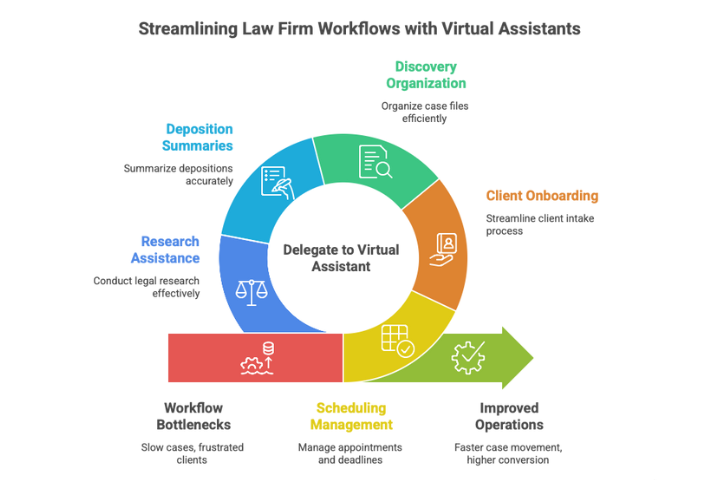
Every law firm experiences workflow bottlenecks that slow cases down, frustrate clients, and overwhelm attorneys. Missed follow-ups, delayed intake responses, disorganized case files, and backlogged communication often occur because the attorney is handling tasks that should be delegated. A skilled virtual legal intake assistant or remote paralegal support specialist can manage structured, repeatable responsibilities such as scheduling, client onboarding, discovery organization, deposition summaries, research, and deadline tracking.
Additional responsibilities can include drafting legal correspondence, conducting preliminary client screening, preparing discovery documentation, organizing litigation files, and assisting with legal research under attorney supervision. These tasks are essential for maintaining case momentum yet often consume valuable attorney time that could otherwise be billed to clients.
This frees the attorney to focus exclusively on billable strategy and client advocacy.
This shift creates measurable operational improvements. Firms that implement law firm virtual support solutions often report 35 to 50 percent faster case movement, especially in practice areas like immigration, family law, estate planning, personal injury, and litigation. Faster communication leads to higher intake conversion because potential clients rarely wait more than 24 hours for a response. Delegation also improves the attorney’s mental clarity by removing administrative clutter and reducing decision fatigue. These operational gains open the door to understanding how virtual staffing strengthens law firm stability during economic fluctuations.
How to Integrate a Virtual Assistant into Your Legal Workflow
Successfully integrating a Virtual Assistant for Attorneys requires a structured onboarding process rather than informal delegation. Law firms that achieve the greatest efficiency gains typically begin by documenting their core administrative workflows and identifying tasks that do not require a licensed attorney.
Once these tasks are defined, the virtual assistant is granted secure access to the firm’s operational systems. Most modern law firms rely on practice management platforms such as Clio or MyCase for case tracking, document storage, and client communication. Secure user permissions ensure that the assistant can perform administrative functions without accessing privileged legal decision-making areas.
Task coordination is often managed through project management tools like Trello, allowing attorneys to assign work, track deadlines, and maintain accountability without constant meetings. Clear documentation of procedures, such as intake scripts, document naming conventions, and billing workflows, ensures consistency and reduces training time.
Regular communication rhythms, such as weekly workflow reviews or asynchronous updates, keep both the attorney and assistant aligned. When implemented correctly, this structured integration allows the virtual assistant to function as a seamless operational extension of the law firm.
Why Virtual Staffing Creates Stability During Market and Case Volume Uncertainty
Economic volatility creates unpredictable revenue cycles, and law firms that rely on full-time staffing models remain financially exposed throughout these fluctuations. A Virtual Assistant for Attorneys provides a strategic buffer by allowing firms to adjust support levels without renegotiating salaries or committing to long-term hiring.
During slow periods, attorneys scale down. When caseloads spike, they scale up. This adaptability is impossible with full-time staff.
Deloitte’s talent trends report found that 74 percent of professional services firms are increasing their use of flexible or outsourced talent to mitigate economic and operational risks. Virtual assistants align perfectly with this shift because they eliminate long-term overhead while maintaining high-quality support.
Instead of being locked into payroll obligations during downturns, attorneys maintain agility and resilience. This creates a stable operational environment that continues to function effectively regardless of external economic pressures. Stability is only one advantage, though; virtual support also elevates profitability in ways traditional hiring cannot match.
How a Virtual Assistant for Attorneys Builds Predictable and Scalable Profitability
Profitability grows when attorneys spend more time on billable work and less time on tasks that generate no direct revenue. When a firm delegates administrative, organizational, and client-facing tasks to a Virtual Assistant for Attorneys, the attorney’s effective hourly output increases consistently.
This supports predictable, structured revenue growth even when the market remains uncertain.
One case example involves a mid-sized litigation firm that implemented a virtual assistant for litigation attorneys to handle discovery scheduling, email triage, and pre-trial paperwork. Within 90 days, the firm reported a 40 percent increase in billable capacity without adding attorneys or paralegals. The boost came entirely from removing workflow friction. Profitability became more consistent because the attorney’s workload aligned with high-value tasks rather than administrative interruptions. With profitability optimized, the next logical question becomes how virtual assistants help future-proof legal practices in a rapidly changing industry.
Future-Proofing the Modern Law Firm With Remote Legal Support
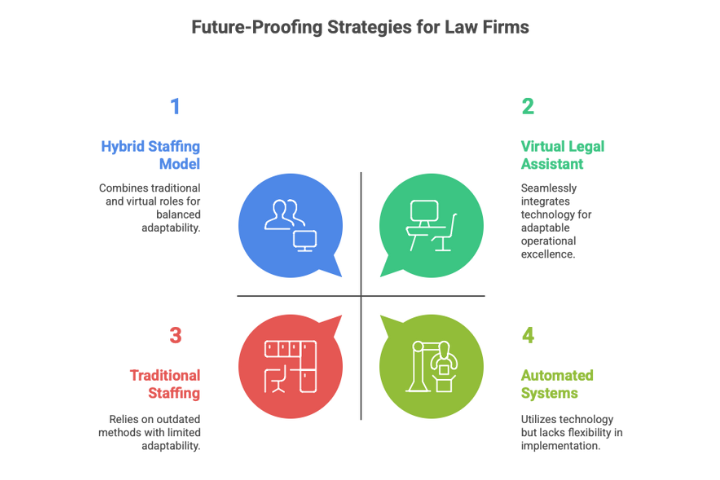
The legal industry is evolving quickly as clients expect faster responses, digital communication, transparent case updates, and more accessible remote services. Firms that rely on outdated manual workflows struggle to meet these expectations, while those with a Virtual Assistant for Attorneys are able to integrate modern systems seamlessly. Virtual assistants assist with CRM management, client portals, practice management software, automation tools, online scheduling, digital intake, and workflow optimization.
A Wolters Kluwer legal tech survey revealed that 70 percent of attorneys believe technology will reshape law practice, yet many also report lacking the time to implement and maintain it. A virtual assistant bridges this gap by managing day-to-day software operations, updating case records, monitoring deadlines, and ensuring systems run efficiently. This forward-facing staffing approach positions firms for long-term sustainability and operational excellence. With future readiness established, it becomes clear why more attorneys are switching now rather than waiting.
When to Hire In-House vs. Stay Virtual
While virtual assistants provide enormous flexibility, law firms often benefit most from a hybrid staffing strategy. High-value, client-facing responsibilities, such as legal strategy, court representation, and complex case analysis, remain the responsibility of licensed attorneys and internal staff.
Administrative coordination, document preparation, client intake management, scheduling, and workflow tracking can be delegated to a Virtual Assistant for Attorneys. This hybrid model allows firms to maintain strong client relationships while keeping operational costs flexible and scalable.
The key is aligning each task with the most appropriate resource. Work requiring legal judgment remains in-house, while operational processes move to virtual support. This structure allows law firms to expand capacity without committing to permanent payroll increases.
Delegation Mistakes to Avoid When Using a Virtual Legal Assistant
While virtual assistants can dramatically improve law firm efficiency, poor implementation can limit results. One of the most common mistakes is delaying delegation until administrative work has already become overwhelming. Early delegation allows assistants to establish systems before workflow bottlenecks emerge.
Another mistake is providing vague task instructions. Clear documentation, defined deadlines, and structured communication channels ensure the assistant understands expectations and can deliver work efficiently.
Law firms must also enforce strict confidentiality and compliance protocols. Virtual assistants should operate within secure platforms, follow documented procedures, and never perform tasks that require legal licensing or attorney judgment.
When these boundaries and systems are clearly defined, virtual assistants operate as a reliable operational extension of the law firm rather than an external contractor.
Why Attorneys Are Making the Shift Now
Economic uncertainty rewards flexible firms and exposes rigid ones. Traditional hiring models cannot match the scalability, affordability, or operational efficiency offered by a Virtual Assistant for Attorneys.
As more attorneys recognize the undeniable advantages of outsourcing administrative tasks, optimizing workflows, and reducing non-billable strain, virtual legal staffing becomes a strategic necessity rather than a convenience.
Firms that act now gain a competitive advantage while others continue to operate with outdated systems that slow growth.
Take Control of Your Firm’s Profitability
Stop trading billable hours for administrative tasks.
In an unpredictable market, the ability to scale without risk is your greatest competitive advantage.
Schedule a free consultation today to discover exactly how much billable revenue you can recover by integrating a Virtual Assistant for Attorneys.
Frequently Asked Questions (FAQ)
1. How much does a virtual legal assistant cost compared to a traditional full-time employee?
The cost difference is significant because you are shifting from a fixed liability model to a predictable operational expense.
| Expense Category | Traditional Full-Time Employee | Virtual Legal Assistant (VA) |
|---|---|---|
| Salary & Benefits | Salary + ~30–40% for taxes, health insurance, PTO, etc. | Predictable hourly or flat monthly rate. No benefits required. |
| Overhead | Required: office space, utilities, computer, furniture, software licenses. | Zero overhead. The VA uses their own workspace and equipment. |
| Payment Model | Paid for 40 hours per week regardless of workload (includes downtime). | Paid only for productive hours worked or contracted tasks (pay-for-output). |
In short: A traditional employee costs 1.3 to 1.4 times their base salary, while a Virtual Legal Assistant converts payroll into a flexible operational expense.
Is a virtual legal assistant the same as a remote paralegal?
No. They perform different but complementary roles within a law firm.
| Role | Primary Focus | Scope of Work |
|---|---|---|
| Virtual Legal Assistant (VLA) | Administrative & Operational Support | Client intake, scheduling, email triage, billing coordination, CRM updates, document organization |
| Remote Paralegal | Substantive Legal Support | Drafting pleadings, conducting legal research, preparing discovery, summarizing depositions, assisting with trial preparation under attorney supervision |
Key takeaway:
A Virtual Legal Assistant removes administrative bottlenecks, while a Remote Paralegal assists with substantive legal work under attorney supervision.
How quickly can a law firm start working with a virtual legal assistant?
Most law firms can begin working with a virtual assistant within a few days to two weeks, depending on onboarding requirements. The process typically involves identifying tasks to delegate, granting access to practice management software, and documenting workflows. Once procedures are established, productivity improvements often appear quickly.
How do virtual legal assistants protect confidential client information?
Professional virtual assistants follow strict confidentiality standards similar to in-house staff. This usually includes non-disclosure agreements, secure document systems, encrypted communication platforms, and restricted software permissions. Attorneys also maintain control over access levels so assistants only interact with the information required for their assigned tasks.
What types of law firms benefit most from virtual assistant support?
Virtual assistants are particularly valuable for solo attorneys, boutique firms, and growing mid-size practices. These firms often face the highest administrative workload but may not want to commit to full-time payroll expenses. Virtual support allows them to maintain operational efficiency while keeping staffing flexible.
Can a virtual legal assistant help improve client response times?
Yes. Faster communication is one of the most immediate benefits. A virtual assistant can monitor incoming inquiries, schedule consultations, coordinate follow-ups, and organize case updates. This ensures potential clients receive timely responses, which can significantly improve client satisfaction and intake conversion rates.
Can virtual legal assistants support multiple practice areas?
Yes. While they do not provide legal advice, virtual assistants can manage operational tasks common across most practice areas. This includes intake coordination, document organization, scheduling, billing support, and communication management. As a result, they can assist firms handling family law, immigration, personal injury, estate planning, litigation, and other practice areas.
What should attorneys look for when choosing a virtual legal assistant provider?
Attorneys should prioritize providers who understand legal workflows, confidentiality requirements, and law firm technology systems. Experience with case management platforms, clear task documentation processes, and strong communication standards are essential. A reliable provider should also offer scalable support so assistance can expand as the firm grows.
