
Businesses are becoming increasingly dependent on reliable technology, making outsourced IT support a strategic way to maintain secure and efficient operations without expanding internal teams. By partnering with an external managed service provider (MSP), organizations can access technical expertise, proactive monitoring, cybersecurity, and ongoing system maintenance while allowing internal staff to focus on core business objectives.
Enterprise spending on outsourced technology continues to rise. According to Gartner’s Forecast Analysis: IT Services, Worldwide, global spending on IT services is expected to reach approximately USD 1.73 trillion in 2025, driven by growing demand for managed services, cloud migration, and cybersecurity support. This guide is intended for business owners and operations leaders evaluating outsourced IT support. It explores the services providers offer, the available delivery models, the advantages and potential risks, and the key factors to consider before choosing an IT outsourcing partner.
What Is Outsourced IT Support?
Outsourced IT support is the practice of hiring an external provider to manage, maintain, monitor, and troubleshoot an organization’s technology systems instead of relying solely on an in-house IT team. It enables businesses to access experienced technicians, specialized tools, and round-the-clock technical support while reducing the costs associated with recruiting and maintaining internal IT staff.
Outsourced IT support can cover everything from help desk services and network management to cybersecurity and cloud administration. The exact services vary depending on business requirements and the level of support needed. The following sections explain the most common IT support services and the different ways they are delivered through managed service providers.
What Are Outsourced IT Services?
Outsourced IT services are the technology functions that an external provider manages on behalf of a business. Rather than supporting a single issue or device, the provider takes responsibility for a broad range of operational and strategic IT activities, helping organizations maintain reliable, secure, and efficient technology environments without expanding their internal workforce.
Depending on the agreement, outsourced IT services may include help desk support, network administration, cloud management, cybersecurity, infrastructure monitoring, software updates, backup and disaster recovery, endpoint management, and IT consulting. Many managed service providers also assist with long-term technology planning, digital transformation initiatives, compliance, and vendor management. Understanding these services makes it easier to determine which support model best fits your organization’s technical and business requirements.
What IT Services Can Be Outsourced?
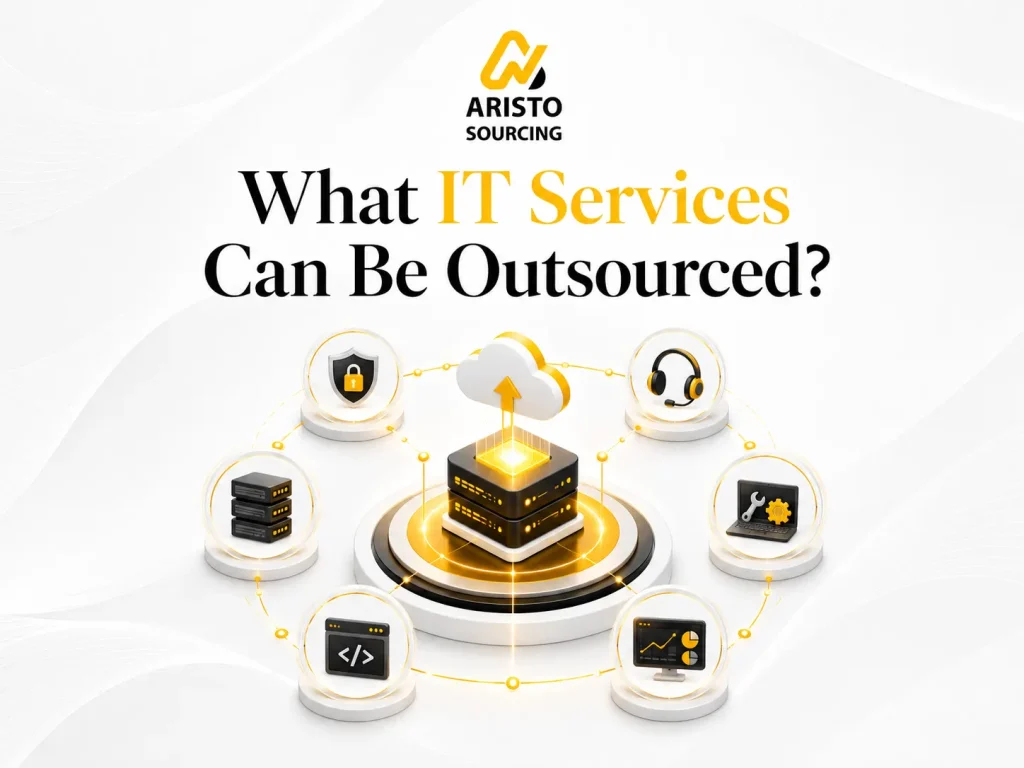
Outsourced IT support covers far more than fixing technical issues. Modern managed service providers deliver a wide range of services that keep business systems secure, available, and productive. The most commonly outsourced areas include help desk support, cybersecurity, cloud and infrastructure management, and disaster recovery, each addressing different operational and security needs.
1. Help Desk Support
Help desk support handles day-to-day technical issues that affect employees and business operations. Outsourcing help desk services lets a business provide fast technical assistance without maintaining a large internal support team. Coverage may be available during business hours or 24/7, depending on the service agreement.
Typical responsibilities include password resets, software troubleshooting, hardware support, printer issues, user account management, email configuration, and remote desktop assistance. Providers manage, monitor, troubleshoot, and resolve issues using platforms such as Microsoft Intune, ServiceNow, Jira Service Management, TeamViewer, AnyDesk, and ConnectWise Control. Without responsive help desk support, technical problems can remain unresolved longer, reducing employee productivity and increasing downtime. As organizations strengthen daily IT operations, cybersecurity becomes the next essential layer of protection.
2. Cybersecurity
Cybersecurity services protect business systems, networks, applications, and sensitive data from cyber threats. Outsourcing cybersecurity allows organizations to access dedicated security specialists, advanced monitoring tools, and continuous threat detection without building an in-house security operations team.
These services commonly include firewall management, endpoint protection, vulnerability assessments, security monitoring, identity and access management, phishing prevention, and incident response. Providers use platforms such as Microsoft Defender, CrowdStrike, SentinelOne, Cisco Secure, Palo Alto Networks, and Splunk to monitor, detect, and respond to threats remotely. Without strong cybersecurity, businesses face greater risks of ransomware, phishing attacks, data breaches, regulatory penalties, and operational disruption. Once security is established, organizations must also ensure that the infrastructure supporting their applications remains reliable and scalable.
3. Cloud and Infrastructure
Cloud and infrastructure services manage the technology environment that supports daily business operations. Outsourcing cloud management lets a business maintain reliable systems while reducing the complexity of administering servers, networks, storage, and cloud platforms internally.
Common responsibilities include cloud migration, virtual server management, network monitoring, Microsoft 365 administration, infrastructure optimization, software updates, and performance monitoring. Providers typically work with platforms such as Microsoft Azure, Amazon Web Services (AWS), Google Cloud Platform (GCP), VMware, Hyper-V, and Cisco networking solutions. Without proactive infrastructure management, businesses may experience outages, poor system performance, and limited scalability. Protecting those systems also requires a plan for recovering quickly when unexpected disruptions occur.
4. Disaster Recovery
Disaster recovery services help organizations restore systems and data after cyberattacks, hardware failures, natural disasters, or accidental data loss. Outsourcing disaster recovery enables businesses to recover operations faster through tested recovery plans, automated backups, and continuous monitoring.
Providers manage backup scheduling, replication, recovery testing, business continuity planning, and emergency system restoration using platforms such as Veeam Backup & Replication, Acronis Cyber Protect, Microsoft Azure Site Recovery, AWS Elastic Disaster Recovery, and Datto. Support may include continuous monitoring with rapid response during critical incidents. Without an effective disaster recovery strategy, businesses risk extended downtime, permanent data loss, financial damage, and loss of customer confidence.
What Are the Benefits of Outsourced IT Support?
Businesses outsource IT support to improve operational efficiency, strengthen security, and gain access to specialized expertise without expanding internal teams. Beyond reducing daily technical workloads, outsourced IT creates predictable costs, supports business growth, and helps organizations maintain reliable technology as their operations evolve.
1. Cost Predictability
Cost predictability means replacing unexpected IT expenses with a fixed monthly operating cost. Outsourced IT support reduces budget uncertainty through managed service agreements that cover monitoring, maintenance, and technical support instead of unpredictable repair bills or hiring additional IT staff.
According to the Deloitte Global Outsourcing Survey, organizations that outsource technology functions commonly achieve IT operating cost reductions of 25% to 45%, particularly when infrastructure management and support services are consolidated. Small and medium-sized businesses benefit the most because they gain enterprise-level IT capabilities without the long-term expense of building a full internal department. Beyond controlling costs, outsourced IT also provides immediate access to experienced technology professionals.
2. Access to Expertise
Access to expertise gives businesses a team of specialists with experience across networking, cloud computing, cybersecurity, compliance, and infrastructure management. Rather than relying on one or two internal technicians, organizations gain a broader range of technical knowledge whenever new challenges arise.
Research from IDC’s Future Enterprise Resiliency & Spending Survey shows that access to specialized skills remains one of the primary reasons organizations expand their use of managed IT services. This allows businesses to deploy new technologies more quickly while avoiding lengthy recruitment and training cycles. With expert support available, providers can also prevent many technical problems before they affect daily operations.
3. Proactive Maintenance
Proactive maintenance identifies and resolves issues before they become business disruptions. Managed service providers continuously monitor servers, endpoints, networks, and applications while applying software updates, security patches, and performance optimization throughout the year.
IBM’s Cost of a Data Breach Report found that organizations using extensive security AI and automation identify and contain security incidents 108 days faster than organizations without those capabilities. Continuous monitoring reduces downtime, improves system reliability, and minimizes costly interruptions. As systems become more stable, businesses can scale their technology environment with greater confidence.
4. Flexibility and Scalability
Flexibility and scalability allow organizations to increase or reduce IT resources as business requirements change. Outsourced IT support enables companies to onboard employees, open new locations, migrate workloads to the cloud, and expand infrastructure without making large upfront technology investments.
The Flexera 2025 State of the Cloud Report found that 72% of organizations identify scalability as one of the most valuable benefits of cloud adoption. Managed service providers help businesses take advantage of that flexibility while maintaining performance and security. As infrastructure grows, internal teams can devote more attention to strategic initiatives.
5. Focus on Core Functions
Focus on core functions allows business leaders and employees to spend more time on revenue-generating activities instead of resolving technical issues. Outsourced IT providers assume responsibility for maintaining systems, troubleshooting problems, and managing technology operations so internal teams can concentrate on customers, products, and business growth.
According to KPMG’s Global Tech Report, organizations increasingly outsource operational IT functions to accelerate innovation and improve business performance. This approach is particularly valuable for growing businesses that need dependable technology support while keeping management focused on long-term strategic objectives.
What Are the Risks of Outsourcing IT Support?
The main risks of outsourcing IT support are reduced day-to-day operational control, data security and privacy concerns, communication challenges, hidden costs, and overdependence on a single service provider. When IT operations are managed externally, businesses may have less direct oversight of support priorities and response processes. Offshore providers can also introduce time-zone differences or language barriers that affect collaboration if expectations are not clearly defined.
Security is another key consideration because outsourced providers often have access to critical systems, customer data, and business applications. Without strong security controls and compliance standards, organizations may face increased cybersecurity and regulatory risks. Some contracts may also include additional charges for projects, after-hours support, or service requests that fall outside the agreed scope. These risks can be significantly reduced through careful vendor due diligence, clearly defined service level agreements (SLAs), transparent pricing, regular performance reviews, and security requirements covering access controls, encryption, and compliance with recognized standards.
Is Outsourced IT Support Right for Your Business?
Whether outsourced IT support is the right choice depends on your internal technical capabilities, budget, operational complexity, and future growth plans. Some organizations benefit from fully managed IT services, while others only need specialized support for selected systems or projects. The best decision balances cost, expertise, security, and scalability with your business objectives.
Before choosing a provider, evaluate whether your current IT resources can support future growth, how quickly technical issues need to be resolved, what level of cybersecurity and compliance your business requires, and whether a managed service model aligns with your long-term technology strategy. The following considerations will help determine if outsourced IT support is the right fit for your organization.
In-House vs Outsourced IT Support
The difference between in-house and outsourced IT support is that an in-house team works exclusively for your organization, while an outsourced provider delivers IT services through a dedicated external team. In-house IT offers greater day-to-day control, immediate onsite access, and deeper familiarity with internal systems, but it also requires higher spending on salaries, benefits, training, and technology. Outsourced IT support provides access to broader technical expertise, scalable resources, and predictable operating costs without the overhead of expanding internal staff. Neither approach is universally better, the right choice depends on your budget, business complexity, security requirements, and long-term growth strategy.
When Should You Outsource IT Support?
You should outsource IT support when your internal team spends more time resolving routine technical issues than supporting business growth. It is also a practical solution if your organization operates across multiple locations, experiences rising IT staffing costs, or lacks the specialized expertise needed for cybersecurity, cloud management, or regulatory compliance. Outsourcing becomes particularly valuable during periods of expansion, digital transformation, or infrastructure upgrades, allowing businesses to strengthen technology operations while freeing internal employees to focus on strategic initiatives instead of daily troubleshooting.
How Much Does Outsourced IT Support Cost?
Outsourced IT support costs depend on the service model, the number of users or devices, the level of support required, and the complexity of your IT environment. Most managed service providers charge a flat monthly fee, per-user pricing, or per-device pricing, while break-fix providers bill only when technical issues occur. According to the 2025 Managed Services Pricing Benchmark published by Service Leadership, fully managed IT support for small and mid-sized businesses commonly ranges from USD 100 to USD 250 per user per month, depending on security services, cloud management, compliance requirements, and service-level commitments. Businesses with multiple locations, 24/7 monitoring, or advanced cybersecurity needs typically invest at the higher end of the range.
How Do You Choose an Outsourced IT Support Provider?
You choose an outsourced IT support provider by first evaluating your internal IT capabilities, business goals, and the level of support your organization actually requires. After defining those needs, compare providers based on their technical certifications, industry experience, cybersecurity practices, response times, customer references, and cultural fit. Review the service level agreement (SLA) carefully to understand response commitments, support coverage, escalation procedures, reporting, and pricing before signing a contract. Selecting a provider with proven expertise, transparent communication, and scalable services will create a stronger long-term technology partnership rather than simply outsourcing technical support.
Is Outsourced IT Support the Same as an MSP?
No. Outsourced IT support and a Managed Service Provider (MSP) are closely related, but they are not exactly the same. Outsourced IT support refers to the practice of hiring an external company to manage some or all of your IT functions, while an MSP is a specific type of outsourced IT provider that delivers those services proactively through ongoing contracts. Unlike traditional break-fix support that responds only when problems occur, MSPs continuously monitor, maintain, secure, and optimize your technology environment under a service level agreement (SLA). In other words, every MSP provides outsourced IT support, but not every outsourced IT support arrangement is a fully managed service.